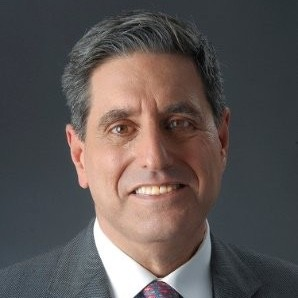

There is a sentence Fernando Vescio has heard more than once while walking the floor of a company he had just joined, and it stayed with him: “I’ve never seen HR walk through here before.” Not hostility. Not a complaint. Just the plain observation of someone who had worked at a company for years without ever seeing a human resources leader at their workstation asking what they were building. That absence is the real problem in HR today, and it explains why so many organizations can hand HR a seat at the executive table and still watch employees route around the function entirely when something goes wrong.
Fernando Vescio is a retired senior human resources executive whose career spans public companies, private companies, and consulting across several industries. He began academically in a commerce and finance program, an unusual foundation for HR at the time, and later earned professional HR accreditation as well as board accreditation while serving with three different boards at once. He has built and rebuilt HR functions, advised CEOs, run culture change at scale, and carried executive and board compensation as roughly a quarter of his workload. David Cohen’s groundbreaking interview shows how Fernando’s view of the profession is unsentimental and specific, and it starts with the argument that structure alone has never made HR credible.
A Seat at the Table Was Never the Prize
Fernando traces the arc plainly. HR began as personnel, a function built around benefits, union negotiations, recruiting, and payroll, and it reported to a business administrator, which meant it was finance-driven and led by a finance person. It was not people-centric by design. As the field professionalized, requiring degrees and certification through associations like the Human Resource Professional Association in Canada and its equivalents internationally, someone developed a model in which HR was separated from finance while still working closely with it, and reported directly to the head of the company.
That is the origin of the seat at the table, and Fernando is careful about what it did and did not accomplish. “Organizational design doesn’t give you a seat at the table and be effective,” he said. The reporting line opened the door. Competence is what let him stay in the room. For any HR leader reading this, the practical takeaway is that a title and a dotted line are the starting conditions, not the achievement, and the work of earning influence begins the day after the org chart changes.
Curiosity About How the Money Works Is the Fastest Route to Credibility
The competitive advantage Fernando names first is not a people skill. It is fluency with numbers. Senior leaders noticed early that he was comfortable with financial language and spoke it more naturally than most HR professionals did, and that comfort bought him a hearing he might otherwise have had to fight for.
What he did with that hearing matters more. Whenever he started with a new organization, he spent significant time up front with the CEO and the board asking how the business worked. How does it make money? Where does it gain its competitive advantage? What are the people issues? He then spent time with each executive individually, partly to build the relationship and partly because he could not advise anyone well without understanding what they actually did. The questions were sincere, and that sincerity is what turned them into credibility. Fernando point for HR professionals nervous about changing industries is related and reassuring: people issues are broadly similar across sectors, and the same skill set travels.
Visibility Is the Habit, Confidentiality Is the Proof
Fernando describes himself as extremely accessible and extremely visible, and admits both can go too far. He spent half his day walking around, stopping at workstations, asking employees what they were working on. It usually took two or three of those conversations before anyone relaxed, and he considers that patience the entire method. “There’s no magic,” he said. It is being visible, being accessible, being genuinely interested, and giving people your time.
Visibility only pays off if confidentiality holds, and Fernando is blunt about the pressure that comes with it. Everyone watches how HR behaves. A leaked conversation or a misplaced employee file, he said, is close to a death blow for the function. So he made confidentiality something he demonstrated rather than promised, including with executives who asked what one of their employees had come to discuss. His answer in those moments was firm: that conversation is between the employee and HR, and he was not divulging who said what. The exception he names is narrow and real, covering conduct that breaches the code of business conduct or crosses ethical lines, where more than confidentiality is required.
The same principle governed how he ran his own team. He shared more context with his HR staff than most executives do, sitting down after executive meetings to pass along what he could, because he believed it made them better at the job. He was equally clear about the cost of breaking that trust, and equally clear that venting belonged inside the HR meeting only. Once you walk out the door, he told them, you wear the HR hat.
Accountability That Shows Up in Someone’s Paycheck
Relationships build trust, but Fernando pairs them with instruments that do not depend on goodwill. Once he understood the business strategy and the two- to three-year goals, he built performance objectives, and his standard is specific: every senior leader and every people manager carries people objectives, and those objectives make up a significant part of the bonus. “If it hits their paycheck,” he said, “the system starts to take care of itself”.
The objectives themselves have to connect to business success rather than float above it. Where a part of the company has an attrition problem, he works with that leader on strategies, programs, training, and whatever else the situation calls for, and then sets a measurable objective around reducing attrition and improving retention. Attrition and retention data, as he puts it, does not lie. If people are leaving one leader, something is happening there.
He layers two other tools on top. Employee surveys must run routinely, must be genuinely anonymous, and must break down to the division or department level, because rolling results up too high hides exactly the local problems worth finding. And he ran focus groups himself as an HR leader, talking generally about how things were going, which surfaced small issues early enough to handle before they grew. When a manager’s results look bad, he validates the data through those focus groups rather than acting on a number alone.
“When you see ethics being compromised in the pursuit of business success, that’s where HR has to step in, because there ain’t anybody else that’s going to step in.”
~ Fernando Vescio
Culture Belongs to the CEO, and HR Has to Say So
Asked who owns the success of the culture, Fernando does not hedge. The CEO, one hundred percent. HR is a partner; HR creates the process; HR communicates and supports it, but the CEO, the board, and the executives have to stand up front and deliver it. In a private company, ownership traces back to the founder. His condition for taking on any culture change is that leadership is the lead actor, and he is willing to decline the work otherwise.
When a senior leader is not living the values, Fernando follows a sequence he sets up in advance. He tells every executive that if he hears about a problem inside their organization, he will come to them first, so nobody worries about being reported behind their back. He brings the feedback directly, describes what he has noticed and how he validated it without naming employees, and offers a roadmap. Survey questions about whether a leader lives the values give him data points rather than impressions. If the behavior does not improve, the two of them go to the CEO together, which he frames not as a threat but as honesty, and which he has needed to do only two or three times in his career.
The sequencing is the part HR leaders most often get wrong. When the issue sits several levels down, he works through that person’s manager rather than escalating to the top, informing the executive of what he intends to do without asking them to intervene. “If you start skipping steps, that’s where HR loses control,” he said. The escalation ladder is what preserves the authority to use it.
He has no patience for the language leaders use to excuse themselves. Told that some CEOs justify their behavior by calling the values aspirational, his response was that he finds it contradictory and confusing, and that it is a recipe for disaster. In a public company facing that situation, his path runs to the board member accountable for HR, with the data and the record of the conversation with the CEO in hand. He describes that conversation as very uncomfortable, and says it anyway.
When a Business Decision Puts Jobs at Risk
The hardest test of HR credibility comes when the business case points somewhere painful. Fernando reframes the premise first, noting that the interest of the corporation is often the same as the interest of its people, because the company has to be profitable for anyone to have a job at all.
Then he gets concrete. He has been through two or three situations where outsourcing a small internal group made clear business sense. Rather than announcing the decision, he walked the affected leader through the scenarios until the logic became evident, and then went looking for a third party willing to take on the current employees. In both cases, that willingness was written into the deal. The employees did not lose their jobs; they changed employers, and several gained a broader career path than a ten-person internal team could ever have offered them. His standard for the alternative is worth stating plainly: a bidder unwilling to take the people would have to be significantly better on every other measure, and if it were not, he would fight tooth and nail against it.
The Courage Is the Job
The through line in everything Fernando Vescio describes is discomfort accepted on purpose. He walked the floor when he could have stayed at his desk. He told executives things they did not want to hear. He built a documented path to the boardroom and let people know it existed. None of it depended on a bigger budget or a better title.
His warning to the profession is the sharpest thing he says. If you are not prepared to bring a serious ethical problem to the board, and you do not dare to do it, he said, you should not be in HR. He is equally direct about what happens to the leaders who choose comfort instead. You become an ivory tower corporate hack, and people do not trust that.
The single habit to carry into tomorrow is the smallest one on his list. Get up, walk to someone’s workstation, and ask what they are working on. Expect it to take two or three tries before the conversation turns real. Fernando built a career’s worth of credibility on exactly that, and he would tell you the information it produced is the kind you will rarely get from a survey.
His expertise spans culture change, organizational design, executive and board compensation, employment law, mergers and acquisitions, and expatriate programs, and he is frequently sought after for his business advice on complex, high-stakes people issues. A lifelong athlete who has played and coached high-level soccer, and a rock band musician from his younger days onward, he is known as an accessible, motivational leader who helps senior executives understand both the numbers and the people challenges behind every critical business decision.