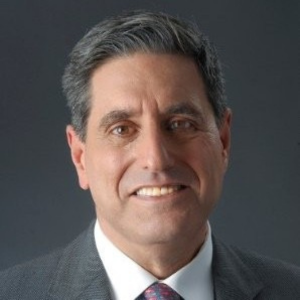

Skills make you capable of doing the job. Behaviors say, will you do the job?
– David Cohen
There is a familiar feeling many job seekers know well: walking out of an interview and wondering what, exactly, was just measured. Was it competence? Chemistry? Composure under pressure? Or simply the ability to deliver polished answers to questions everyone has learned to anticipate?
According to David Cohen, founder of DS Cohen and Associates, too many interviews still rely on rituals that feel authoritative but reveal very little about how someone will actually perform on the job. In a recent conversation built around a mock interview, Cohen made a case for a simpler, more evidence-based standard: stop asking candidates what they would do, and start looking more closely at what they have done.
His critique is not aimed only at employers. Candidates, he argues, are responding rationally to a system that often rewards rehearsed language, confidence, and intuition over substance. The result is a process that can mislead both sides.
The Gap Between Capability and Behavior
At the center of Cohen’s argument is a basic distinction: capability is not the same as behavior.
A candidate may have the technical skills to do a job. They may hold the right degree, present well, and offer convincing responses. But that does not necessarily mean they will act effectively when the work becomes difficult, ambiguous, or interpersonal. “Skills make you capable of doing the job,” Cohen said. “Behaviors say, will you do the job?”
That distinction matters because many interviews still privilege exactly the wrong kinds of questions. Asked about strengths, a candidate might say they work well under pressure, are organized, eager to learn, and reliable. Asked about weaknesses, they might offer some version of perfectionism.
These answers are familiar because they are socially legible. They signal preparedness. They are also nearly impossible to verify in the moment. What they tend to measure instead is a candidate’s fluency in interview culture.
Why Traditional Interview Questions Fall Short
Cohen is blunt about the value of such questions. In his view, asking about strengths, weaknesses, or where someone sees themselves in five years often produces little more than practiced self-presentation. A hiring manager may feel reassured by the candidate’s tone, confidence, or shared background, but none of that reliably predicts job performance.
Bias enters quietly and early: a polished appearance, a similar upbringing, a sense of comfort or familiarity. The interviewer may leave with a strong impression, but not necessarily a useful one.
That problem becomes even clearer in the case of novelty questions—the ones designed to seem clever, revealing, or psychologically insightful. How many ping-pong balls fit on a school bus? What tree would you be? How many pink garage doors did you pass on the way here?
These questions persist in part because they create the illusion of depth. They may seem to test logic, creativity, or spontaneity. But unless they are directly relevant to the work, Cohen argues, they mostly introduce noise. They can unsettle candidates, reward improvisation, and flatter the interviewer’s sense of originality, while offering little evidence about how a person will function in the role.
What Behavioral Interviewing Does Better
The more useful alternative, he said, is behavioral interviewing: asking candidates to describe a recent, real situation that required the kind of judgment or conduct the job demands.
In the mock interview, that shift was immediate. Instead of asking how someone would handle conflict on a diverse team, Cohen reframed the question: tell me about a recent time when someone on your team was preventing progress. What happened? What did you do? How did the other person respond? What happened at the next meeting?
This kind of questioning does more than invite storytelling. It forces specificity. The interviewer is no longer listening for ideals, but for sequence, action, and consequence. If the candidate describes speaking privately with a disruptive colleague, the interviewer can ask how the conversation began, what resistance emerged, what changed afterward, and how other team members reacted.
That detail matters because it makes vague virtues harder to perform. “Good communicator” becomes less interesting than the candidate’s actual way of handling discomfort, tension, and feedback. And when a story is real, follow-up questions tend to deepen it. When it is fabricated or borrowed, those same questions often expose the strain.
The Importance of Specificity and Honesty
Cohen sometimes asks what he calls an “honesty factor” question: would the candidate be comfortable arranging a reference conversation with someone involved in the story they just told? The goal is not to provoke embarrassment. It is to create accountability.
This matters more than it may seem. Cohen described hearing of applicants using stories that were not theirs—shared experiences reframed as personal leadership examples, volunteer work exaggerated into sole initiative, group efforts repackaged as individual accomplishments.
In competitive hiring environments, the temptation is understandable. But it is also a sign that many interview processes still reward narrative confidence over grounded evidence.
Behavioral interviewing is not flawless, Cohen acknowledged. Past behavior does not guarantee future performance. People change. Contexts change. A story from 10 years ago may say less about a candidate than a smaller example from the last 18 months.
That is why recency matters. It is also why frequency matters. A single strong anecdote may be meaningful; repeated examples of the same pattern are more persuasive.
What employers should be listening for, Cohen suggested, is not simply whether a story sounds impressive, but whether it reflects behaviors that are both relevant and recent.
Hiring Managers Need Better Definitions of Success
That requires preparation on the employer’s side. One of the clearest themes in the conversation was that organizations often begin interviews without having done the harder foundational work of defining what success in the role actually looks like. “Teamwork,” for example, is too vague to be useful. So is “leadership,” “sales ability,” or “good communication.”
The better question is: what are the four or five observable behaviors that make someone effective here, in this organization, in this role?
For one company, relationship-building might mean following through consistently and navigating conflict without escalation. For another, it may mean consulting cross-functional partners early and keeping communication direct under the deadline. Without that specificity, interviewers are left scoring charisma, familiarity, and gut instinct under the banner of culture fit.
Bias Isn’t Eliminated — But It Can Be Reduced
Cohen is skeptical of the idea that interviews can be bias-free. Everyone arrives with assumptions shaped by experience, status, aesthetics, and pattern recognition. Height, age, dress, confidence, accent, and educational pedigree—all can shape perception long before a substantive question is answered.
The goal, then, is not purity but discipline.
That discipline begins with clear criteria and becomes stronger when interviews are structured, scored against a rubric, and conducted by a panel rather than a lone decision-maker. In Cohen’s view, panel interviews are especially useful because multiple people hear the same answer at the same time, take notes independently, and compare observations afterward.
That does not erase bias, but it can reduce the power of one person’s unexamined impression.
Rethinking Experience, Degrees, and “Fit”
The conversation also challenged a few assumptions that remain deeply embedded in hiring systems: that more years of experience are always better, that credentials reliably signal readiness, and that conventional markers of polish are interchangeable with performance.
Cohen described cases in which organizations overlooked highly capable candidates because they lacked a formal degree equivalency or did not fit a standard profile. In one example, a candidate without the preferred engineering credential turned out to be the strongest performer once hired.
In another, a sales team composed of recent graduates succeeded because the organization had identified the behaviors associated with success and hired for those, rather than defaulting to industry tenure alone.
This is a useful corrective at a time when employers often talk about skills-based hiring while still using filters that narrow the field in old ways. A résumé may suggest readiness, but it rarely captures how someone responds under strain, builds trust, adjusts after feedback, or continues learning in unfamiliar situations.
What Candidates Can Take From This
For candidates, there is a quieter lesson here, too. Interviews remain imperfect, and many still demand performance. But when the process is substantive, authenticity is not a disadvantage. In fact, it may be the only thing that creates a better match.
Cohen’s advice to candidates was not to become less prepared, but to become more concrete. Go in ready to talk about recent experiences. What happened, specifically? What was hard? What did you do? What changed because of you? What did you learn? And what would someone else in that situation say about your role?
That kind of preparation may be less theatrical than memorizing ideal answers about strengths and long-term goals. But it is more likely to produce a sustainable fit for the employer and for the person being hired.
Final Thoughts
By the end of the conversation, Cohen returned to what he sees as the single most important shift hiring managers can make: know what you are looking for before the interview starts, and evaluate candidates against that standard rather than against your own immediate affinity for them.
It is a deceptively simple idea. But in a hiring culture still shaped by instinct, overconfidence, and inherited scripts, it feels almost radical.
An interview, at its best, should not be a test of performance in the theatrical sense. It should be a structured attempt to understand how a person works, how they relate to others, and whether the way they have shown up in real situations aligns with what the role actually requires.
That is less flashy than the mythology of the perfect interview question. It is also, Cohen suggests, far more human—and far more useful.