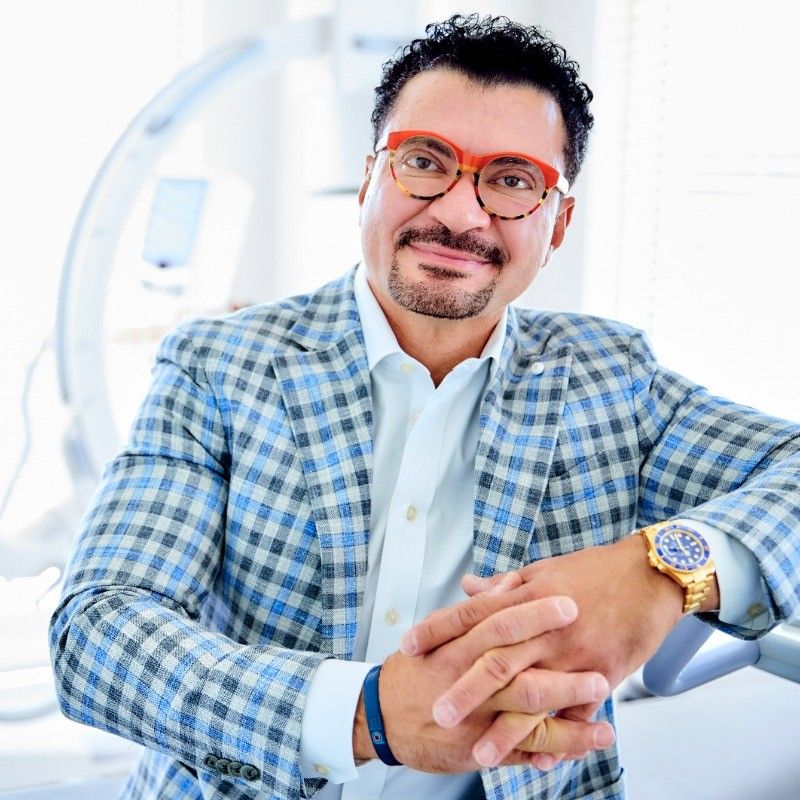

Pain is not the enemy… misunderstanding it is. When we learn to listen to the body’s signals instead of fearing them, we open the door to real healing.
– Dr. Hany Demian
Pain Isn’t Just Physical—It’s a Conversation Between Your Body, Mind, and Nervous System
Pain is rarely just a physical sensation. It’s a message—one shaped by the body, the nervous system, and the experiences we carry with us over time. Understanding that message, rather than silencing it, is often the missing piece in long-term healing.
Dr. Hany Demian, a pain management specialist known for his regenerative, non-surgical approach, has spent years helping patients look beneath symptoms to understand what their bodies are truly communicating. Recently, that perspective deepened in an unexpected way: he became a patient himself.
Fresh off shoulder surgery, Dr. Demian experienced pain not as a clinician interpreting data, but as a human navigating vulnerability, uncertainty, and recovery. That dual perspective—doctor and patient—reinforced what he sees daily in practice: pain is as much about perception, stress, and nervous system regulation as it is about tissue and joints.
What Becoming a Patient Revealed About Healing
Stepping into the hospital as a patient was humbling. Used to giving instructions, Dr. Demian suddenly found himself following them—sometimes without fully understanding why. One of the most surprising moments came when his surgeon asked him to stop all supplements and testosterone before surgery.
For someone whose work centers on reducing inflammation, this felt counterintuitive. But the explanation was simple and precise: inflammation, at the right time, is necessary for healing. Blunting it too aggressively can interfere with recovery. Hormones like testosterone, while beneficial in many contexts, can also increase clotting risk during periods of immobility.
The experience reinforced a core truth of good medicine: what helps in one phase of health can hinder another. Healing is contextual, personal, and time-sensitive. There is no universal protocol—only thoughtful, individualized care.
The Hidden Role of “Pain Personalities”
Over time, Dr. Demian has noticed that people tend to fall into distinct “pain personalities.” Some minimize discomfort and insist they’re fine, even when they’re not. Others avoid doctors entirely until pain becomes unbearable. And then there are the dramatic responders—often driven by fear rather than the sensation itself.
Interestingly, he sees this most often in men. Many grew up associating medical care with threat or punishment, which wires fear into the nervous system early. As adults, that fear magnifies pain long before a needle ever touches the skin.
Pain, in these cases, isn’t exaggerated—it’s amplified by anticipation, stress, and past experience.
Why Googling Symptoms Often Makes Pain Worse
One of the most common accelerators of pain today isn’t injury—it’s information overload. Searching symptoms online often leads people to worst-case scenarios, triggering anxiety and stress responses that directly increase pain perception.
Dr. Demian has seen patients—and colleagues—spiral after convincing themselves they’re facing dire outcomes based on incomplete or misleading information. Fear activates the nervous system, increases inflammation, and tightens muscles. The body listens to the story the brain tells it.
Even diagnostic scans can trigger pain. Dr. Demian experienced this firsthand: before seeing his MRI, he had no shoulder pain at all. After hearing how severe the damage looked, discomfort appeared almost immediately—despite no physical change.
The lesson is clear: information without context can become a biological stressor.
Stress, Not Injury, Is Often the Real Trigger
Chronic stress quietly drives much of the pain people experience every day. It disrupts mitochondrial function, accelerates aging, and alters how the nervous system processes sensation.
Dr. Demian once took a biological age test that showed certain organs aging faster than expected—not because of physical decline, but because of stress. After intentionally lowering stress and shifting mindset, repeat testing showed measurable improvement within weeks.
Pain is not weakness. It’s feedback.
The Everyday Habits That Age the Body Fastest
Despite advances in regenerative medicine, the most powerful anti-aging tools remain foundational:
- Sleep: Poor sleep disrupts hormones, increases inflammation, and worsens pain perception.
- Nutrition: Inflammatory diets amplify joint pain and slow recovery.
- Movement: Even limited movement improves circulation, mood, and resilience.
Sedentary habits, prolonged sitting, and constant screen use contribute to “tech neck,” headaches, and nervous system dysregulation. Over time, these habits quietly erode physical and emotional well-being.
When Optimization Goes Too Far
High achievers often assume more treatment equals better health. In reality, overtreatment can create imbalance, stress, and injury. Overtraining, excessive supplementation, and chasing every new intervention can push the body into a constant state of pressure rather than recovery.
True optimization is intentional. It’s not driven by fear of aging or missing out—it’s guided by evidence, timing, and listening to the body.
Pain Is a Signal, Not an Enemy
Small, recurring aches are not something to panic over—but they also shouldn’t be ignored. Pain is the body’s way of asking for attention. Addressed early, many issues can be resolved with simple changes. Ignored, they often escalate.
The goal isn’t to eliminate all discomfort. It’s to understand it.
The Most Effective First Step Toward Feeling Better
Before advanced treatments, start with the basics:
- Prioritize sleep
- Eat to reduce inflammation
- Move daily
- Reduce stress
- Get a simple blood panel to identify deficiencies
Across cultures where people live well into their 90s and beyond, longevity isn’t built on constant intervention. It’s built on consistent foundations.
Advanced therapies work best when the basics are already in place.
Listening Instead of Fighting
Pain doesn’t mean something is wrong with you. It means something needs your attention.
When we stop fighting the signal and start listening to the conversation—between body, mind, and nervous system—healing becomes more sustainable, compassionate, and effective.
As Dr. Demian’s own recovery reminds us, even the most advanced medicine works best when paired with patience, awareness, and respect for the body’s timing.