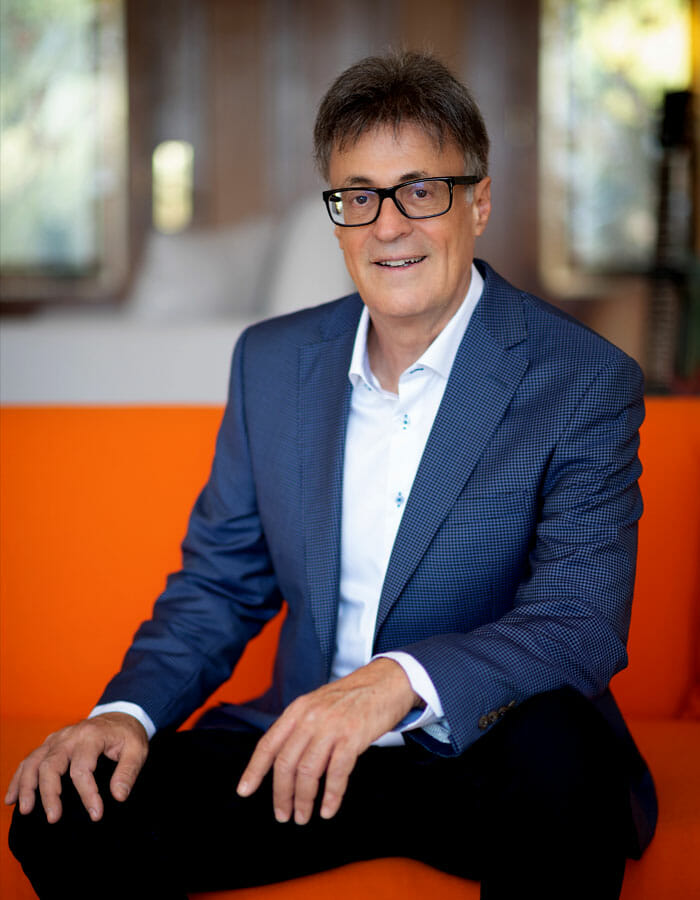

“The 30-year fixed-rate loan is the greatest wealth-building gift Americans don’t realize they have. If you simply buy the right homes, let inflation do its work, and give it time, your future can become stronger than you ever imagined.”
— Adiel Gorel
For many people, the idea of building meaningful wealth feels distant—reserved for high earners, market insiders, or those willing to take outsized risks. Yet one of the most powerful wealth-building tools available to everyday Americans has existed quietly for decades, largely overlooked because of its familiarity.
According to real estate strategist and educator Adiel Gorel, that tool is the 30-year fixed-rate mortgage—a financial structure so ordinary that most people fail to recognize how extraordinary it truly is.
With more than four decades of experience investing through multiple market cycles, Gorel has helped thousands of working professionals—teachers, nurses, engineers, and retirees—use this uniquely American loan structure to build long-term wealth, stabilize retirement income, and create financial flexibility over time. His approach is not based on speculation or rapid growth, but on patience, predictability, and systems that allow inflation and time to do the heavy lifting.
Why the 30-Year Fixed Mortgage Is So Unusual—and So Powerful
In most parts of the world, mortgage payments fluctuate with inflation. As costs rise, so do monthly obligations. In the United States, however, homeowners can lock in a payment that remains unchanged for three decades.
This single feature fundamentally alters the financial equation.
While wages, rents, and asset values tend to rise over time, the mortgage payment stays frozen. Inflation, which is often framed as a threat, quietly works in the borrower’s favor by reducing the real cost of debt year after year. What once felt like a heavy obligation becomes increasingly manageable, while equity steadily grows.
“It’s a gift most people don’t even realize they have,” Gorel often explains. “Because we grew up with it, we assume it’s normal. But globally, it’s almost unheard of.”
A Strategy Built on Simplicity, Not Speed
The core of Gorel’s approach is intentionally straightforward. Rather than chasing appreciation in expensive coastal cities or attempting to time the market, he focuses on newly built single-family homes in affordable, growing Sunbelt metros—places with steady job growth, population inflows, and long-term rental demand.
Markets such as Oklahoma City, Tulsa, parts of Texas, Mobile, and the Raleigh-Durham area offer a combination of affordability and stability that supports long-term ownership. New construction, in particular, reduces early maintenance surprises and allows investors to focus on consistency rather than constant repairs.
The process itself is deliberately unglamorous: purchase a home with a conservative down payment, secure a fixed-rate loan, hire a local property manager, and then—perhaps the most challenging step—resist the urge to interfere.
Over time, rents rise while payments remain unchanged. Equity builds quietly. Options expand.
Why Patience Matters More Than Perfect Timing
Financial headlines often amplify fear, especially during periods of rising interest rates or economic uncertainty. Yet history suggests that these moments frequently create opportunity rather than eliminate it.
When borrowing costs increase, demand tends to soften. Builders respond with incentives, price adjustments, and rate buydowns. Meanwhile, long-term investors benefit from reduced competition and the ability to refinance later if rates fall.
“The worst time to buy is usually when everyone feels confident,” Gorel notes. “The best time is often when people are waiting for certainty that never actually arrives.”
Because the strategy is designed for long-term ownership rather than quick exits, temporary fluctuations matter far less than structural fundamentals—fixed payments, population growth, and time.
Resilience Through Economic Cycles
One of the less discussed advantages of fixed-rate residential real estate is its behavior during downturns. When economic uncertainty rises, many potential buyers delay purchases, increasing rental demand. At the same time, fixed mortgage payments provide stability when other costs feel unpredictable.
Property values may fluctuate, but as long as owners are not forced to sell, history has shown that markets recover. The key, Gorel emphasizes, is emotional discipline—avoiding panic and allowing the system to work as intended.
Flexibility Is the Real Return
Unlike strategies that rely on a single outcome, long-term real estate ownership offers multiple exit paths. Some investors hold properties indefinitely, passing them on to heirs with favorable tax treatment. Others sell a portion of their portfolio after a decade or more to eliminate debt on remaining homes. Still others use sales opportunistically to fund life goals—education, relocation, or early retirement.
The common thread is optionality.
“Real estate doesn’t lock you into one decision,” Gorel explains. “It gives you choices over time.”
The Power of Starting Small
Perhaps the most counterintuitive aspect of this approach is how accessible it can be. Many people assume they need to be wealthy before they invest, when in reality, investing is often how wealth is built.
Starting with a single home allows individuals to experience the system in action—seeing a property rented, expenses managed, and payments covered. Once that first step is taken, fear tends to recede, replaced by clarity and confidence.
Predictable. Repeatable. Quiet.
A Different Definition of Wealth
Beyond real estate, Gorel’s life reflects a broader philosophy about balance. In addition to his investment work, he is an author, musician, and host of a wellness-focused podcast exploring longevity, health, and personal growth.
For him, financial security is not an end in itself, but a foundation that supports a meaningful, multidimensional life.
“Wealth should serve your life,” he says, “not consume it.”