

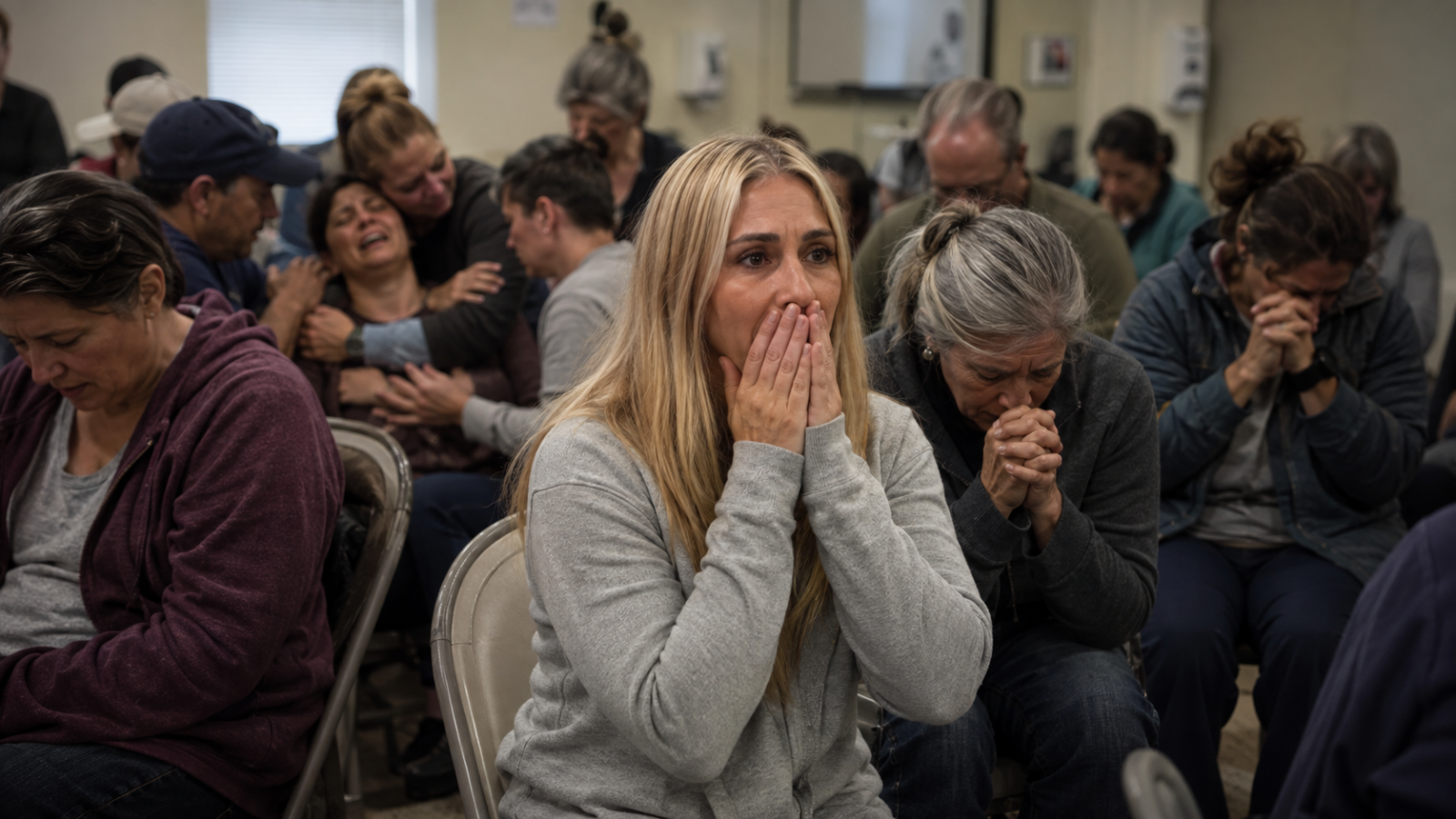
I walked into that room angry.
Not the quiet kind of angry that stays politely beneath the surface. The real kind. The kind that had been building for years through medication after medication, side effect after side effect, limitation after limitation. I was young, and I was furious, and I had decided, somewhere along the way, that epilepsy had stolen something from me that I was never getting back.
I was right about that last part. I just had the wrong understanding of what it meant.
The Medications
Before I tell you about the room, I need to tell you about what came before it.
When I was young, phenobarbital controlled my seizures for years. Then my body changed. Adolescence arrived, and with it, hormonal shifts that medication could not keep up with. The seizures came back. And what followed was one of the most exhausting seasons of my life — a long search for something that worked, conducted entirely inside my own nervous system.
One medication blurred my vision. Another flattened my emotions until I felt like I was watching my own life through frosted glass. One affected my speech so severely that I could hear every word forming perfectly in my mind but could not produce them correctly out loud. I sounded, I was told, like someone who had been drinking heavily. I knew exactly what I wanted to say. My mouth simply would not cooperate.
The process of changing medications was its own particular ordeal. You could not simply stop one and start another. You had to be weaned slowly — a half pill reduction every three or four weeks — while the new medication built up in your bloodstream. For months at a time I existed somewhere between two chemical realities, belonging fully to neither, feeling the side effects of both.
Nothing worked well. Nothing worked for long.
And then a trial group was announced. A new medication. A real chance.
The Room
I did not know what I would find when I walked through that door.
What I found was a room full of people who had epilepsy far more severe than mine. People whose seizures numbered not in the single digits per month, as mine did at my worst, but in the dozens. In the hundreds. Ninety seizures a day. One hundred and fifty. Three hundred.
I had never encountered numbers like that before.
There was a person in that room who had to be restrained. Not restrained the way you restrain a child throwing a tantrum — restrained the way you restrain someone whose body is trying to destroy itself every few minutes. Strapped down so the seizures could not send them to the floor or into the walls. So they would not break bones they had no control over.
I remember my jaw dropping.
I remember standing very still.
And I remember, for the first time in years, feeling something other than anger.
The Shift
I am not proud of how long the pity party had lasted. Looking back, I understand it. I was young. I was frightened. Nobody had given me the tools to understand what was happening to my body or why, and the medications that were supposed to help kept making things worse in different ways. Anger was the only response that felt proportionate to the situation.
But in that room, something broke open inside me.
I looked around at people whose daily reality made my worst months look manageable. I looked at the restraints. I looked at the blank stares of those whose seizures had taken so much that there was almost nothing of ordinary life left.
And I thought: I can walk out of here on my own.
That thought — so simple, so obvious, so entirely new to me — was the beginning of something I had never felt before in connection with epilepsy.
Gratitude.
Not performed gratitude. Not the kind you say out loud because someone tells you to count your blessings. The real kind. The kind that arrives unbidden and rearranges something permanently inside you.
I was not terminal. I was not confined. I had an invisible condition — one that nobody could see when they looked at me, one that I could choose to disclose or not disclose, one that had cost me real things but had not taken everything.
The pity party was over.
What Came After
The medication from that trial turned out to be Dilantin.
My body rejected it completely. Sores appeared throughout my body — external and internal — so severe that I could not move, could not swallow, could not lift my arms. I lost weight rapidly. I could not feed myself.
My father took time off work to care for me. He made chicken broth — breakfast, lunch and dinner — and fed it to me by hand because I could not hold a spoon. He did not talk about what he was doing. He did not ask to be thanked. He simply stayed and fed me and waited for the sores to heal.
That helplessness — complete, physical, humiliating helplessness — taught me something that has never left me. It taught me what it feels like to need another person entirely. To depend on love as a literal survival mechanism.
I have enormous compassion for elderly people for exactly this reason. I know, from inside my own body, what it feels like when your physical capabilities stop matching your mental ones. I learned that in my early twenties, lying in a bed I could not get out of, being fed by a man who never once made me feel like a burden.
What I Carried Out of That Room
I walked into the trial group furious at epilepsy.
I walked out with something I had not expected to find there.
Perspective. Proportion. And a gratitude so specific and so grounded in reality that it has never entirely left me, even on the hardest days.
Yes, epilepsy took things from me. It took fifteen years of driving. It took opportunities. It took an ease of movement through the world that other people never had to think about.
But I could walk out of that room on my own.
I could breathe the air outside.
I could feel grass under my feet and look up at the sky and watch birds cross it.
Those things — the small, unremarkable, invisible gifts of a body that mostly works — are not small. They are not unremarkable. I know that now in a way I cannot un-know.
The obstacles that crossed my path gave me something I could not have earned any other way.
They gave me the ability to be grateful for what most people never think to notice.
And that — more than any medication that ever worked, more than any credential I have earned or stage I have stood on — is the thing I am most grateful epilepsy taught me.
You are not alone in this. You never have been.

Stacey Chillemi has lived with epilepsy since the age of five. She is a 20-time bestselling author, epilepsy advocate and host of The Advisor with Stacey Chillemi — a podcast reaching 1.3 million listeners worldwide. She testified before the United States Congress on disability rights and has been a HOPE mentor for the Epilepsy Foundation for sixteen years.
Website: staceychillemi.com | Podcast: The Advisor with Stacey Chillemi | Email: [email protected]