
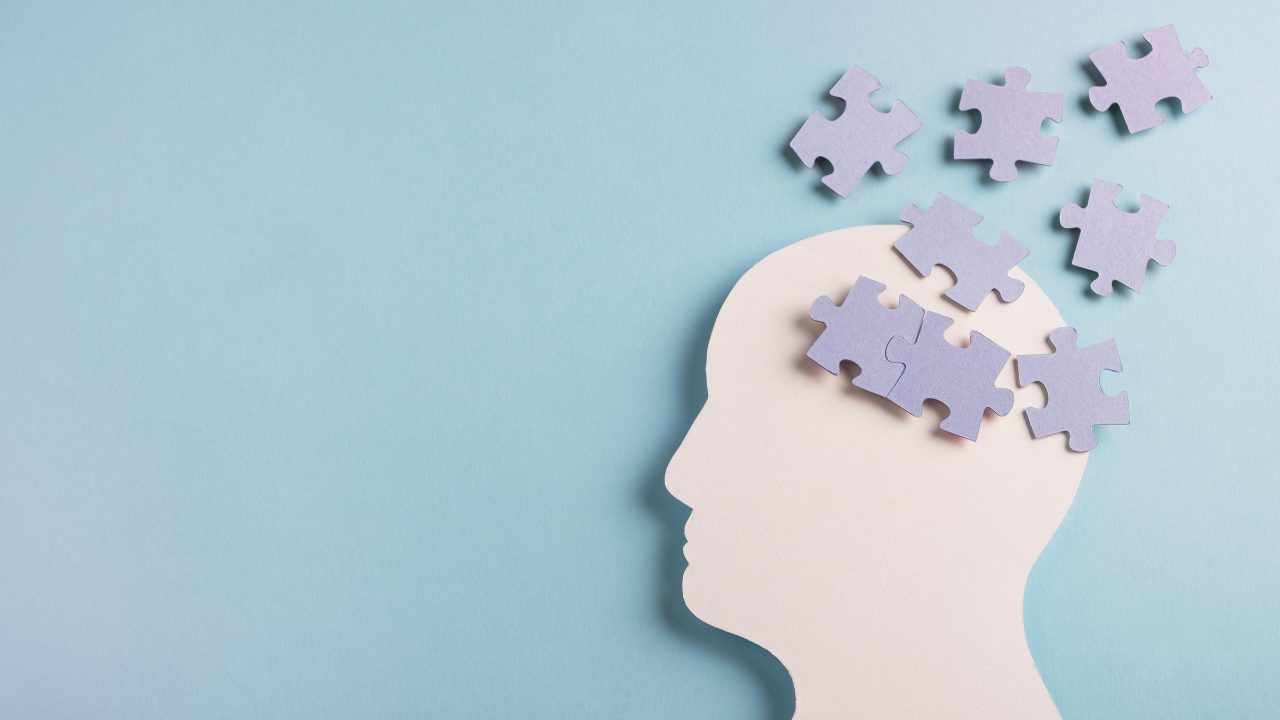
What we’re going after is moderate cognitive impairment: forgetfulness, not feeling as sharp, the things that scare everybody as we age.
– Mark L. Fox
There is a particular kind of fear that tends to arrive quietly.
It starts with misplaced keys, a forgotten name, the moment you walk into a room, and the loss of the thread of why you came. For many people, those lapses feel more like an inconvenience than a warning sign—small reminders of aging, vulnerability, and the possibility of future dependence.
That fear sits at the center of a conversation we recently had with Mark L. Fox, founder of Resna Health, about a new wearable called Blue Vibe, a device designed to be worn for about an hour a day on the wrist or back of the neck. Fox describes it as combining pulsed electromagnetic field technology, or PEMF, with blue light delivered at 40 hertz. The product, he says, is intended to support people experiencing forgetfulness, mental fogginess, and other forms of age-related cognitive slowdown.
The idea lands at a cultural moment when many people are actively looking for non-pharmacological ways to feel sharper, calmer, and more in control of their health. It also arrives at a time when the public conversation around brain health often moves faster than the science.
Fox knows that tension. He speaks with the confidence of a builder, not a clinician, and repeatedly notes that he is not a doctor and does not present the device as a treatment or cure for disease. What interests him, he said, is the gap between what people are feeling in daily life and the limited number of accessible tools aimed at early cognitive decline.
The Rise of Everyday Cognitive Worry
Fox’s framing is less about diagnosis than about function. He is not talking about dramatic neurological events. He is talking about the lived experience of mental wear and tear: brain fog, losing track of tasks, feeling scattered, struggling to stay focused, and noticing that thinking no longer feels as fluid as it once did.
That matters, because for many adults—especially those caring for aging parents or watching changes unfold in someone close to them—cognitive decline is not an abstract medical topic. It is deeply personal. It shapes decisions about work, caregiving, independence, and identity.
Fox, who is in his 60s, described this concern in practical terms. People want to stay capable. They want to remain independent. They do not want to become, as he put it, “a burden on their kids.”
It is an emotionally resonant point, and one that helps explain why products in the brain-health and nervous-system space have gained traction. In a world saturated with stress, interrupted sleep, and constant digital stimulation, “mental tired” has become a common baseline state. The appetite for simple tools that might ease that burden is real.
What Blue Vibe is Supposed to do
According to Fox, Blue Vibe is the latest in a family of wearable devices developed by his company. Unlike larger wellness systems or app-based platforms, the emphasis here is on simplicity: no elaborate setup, no complex interface, no subscription model. The device is worn for roughly an hour a day and then shuts off automatically.
That simplicity, Fox said, was intentional. He wanted something people could use without friction—while watching television, walking around, or working at a computer.
The more ambitious part of the design is the combination of PEMF and blue light, both synchronized at 40 hertz. Fox traces that decision in part to research from MIT that explored the effects of 40-hertz sensory stimulation in animal models. In the interview, he characterized that work as an early point of inspiration, particularly around the idea that certain frequencies may matter for inflammation and brain-related function.
But inspiration is not the same as proof, and that distinction is essential here.
The scientific literature around sensory stimulation, light exposure, electromagnetic fields, and cognition is still evolving. A hypothesis generated in animal research does not automatically translate into meaningful results in humans. And a consumer wearable, even one developed with care, is not equivalent to a clinical intervention studied under tightly controlled conditions.
Fox seems aware of that gap, even as he speaks enthusiastically about the device’s potential.
What the Early Data Does and Does not Show
The most concrete evidence Fox referenced was a six-week trial involving adults roughly between the ages of 53 and 82. Participants wore the device for about an hour a day and completed a PROMIS-based cognitive survey measuring self-reported symptoms associated with cognitive impairment.
Fox said the preliminary results showed improvement across all participants and described the findings as statistically significant. He emphasized that the reported changes were based on people noticing less forgetfulness and better day-to-day functioning. In some cases, he said, caregivers also reported improvement.
That is encouraging on its face. It is also only a first layer of evidence.
A self-reported survey can tell us whether people feel different. It cannot, on its own, establish a mechanism, rule out placebo effects, or show whether changes would hold up across larger and more diverse populations. It also does not answer whether benefits extend beyond the study period or how the device compares with other interventions known to support cognitive health, such as exercise, sleep, social connection, hearing correction, blood pressure management, and treatment for depression.
Fox acknowledged some of those limitations. He said he wants to move toward more objective measurements, including EEG, imaging, and other physiological markers, to better understand what may be changing in the brain.
That next step is where many wellness technologies either gain credibility or lose it. Stronger evidence usually requires independent researchers, clearer endpoints, larger sample sizes, and publication in settings where methods can be reviewed and challenged.
The Mechanism Question: How Does it Work?
One of the more interesting moments in the conversation came when Fox addressed the question that tends to surface quickly around devices like this: How exactly is it supposed to work?
His answer was unusually candid. In essence, he said that mechanism matters less to him than whether a device appears to help people. He compared that uncertainty to medicine more broadly, arguing that many widely used tools arrived before science fully understood their underlying pathways.
There is a pragmatic appeal in that view. But in health and wellness, mechanism is not just academic. It helps determine whether an intervention is plausible, safe, and likely to work consistently. It also helps separate meaningful innovation from storytelling.
Fox’s explanation centered on energy exchange—magnetic fields, light, and the body’s responsiveness to both. He also discussed research and theory related to cell voltage, ATP production, and the body’s conductivity. Some of these ideas draw from broader conversations in bioelectromagnetics and photobiomodulation. Others remain more speculative, at least in the way they are translated into consumer claims.
What is most important for readers is not to confuse a plausible theory with settled science. There is a difference between “this may be worth studying” and “this is clinically established.”
What People say They Notice
If the mechanisms are still under debate, the user experience Fox described is more straightforward. Most people, he said, do not feel anything dramatic while wearing the device. A few report mild warmth from the light against the skin. More commonly, he hears that people simply begin to notice changes over time: feeling better, thinking more clearly, sleeping differently, or sensing improved overall regulation.
He shared one anecdote about an older woman whose family reported she had become more engaged, more capable with technology, and more active in daily life after using the device for a couple of weeks. It is a compelling story—human, specific, hopeful.
But anecdotes are exactly that. They can point researchers toward useful questions. They cannot answer them.
And in the cognitive-health space, where desperation and hope often coexist, that distinction matters deeply.
Why this Category Resonates Right Now
What Fox may understand particularly well is not only the technology he is building, but the emotional landscape into which it is landing.
Many people do not want another complicated health platform. They do not want to learn a new app, manage another subscription, or be told that optimizing their brain requires yet another layer of digital oversight. They want something simple, low-friction, and ideally noninvasive.
They also want alternatives to the all-or-nothing logic that often dominates conversations about cognitive decline. Not everyone is looking for a diagnosis. Many are simply looking for support in the gray zone—when they feel off, foggy, or less resilient than they used to, but not necessarily ill.
That gray zone is where wellness companies increasingly operate. It is also where careful journalism is most needed.
Because the truth is that brain fog, forgetfulness, and reduced focus can arise from many causes: stress, poor sleep, medication side effects, anxiety, depression, menopause, metabolic dysfunction, burnout, loneliness, hearing loss, and more. Any conversation about cognitive wellness that becomes too device-centered risks flattening that complexity.
The Larger Question
Blue Vibe may ultimately prove useful for some people. It may become one of many tools that help support attention, calm, or cognitive confidence. Or it may join the long list of wellness products whose promise outpaced the evidence.
At this stage, the most responsible position is neither dismissal nor endorsement. It is curiosity with boundaries.
Fox’s strongest point is not that he has solved cognitive aging. It is that people are hungry for better options—especially options that feel approachable, drug-free, and easy to integrate into daily life. He is also right that independence, clarity, and emotional steadiness are not superficial goals. They are central to the quality of life.
The unanswered question is whether wearable neuro-wellness devices can reliably help deliver those outcomes, and under what conditions.
For now, Blue Vibe sits in that in-between space: intriguing, preliminary, and not yet definitive.