There is so much divinity within each one of you. Just go tap into it and you’ll see the wonders it has to offer.
– Deepak Parashar
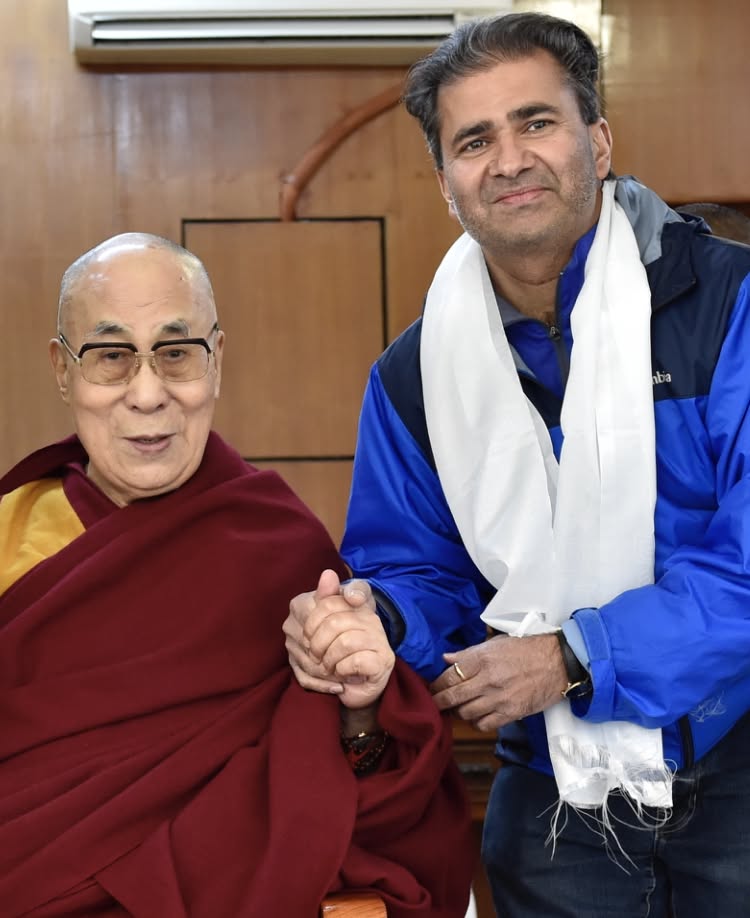
Meet Deepak Parashar: an electrical engineer–turned global energy leader who pivoted from power plants to inner power with elegant precision. After two decades building power projects in over 15 countries, a chance blessing from His Holiness Tenzin Gyatso, the Dalai Lama, and an encounter with an energy-transmitting Vietnam veteran set him on a 14-year, 38-country odyssey across disciplines, cultures, and leadership to understand the interconnected flow of energy as a basis for our existence. This research and insights reinforced by clergy and 100+ thought leaders from myriad professions led to his techno-spiritual book, Life—The Spiritual Essence, to inspire high-performing professionals to become Techno-Spiritual Billionaires in a high-stakes world.
In this interview with Lisa Urbanski at The Advisor with Stacey Chillemi, we explore the core principles of leadership through Deepak’s interactions—from scriptures to three legendary leaders—His Holiness Tenzin Gyatso, the Dalai Lama, WWII Nuremberg Special Trials Prosecutor Benjamin Ferencz, and Tuskegee Airman Colonel James Harvey III—who have materially influenced events of the past century.
Thank you so much for joining us! Our readers would love to get to know you a bit better. Can you tell us a bit about your backstory?
Absolutely. While leading major power-plant initiatives worldwide with cross-functional teams in 30-plus countries, facing relentless schedules, a different question kept arising: Is there more to life than this? Who is the “real me” versus the “perfect me,” and what is the delta between the two? That inquiry, along with the events mentioned above became the doorway to my approach to life, leadership, and eventually my 2024 book, Life—The Spiritual Essence. I vowed to include nothing I hadn’t personally validated, which is why the project began as notes and only later cohered into the book.
The outcomes encompass a strategic, holistic system for daily improvement; an integrated energy model explaining our shared existence; and the iterative structural science behind five major religions. Derived analyses include modern leadership philosophies rooted in ancient scriptures applied across diverse professions, and a spiritual travelogue that transcends boundaries by embracing profound topics such as the depths of human suffering, the heights of natural wonder, and the diverse realms of art and culture.
What did it feel like to be in the Dalai Lama’s energy?
Lisa, I often think—what Karma had I achieved earlier to meet this great sage not once but twice. Here is where his leadership and divinity are one, with his profound love in play sensed through a wave of pure energy flooding my being. And when I met him the second time, I spent two days in tears simply anticipating that meeting, and the experience deepened the humility that real leadership requires. With His Holiness, words become secondary; true dialogue happens in awareness.
From the scriptures, what timeless leadership qualities did you see?
The underlying current is the same. Amongst many qualities, Jesus Christ was revered for compassion, love, servanthood, humility, truthfulness, and forgiveness. Prophet Muhammad exemplified perseverance, patience, humility, justice, fairness, and leading by example. The Buddha taught ten perfections, including wisdom, energy, patience, determination, loving-kindness, and equanimity. Lord Krishna represented the warrior-diplomat, guru, prankster, whilst playing the flute of goodness, leading us out of cosmic confusion or confusion of the soul. All religions accept that this world is not our permanent home, there is suffering and bondage here, and the search is on to find solutions for eternal joy devoid of fear.
Let’s talk about Ben Ferencz, and how you connected.
In 2019, I stumbled upon a documentary titled Prosecuting Evil: The Extraordinary World of Ben Ferencz and was profoundly moved by how this World War II Nuremberg Special Trials Prosecutor echoed the architecture of my own holistic framework. Specifically, The Six Trigger Points, which is the holistic section in my five-part book, reflected in his life and language. That energetic framework is a one-page chart of 25 holistic actions designed for daily excellence in six mental quadrants that took seven years to build and seven more to test and refine. The resonance was so precise that I felt compelled to reach out to him.
And he called you back. What was that moment like?
These moments come seldom in a lifetime. In my case, it was enriched by his humility and my ability to translate holistic preparation to meet opportunity. We hear about books like Eckhart Tolle’s “The Power of Now” about living in the moment, but this was being fully alive with every cylinder firing. This was not a routine executive call asking for a 30 second elevator speech on some execution issue and related Profit & Loss assessment; this was the last surviving Nuremberg prosecutor on the line, a man who went through the 1944 Normandy landings, had crossed the Maginot Line, and entered Concentration Camps as they were being liberated to gather evidence on behalf of the Allies for the WWII Trials. The conversation ran for an hour, indeed, one of the greatest in my life.
What were your three biggest takeaways from Ferencz?
Let me preface this with what Lesley Stahl said to Mr. Ferencz during a 60 Minutes interview—that he was the sunniest man she had met despite all of his challenging experiences. She also mentioned that he was of small stature, and with it comes my first takeaway: his self-effacing humor. During our discussion, he quipped that the U.S. Airborne rejected him during WWII because, given his stature, he would “never land,” a lightness that carried him through the heaviest contexts. Second, humility: this global legend took the time to call an unknown engineer-author like myself, and that alone speaks volumes. Third, his devotion to a cause larger than self: he told me he had donated all his savings. Stacey, try to imagine just what personal boundaries of fear this great man faced—look fear directly in the eye and you discover how quickly most of it dissolves, leaving only the work that must be done.
How did his life embody sustained service?
Mr. Ferencz shared with me just how he developed his strategy to bring down Dr. Otto Ohlendorf of the Einsatzgruppen at the Nuremberg War Trials, translating the horrors he witnessed at the concentration camps into lifelong service for humanity. He went on to devote 70 years to a life of jurisprudence and helped materially influence the creation of the International Criminal Court at The Hague. Even at the age of 98, he kept a 16-hour-a-day routine, a testament to disciplined purpose. Encounters like this also remind us to seek and honor the blessings of elders, look at what they have done for us, and to be of service in return.
This great man was truly a non-traditional monk in his own right.
Your third exemplar?
Colonel James Harvey III of the Tuskegee Airmen stands as a living embodiment of disciplined excellence. These trailblazing pilots trained under an extraordinarily high bar during WWII, transforming adversity into opportunity. Their courage left such a mark that bomber crews progressively began to request the Tuskegee pilots to guard them on dangerous daily missions over enemy skies.
My own connection to Colonel Harvey felt almost destined. In September 2021, I had just removed a quote from another legendary Tuskegee Airman from my manuscript, unable to reach him for permission. Two weeks later, while on a business trip to Washington, D.C., I unexpectedly met Colonel Harvey himself. He not only shared his wisdom but also graciously allowed me to include his personal mantras in my book. That evening, my colleagues and I had the honor of sitting with him—then 98 years old—along with his family and friends.
What did Colonel Harvey impart?
This great “Warrior-Monk” said, “always strive to be the best—despite the odds,” and he lived that credo over 126 missions in Korea. For him, a problem was simply something to be worked through, and that is sheer focus. It reminded me of Special Forces, look how they are trained to operate until the very last moment without worrying about the results. He embodied what I call Dynamic Quietude—taking your great knowledge acquired and applying it with focus to operate in the most efficient manner. The Colonel also believed in a good belly laugh every day—a critical ability of a leader to inspire his or her team in all situations with cheerful dynamism. His presence reminded us that excellence is not only about achievement, but also about generosity, humility, and the willingness to pass the torch to others.
Across leaders and scriptures, what patterns kept repeating?
Lead from the front, speak less, and seek a stillness of the mind to effect excellence in the moment. Then three constants emerge: humility, humor, and dedicating your life to something larger than yourself, transcend the narrow “I” and move into the expansive “We.” When that happens, excellence and service are no longer in conflict; they become the same motion—this is where the greatest leaders transcend their domain of expertise to serve (and not dominate) humanity.
You often speak about the ego. How do you keep it in check?
Humor helps; I joke that praise makes me inflate and float off-screen during a podcast, so I keep my feet metaphorically chained to the floor. More seriously, standing before nature’s power—or history’s giants—reminds me daily how minuscule I am, and that realization collapses the delta between the “real me” and the “perfect me.” Ego falls in proportion to honesty, and honesty grows with perspective. That inner alignment is the beginning of real leadership as one processes positive change in a concerted and organized manner.
What role have mentors or gurus played in your path?
Lisa, I have been so fortunate to learn from great teachers across multiple beliefs. As an example, a premier swami in India quietly oversaw my book strategy for a decade, asking me to return with charts (the book has over 65 illustrations) and patiently refining my language and logic. When I confessed my so-called vices, including lifelong non-vegetarianism, he simply said to continue until compassion arose naturally. He was teaching the difference between the suppression of a desire and the natural progression of the mind. Months later, feeding a cow and seeing its gentleness by way of an eye-connect, the shift to vegetarianism happened in an instant—proof that real change is ripened, not forced. On a larger note, one who gains freedom over desires now revels in the highest echelons of the pure Self resident in each of us by way of the tranquility of the senses and the mind, and becomes free from the bonds of grief.
What did you observe about the Dalai Lama’s way of teaching?
His Holiness hides profound knowledge inside that bubbly humor, inviting hearts to open before minds analyze. Look at the training of these great monks—they can perceive us at multiple stages of our lives all at once and make minuscule adjustments that set an entire trajectory right. It is leadership as a subtle calibration rather than grand performance. Even recalling his blessings on the two occasions I was in his presence gives me goosebumps. The great teachers lead you into yourself, and not to them.
Why put the book out at all?
Because the journey kept revealing interconnected patterns I could not ignore—across science, spirituality, leadership, and everyday life. Life—The Spiritual Essence is meant to be shared as an act of service, not for personal gain. I started out saying that if even one reader discovered a clearer path through its pages, the effort was worthwhile. I have since received much feedback, and Lisa, the related joy is indescribable.
Every step of this work—whether through the book itself, podcasts, speaking invitations, or academic settings—carries the same intention: to serve. All proceeds are devoted to supporting underprivileged women and children, and it is in that spirit of giving that the message continues to grow.
Before we close, any advice… especially for our younger readers?
Take the time to truly discover yourself, and honor the one or two gifts that feel most deeply yours. Scattering your energy too widely can cloud the joy of mastery. Remember, leadership is not confined to titles or stages of life—it may be expressed through service, through stewardship, through creativity, or through the quiet guardianship of others. Whatever your season of life, when your craft is carried with humility, gratitude, and awareness, the corridors of knowledge and opportunity will reveal themselves. And when they do, step forward with courage and kindness.
How can our readers further follow your work online?
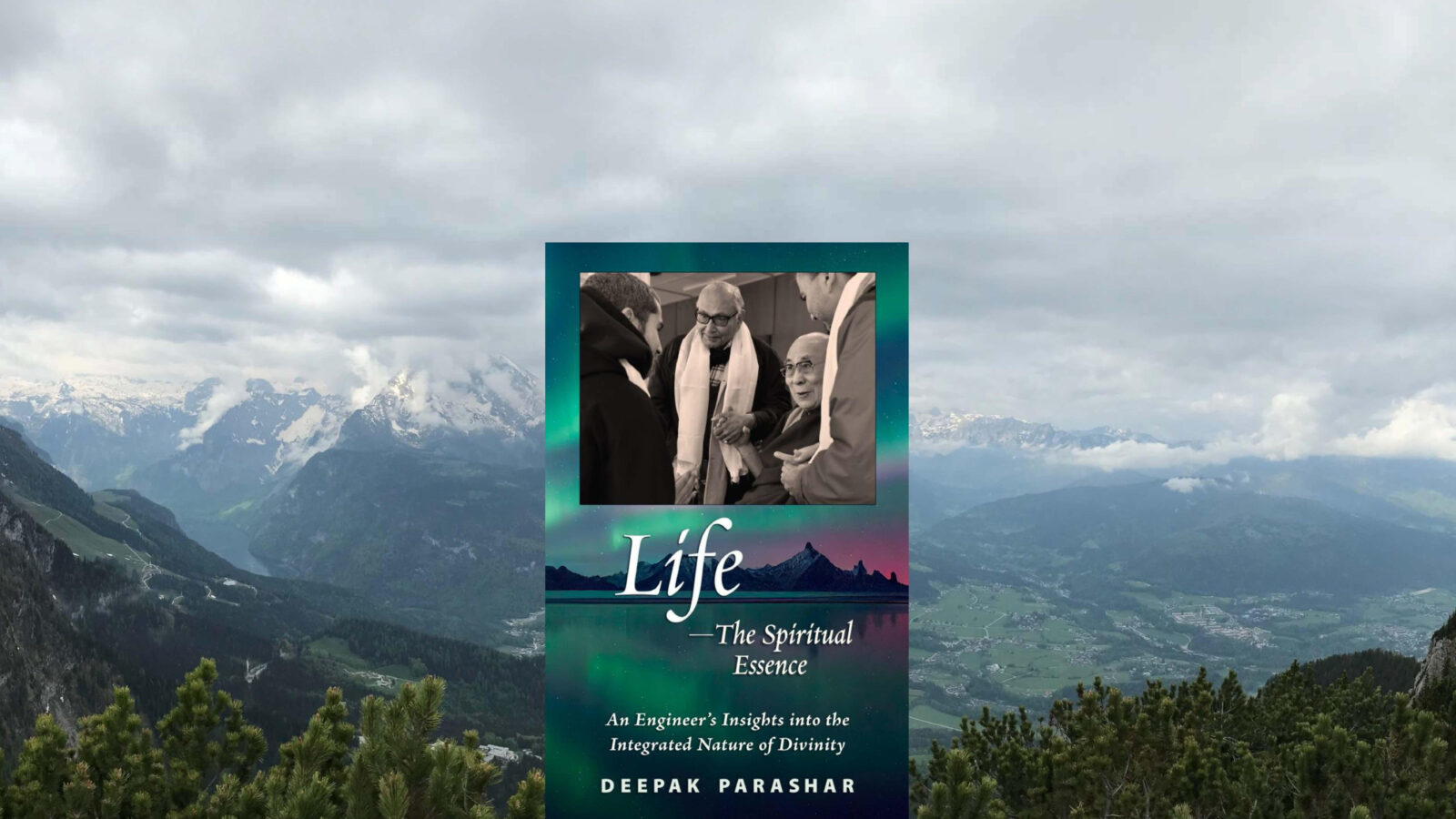
Life—The Spiritual Essence is available on Amazon and other platforms in both e-book and print, and serves as a daily, practical guide for aligning excellence with inner clarity. Though nearly 300 pages, it reflects 14 years of exploration and is encyclopedic in scope—inviting readers to pause, reflect, and absorb its progressive techno-spiritual roadmap of how energy interconnects all aspects of communal existence under the corporate auspices of divinity.
I also welcome thoughtful dialogue and reflections. You can connect with me on LinkedIn or Facebook, reach me directly by email at [email protected], or learn more about my work at https://www.parasharadvisory.com.
Thank you for sharing your journey and these powerful insights with our readers today.
Lisa, thank you for having me. It’s been an honor. Namaste to everyone reading, and may your path be lit with humility, humor, and purpose.