
There is a number that quietly stops wealthy families in their tracks. The average single-family office costs roughly three million dollars a year to operate, and once a family crosses a billion dollars in assets, that figure can climb past six and a half million before a single outside advisor, fund manager, or transaction fee is added on top. What tends to surprise people is not the size of the number. It is what the money is actually buying. As Susan Lindeque explains, close to ninety percent of that annual cost is simply administration.
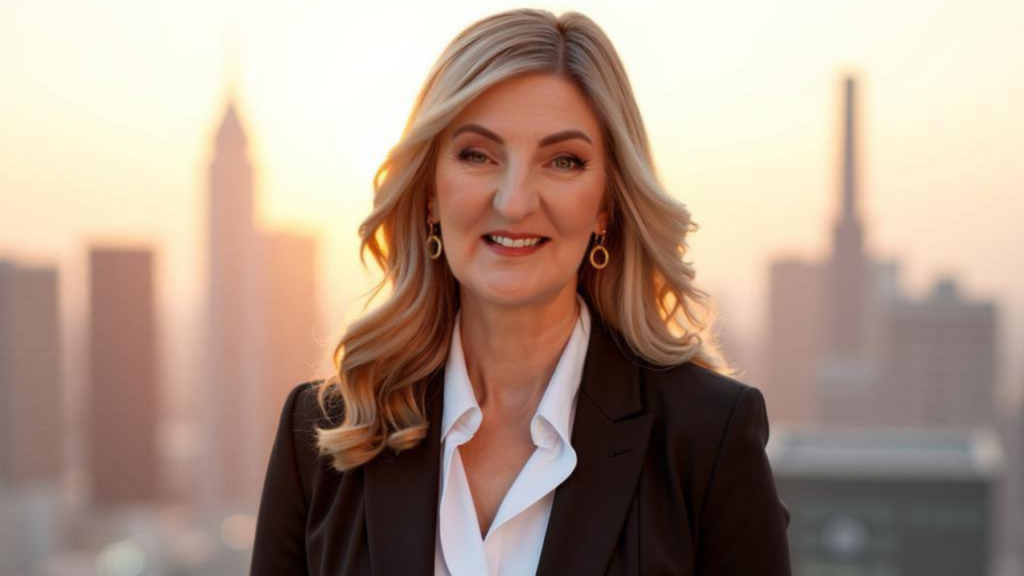
Susan Lindeque is the Founder and CEO of Avestix Group, a women-led and women-owned fund management firm built around alternative assets. She is a Chartered Accountant and the Chief Investment Officer of her own single-family office, and over thirty-five years, she has worked across corporate finance, technology, commercial real estate, venture capital, and public markets. She has personally raised, invested, financed, or managed more than a billion dollars in capital across more than one hundred private acquisitions. That history matters here because Lindeque is not describing the family office from the outside. She has lived inside the structure, paid the costs herself, and spent years working out which of those costs are worth paying.
Why So Much of the Cost Is Simply Administration
The first thing to understand about a family office is that most of what it spends is not buying investment brilliance. It is buying record-keeping. Lindeque is direct about this. By her estimate, roughly ninety percent of the annual cost goes to administration, which means consolidating reports, managing tax affairs, and keeping up with a heavy load of compliance and regulation. Some of the software platforms that handle this work, she points out, will charge one or two percent of a family’s assets each year just to manage the data. On a portfolio worth hundreds of millions of dollars, that single line item alone becomes enormous.
The lesson Lindeque draws from this is not that administration is unnecessary. It is that families rarely separate the cost of running the machine from the value the machine produces. A high number is not automatically a wise number. Before assuming the expense is simply the price of doing business at this level, she encourages families to ask a plainer question: what is the true cost of running this, and what am I actually receiving in return? Until you can answer both halves, you cannot tell whether you are paying for results or paying for habit.
When the Work Crossed the Complication Line
Lindeque has a phrase for what has happened to wealthy families over the past decade or so. She says they have crossed the complication line. For most of modern history, the traditional ultra-high-net-worth family built its wealth in something concrete, such as real estate, manufacturing, or a single operating business, and the work of managing it was relatively contained. Beginning around the financial crisis and the early years of Bitcoin, that began to change quickly.
Today, Lindeque explains, the most active families are no longer content to hand their capital to a fund manager and wait. They want to make direct investments and to be part of the decision themselves, which pulls them into alternative assets, meaning almost anything outside of public equities and bonds. That includes venture capital, real estate, energy, data centers, and more. The problem is that no single person can credibly cover all of it. A family that wants to invest directly across these areas may need four or five different specialists, each with deep expertise in a different field. Because that talent is scarce, families end up competing against one another for the same small pool of people, which drives compensation higher. And even when a family hires well, Lindeque notes that retention becomes its own challenge, because skilled professionals often grow restless after several years and leave to start their own firms, taking their knowledge with them.
The Four Costs That Never Show Up on the Balance Sheet
The most expensive risks inside a family office are the ones that never appear as a line item. In her conversation, Lindeque worked through four of them. The first is key person dependency, which she considers the most dangerous of all. When one individual, often the chief investment officer or chief financial officer, holds all the knowledge about the structures, the tax strategy, and the investments, the family becomes deeply dependent on that single person. If that person leaves, or becomes ill, or passes away, it creates a vacuum that the rest of the organization cannot easily fill.
The second cost is advisor duplication. Because no one person holds every area of expertise, families often keep internal staff and also pay external consultants, and the two frequently overlap. That overlap quietly doubles costs and sits on top of the administrative burden the family is already carrying. The third is underutilized and fragmented infrastructure, where an operation built for a much larger fortune is still running at full weight even as it is managed, in Lindeque’s words, by just a handful of people. The fourth is governance without accountability, where the office simply continues because it has always continued. To counter that drift, Lindeque begins every engagement by asking families what they truly stand for, rather than starting with the spreadsheets.
The Question That Comes Before Any Structure
When a family asks Lindeque to redesign their office, she does not start with tax structures or org charts. She starts with a single question: what does this family want to stand for, and what do they want to be remembered for? Her answer, distilled to one word, is legacy. Only once a family can articulate that clearly, stripping away everything that does not belong to it, can they begin to decide what truly requires their involvement and what can be handed to someone else.
This is also where Lindeque locates the weakest link in most family offices, which is succession planning. Strong governance, she explains, is not only about legal structures and tax efficiency. It is about preparing the next generation, and that work is genuinely hard. Families struggle with basic questions, such as when a child should first take a seat at the table and how to talk across generations about unfamiliar territory like digital currency. She shared her own example of a daughter who urged her to consider Bitcoin years ago. The advice went unheeded at the time, but the lesson stayed with her, and now the younger generation has a real voice in the conversation rather than being dismissed.
“There’s just one word in my mind, and that’s legacy.”
— Susan Lindeque, Founder and CEO of Avestix Group
Building a Lean Core and Borrowing Institutional Strength
The highest performing families, in Lindeque’s experience, are not the ones spending the most. They are the ones with the clearest model for what to keep close and what to hand off. Rather than trying to construct an entire institution under one roof, they build a lean core focused on governance and decision making, then partner with institutional-grade firms for the heavy operational work. This is where she sees real change arriving, because artificial intelligence is already automating much of the back office, including reporting and tax workflows, which she expects to cut administrative costs significantly and free families to focus on what only they can decide.
Working with institutional-grade partners also solves problems that families rarely think about until it is too late. Lindeque uses digital assets as a clear example. A family that bought cryptocurrency on a consumer platform may have no plan for what happens to those holdings if something happens to the person who controls them, which is one reason so much Bitcoin is simply considered lost. Knowing which partners serve as proper custodians and ensuring the next generation can actually reach the assets is a form of protection most families overlook. The deeper payoff, she says, is control. She compares it to a doctor who spends only a few minutes examining a patient and the rest of the visit filling out paperwork. Remove that burden, and the doctor can finally focus on the patient. The same is true for a family. When the administrative weight is lifted, what they gain is not less control but more, along with the peace of mind that comes from knowing the structure underneath them is sound.
Start With What You Stand For
The most useful idea in Lindeque’s approach is also the simplest. A family office is not measured by what it costs. It is measured by what it makes possible. The three-million-dollar number that opens this conversation is only alarming if the family cannot say what that money is protecting and why.
So the action to carry forward is not to slash the budget or fire the staff. It is to sit down and answer Lindeque’s first question honestly. What does this family stand for, and what do we want to leave behind? Once that is clear, every other decision, from what to keep in-house to what to outsource, becomes far easier to make. As Lindeque reminds us, money is only the vehicle. The legacy is the destination.
That clarity is what separates a family office that runs like a real institution from one that has simply become an expensive habit, and few people are better equipped to tell the difference than Susan Lindeque.