

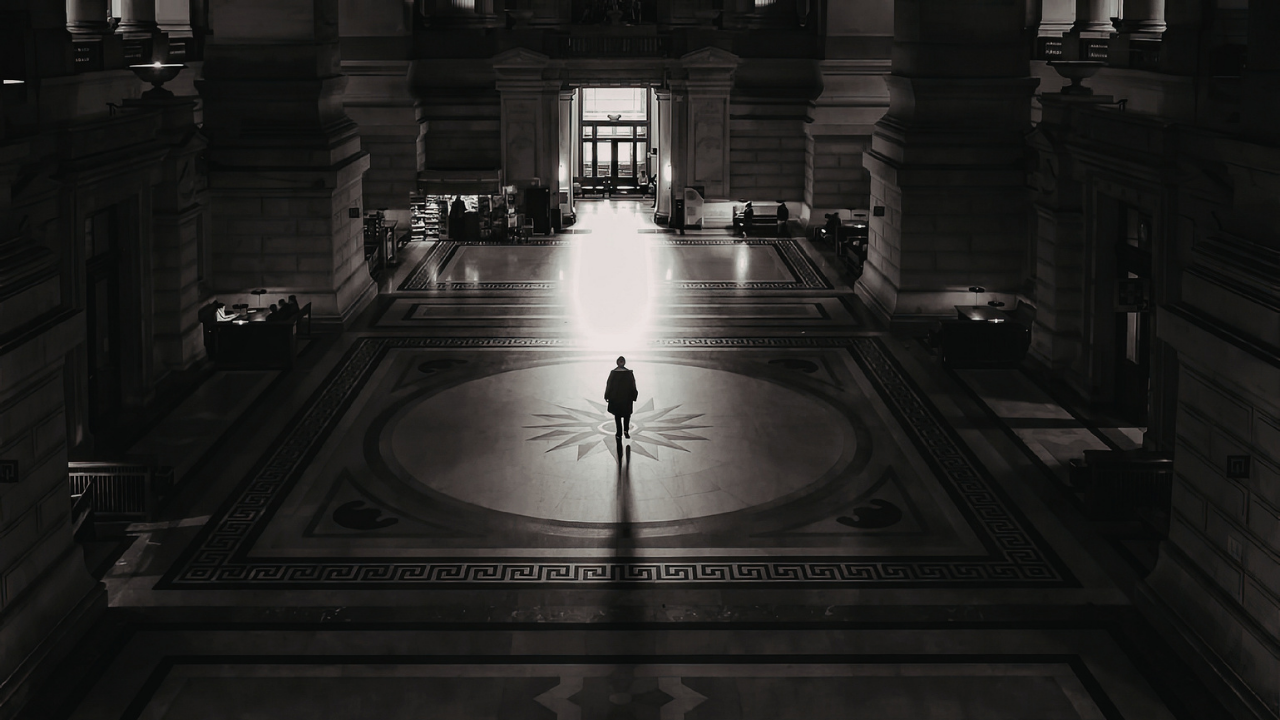
“The truth on its face is almost never enough. You have to present other facts that make what that witness said seem true — even more true.”
— Gregg Owen, former Cook County prosecutor
A former Chicago prosecutor’s hard-won lessons on clear thinking, resilience, and the art of being heard
By the time most people encounter a high-stakes moment — a difficult conversation, a professional crisis, a personal betrayal — they do what feels natural: they react. They talk. They defend. And almost every time, it makes things worse.
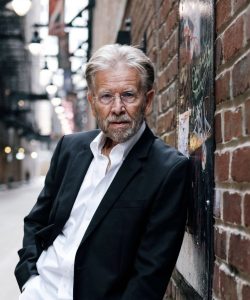
Gregg Owen spent decades inside one of America’s most pressurized arenas — the courtrooms of Cook County, Chicago — handling some of the city’s most complex murder cases at a time when the system was rife with corruption and the odds were frequently stacked against justice. Before that, he toured the country as a musician, sharing stages with The Doors, Janis Joplin, and Cream. His life has been a masterclass in reinvention, and the lessons he carries from both worlds cut to the heart of how humans make decisions under pressure, navigate unfairness, and find clarity when everything feels overwhelming.
What he learned, case by case and stage by stage, applies far beyond the courtroom.
The Truth Needs a Team
One of the most counterintuitive insights from Owen’s career is deceptively simple: telling the truth is not enough.
“You have to corroborate the truth,” he explains. “Somebody says, ‘I was there and I saw this.’ Okay. But what is the defense going to do? They’re going to make it seem like maybe he was the killer. So even though he’s telling the truth, how do you establish in the minds of a juror that the person you have is telling the truth?”
This principle extends well beyond legal proceedings. Psychologists call this the truth bias problem — research consistently shows that people judge the credibility of a statement not only by its content, but by the surrounding context, the demeanor of the speaker, and the supporting evidence around it. In a landmark study published in Law and Human Behavior, jurors were found to be heavily influenced by corroborating detail rather than the emotional conviction of a witness alone.
In everyday life, this means that when you have an important truth to communicate — to a manager, a partner, a colleague — raw assertion rarely lands. You need context. You need supporting evidence. You need to understand your audience.
Actionable takeaway: Before delivering an important message, ask yourself: What else can I bring to support this? Who else can speak to it? What context makes this easier to believe? Truth without scaffolding often collapses under scrutiny.
The Choreography of Communication
Owen’s mentor, a skilled senior prosecutor, taught him something he calls the “choreography of the courtroom” — the idea that there are no accidents in effective communication. Every positioning, every pause, every word choice is intentional.
One example stands out: when questioning a witness he wanted the jury to trust, Owen would position himself physically so that the witness, while looking at him, was actually making eye contact with the jury. When cross-examining an opposing witness, he’d move to the center of the room — pulling that witness’s gaze away from the jury.
“The jury tends to think, why aren’t they looking at us now?” he notes. “They start wondering, is the person trying to hide something?”
This is supported by decades of communication research. Studies in nonverbal behavior — including work by Albert Mehrabian and later researchers in social psychology — confirm that eye contact, body orientation, and physical proximity profoundly affect how messages are received and how trust is established. We are wired to read spatial cues as signals of confidence, honesty, and connection.
Actionable takeaway: Think of your important conversations as choreography. Where are you standing or sitting? Are you physically oriented toward the person whose trust you’re building? Are you removing distractions that pull attention away from connection? Intentionality in these small details changes outcomes.
Silence Is a Strategy, Not a Weakness
One of Owen’s most consistent pieces of advice — drawn from both his time coaching witnesses and his personal philosophy — is to resist the impulse to fill silence with words.
“When someone gets arrested, what’s the first thing they do? They want to talk their way out of a problem. Never works,” he says. “Don’t say anything right away. Give your brain time to comprehend what you’re facing.”
He applied this principle even to witness preparation, instructing people on the stand to count silently — “one thousand one, one thousand two” — before answering any question under cross-examination. That two-second pause accomplished several things simultaneously: it gave attorneys time to object, it allowed the witness to think more clearly, and it projected composure rather than anxiety.
Neuroscience backs this up. When we perceive a threat — social, physical, or professional — the brain’s amygdala activates the fight-or-flight response, impairing the prefrontal cortex’s ability to reason carefully. The brief act of pausing before responding literally gives the rational brain time to re-engage. Research on emotional regulation, including work by Stanford psychologist James Gross, identifies this “cognitive reappraisal” pause as one of the most effective tools for preventing reactive, regretted decisions.
Actionable takeaway: Build a two-second rule into high-stakes conversations. Before responding to criticism, an accusation, or a provocative statement, pause. Breathe. The moment of silence you’re afraid will make you look weak is almost always the moment that makes you look strong.
Get Behind Someone Else’s Eyes
Perhaps the most transformative habit Owen developed over a lifetime of high-pressure work is what he describes as seeing the world from behind someone else’s eyes.
“You have to see it from their point of view. You have to be willing to accept how they think, like it or not. And that’s how you analyze the resolution of this, whatever it may be.”
This is not a passive exercise in empathy — it’s an active analytical strategy. When Owen faced hostile witnesses, corrupt systems, or grieving families, he consistently asked: What does this look like from where they are standing? That shift in perspective didn’t just make him more compassionate — it made him more effective.
This aligns closely with what psychologists call “perspective-taking,” a cognitive skill distinct from empathy alone. Research published in Psychological Science has found that people who engage in deliberate perspective-taking make better predictions about others’ behavior, negotiate more successfully, and are perceived as more trustworthy. It is also a cornerstone of the Harvard Negotiation Project’s interest-based approach, which advises separating people from problems and understanding the interests underlying stated positions.
Actionable takeaway: The next time you’re in conflict or trying to persuade someone, spend five minutes writing out the situation from their point of view — their pressures, their fears, their goals. Not to agree with them, but to understand them. The solution often becomes visible from that vantage point.
Intuition Is Information — But It Needs Quiet to Speak
Owen credits much of his life’s pivotal decisions — including a moment standing in front of a bulletin board that redirected his entire career — to listening to something internal he describes as a guiding instinct.
“I’m a believer, and I believe there’s a spirit inside of me that tells me 99.9% of the time the thing to do — may not be something I want to do, but it’s never wrong.”
Whether framed spiritually or psychologically, this maps closely to what researchers like Gary Klein have studied extensively as naturalistic decision-making — the way experienced professionals develop a rapid pattern-recognition system built on years of accumulated knowledge. What we call “gut feeling” is often the brain processing complex information below the threshold of conscious awareness and surfacing it as a felt sense.
The problem, Owen notes, is noise. “There’s too much noise. Got music playing, people talking. But the point is to be silent, to just be in your car and let things come to you.”
The research on this is substantial: studies on mindfulness and decision-making show that even brief periods of silence and stillness improve access to intuitive insight, reduce cognitive overload, and increase decisiveness. The challenge in modern life is simply creating the conditions for that quiet to exist.
Actionable takeaway: Schedule unstructured, quiet time — even ten minutes daily — without podcasts, screens, or input. Treat it as information-gathering, not time-wasting. The decisions you’ve been circling often become clearer in that space.
Life Isn’t Fair — And That’s Not the End of the Story
Owen is candid about something many people resist accepting: life is not fair. After years of watching victims who deserved none of what happened to them, and watching corrupt systems protect the powerful, he arrived at a perspective that is neither naive nor nihilistic.
“It’s not fair at all. But you have to understand that’s how it is — and you have to make the best of it for yourself, regardless. The system of justice should be fair, and you should fight hard to make sure it is.”
This distinction — between accepting unfairness as reality and tolerating it as permanent — is psychologically crucial. Research on post-traumatic growth, pioneered by psychologists Richard Tedeschi and Lawrence Calhoun, finds that the people who navigate adversity most successfully are those who can hold two truths at once: that something painful and unjust happened, and that they retain agency in what comes next. It is not the absence of hardship that builds resilience — it is the refusal to be defined by it.
Actionable takeaway: When facing something genuinely unjust, allow yourself to name it clearly. Then ask: what, within this situation, do I actually control? What voice do I have? Acting within your zone of agency — however small — is the difference between adaptation and paralysis.
A Final Reflection
The arc of Gregg Owen’s life — from bandstage to courtroom to authorship — is less about career pivots than it is about a consistent internal orientation: toward truth, toward preparation, toward other people’s humanity, and toward the quiet voice that knows what the right thing is, even when it’s hard.
The strategies he developed weren’t born in a seminar room. They were forged in the aftermath of violence, in front of grieving parents, in corrupt systems, and on stages in front of thousands of people. And yet every one of them is available to anyone willing to practice.
Slow down before you speak. Build evidence around your truth. See through other eyes. Get quiet enough to hear yourself. And when something is unfair — say so, then act anyway.
Justice, in all its forms, rarely arrives on its own. It has to be built, case by case.
The perspectives in this article are drawn from insights shared by Gregg Owen and are intended for educational purposes only. Readers are encouraged to explore additional resources in psychology, communication, and resilience for further learning.