

There is a pattern so common among wealthy families that it has become a saying: the first generation builds it, the second maintains it, and the third loses it. Fortunes built over decades, sometimes over lifetimes of grinding work and sacrifice, gone before the grandchildren finish school. It happens to families with every advantage available to them: the lawyers, the accountants, the estate planners, the bankers. And it keeps happening. Right now, an estimated $86 trillion is in the process of transferring from one generation to the next, the largest wealth transfer in human history. How much of it will survive to the fourth generation is, for most families, genuinely unknown.
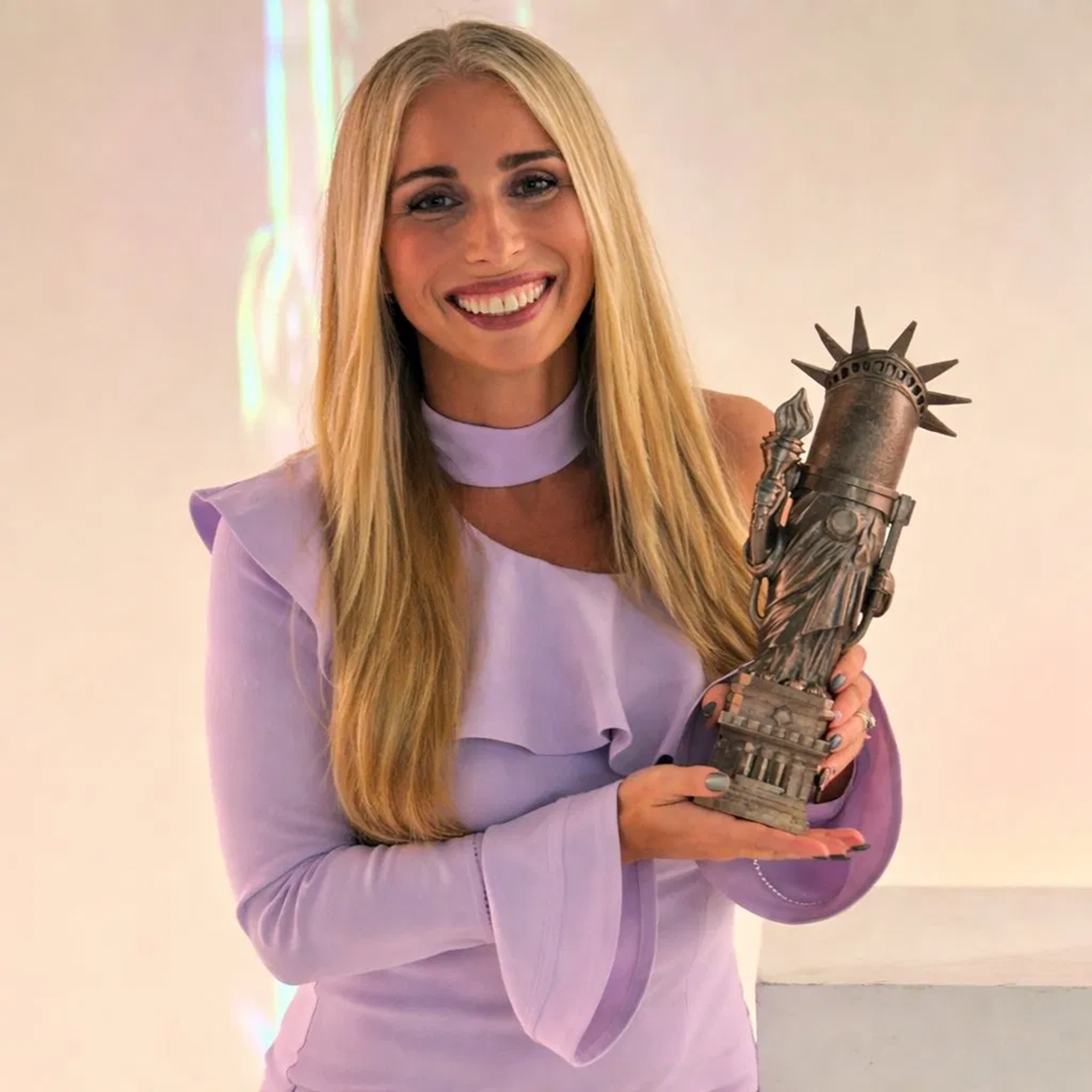
Susan Lindeque has spent her career trying to change those odds. The founder of Avestix, a chartered accountant with a CFO background, Lindeque spent 14 years as the chief investment officer of a single family office, managing one family’s wealth across three generations and multiple countries. She has watched the pattern play out up close, from the inside, and she understands exactly where the cracks form. The answers she has arrived at are not about financial instruments or tax structures, though those matter. They are about something harder and more fundamental: the conversations families keep avoiding until it is too late.
Why the Third Generation Is Where the Money Disappears
The third-generation loss pattern is so consistent that it has its own name in wealth management circles. But understanding why it happens requires looking past the obvious explanations. It is not simply about the heirs being less motivated or less capable than the founder. The problem runs deeper than that.
Lindeque points to three interlocking failures. The first is governance. Most families that build significant wealth do not put formal governance structures in place around that wealth. There are no clear guidelines for how decisions get made, who has authority over what, or how the wealth will be managed when the founder is no longer there to make those calls. Without a structure, the money sits exposed to whatever family dynamics happen to emerge when a crisis arrives.
The second failure is succession planning. Lindeque describes sitting down with a first-generation family member at a recent gathering who came specifically to learn from other families, motivated entirely by fear of becoming a cautionary tale. That fear is well-founded. When there is no documented succession plan, the question of who inherits what and under what conditions gets answered in the worst possible way: in the middle of grief, under legal pressure, with family members who may not have spoken honestly with each other in years.
The third failure is the one most often overlooked entirely. It is the transfer of values. The founding generation built the wealth through a particular kind of discipline, work ethic, and orientation toward money that was absorbed through direct experience. That orientation does not transfer automatically. “I always start to say, what is your why?” Lindeque explains. “Why do you want to have generational wealth?” Without a clear answer to that question, communicated deliberately across generations, the wealth becomes an inheritance with no instruction manual attached.
The $86 Trillion Transfer and What It Actually Means
The scale of what is happening right now in wealth transfer is difficult to absorb. Baby boomers accumulated enormous wealth over a sustained bull market that ran, with one significant interruption, for the better part of 15 years. Much of that wealth has been sitting in illiquid form: in family homes, in private businesses, in real estate portfolios, held by people who are now in their 80s and 90s. The transfer has begun, and it will accelerate significantly over the next 15 to 20 years.
Lindeque notes that $30 trillion of that total is expected to transfer specifically to women, as widows, as inheritors, and as earners in their own right. She watched this happen in microcosm at a recent breakfast, sitting near a couple who held significant digital currency holdings. The conversation turned to what would happen to those holdings if the primary holder passed away suddenly. Did the other person know where the seed phrases were stored? Did anyone? For digital assets held outside institutional custodianship, losing those access credentials means losing the assets permanently, with no recourse whatsoever.
What makes this transfer period particularly complicated, Lindeque explains, is that the inheriting generation does not share the same relationship to money, risk, or investment that the founding generation had. The younger generation grew up in a prolonged bull market. They have not experienced a 2008-style financial crisis, the kind that wiped out carefully built portfolios in a matter of months. Their appetite for digital assets, AI-adjacent investments, and sectors like quantum computing and cybersecurity reflects a worldview shaped by an era of rapid technological growth, not one defined by financial catastrophe. Neither perspective is wrong. But the gap between them, when left unaddressed, is where family wealth goes to fracture.
What the Families Who Keep Their Wealth Actually Do
The families that successfully preserve wealth across generations are not necessarily the ones with the most sophisticated financial structures, though structure matters. What separates them, in Lindeque’s 14 years of direct observation, comes down to three consistent practices.
The first is multi-jurisdictional thinking. Wealthy families who protect their assets do not keep everything in one country or one tax environment. They hold assets across multiple jurisdictions, sometimes in Singapore, sometimes in the Cayman Islands, sometimes in Puerto Rico or British Virgin Islands, each chosen for its particular combination of tax treatment and legal protections. They do not make these decisions once and leave them alone. They revisit them as laws change, as family circumstances shift, and as new opportunities open.
The second practice is co-investment. Lindeque observes that wealthy families are increasingly moving toward investing alongside other trusted families rather than each managing their own isolated portfolio. The advantage is not just the pooled capital. It is the pooled judgment. Families with patient money, meaning capital that is genuinely their own and not tied to a fund’s performance timeline, can evaluate opportunities with a discipline and a horizon that institutional investors often cannot match.
The third and most important practice is the one that cannot be delegated to a financial advisor. Lindeque is direct about it. The real secret is the values. What is the mission of the family? What is the vision? She advocates for something as structured as a vision statement for the family, arrived at by bringing all generations around the same table and asking what they actually want to build together. That includes the women in the family, who have historically been excluded from financial conversations even within their own households, and the younger generation, who bring a different perspective that deserves to be heard rather than overruled.
The Conversation That Costs More Than Any Bad Investment
If there is a single through-line in Lindeque’s work with families, it is this: the most expensive thing most wealthy families do is avoid a conversation.
The avoidance is understandable. Founders of different generations grew up with different cultural norms around money. For many baby boomers, financial matters were private, handled by the patriarch, and not discussed openly even with spouses or children. That norm is changing, but it changes slowly, and it often does not change fast enough for the wealth transfer to go smoothly.
The cost of the avoidance is incalculable, Lindeque says, and she means that almost literally. When there is no clear succession plan and no established communication structure, and the head of the family passes away without leaving clear guidelines, what follows is frequently family conflict. Siblings who disagree about what to do with the business. Spouses who never knew where the assets were held. Adult children who discover for the first time that their assumptions about inheritance were wrong. “A lot of the times it’s about money,” Lindeque says. “Money is a driving force that splits families.” And when the family splits, the wealth almost always follows.
The solution is not a single conversation. It is a culture of ongoing communication, built early and maintained consistently. Lindeque describes a practical first step that any family can take: bring everyone to the table, show them what the wealth looks like, explain the structures, and give each family member access to information appropriate to their level of involvement. Start there, even if the conversation is incomplete. “The sooner you can have that conversation with the family around the table, even if it’s just a starting point,” she explains, “just having [an] open conversation around that” begins to close the gap.
“All the money in the world doesn’t matter because then there’s no purpose. And also what is the purpose behind that? What do we want to create? It comes down to what is your legacy. What do you truly want to leave behind for your family?”
Susan Lindeque, Founder, Avestix
Bridging the Gap Between the Generation That Built It and the One Inheriting It
One of the most consistent fault lines Lindeque observes in family wealth is not between the first and third generation. It is between the first and second. The founder built the business through physical effort, negotiation, direct experience, and a tolerance for hardship that came from having no other option. The inheriting generation grew up with options. They want flexibility. They want to be part of a digital economy, not running a factory or selling real estate door to door. They view risk through a completely different lens, one shaped by an era of rapid growth rather than hard experience with what a genuine financial downturn actually feels like.
Lindeque does not see this as a problem to be solved by one side capitulating to the other. She describes it as two different poles that need to be brought closer through listening. There is genuine wisdom on both sides. The older generation has business instincts, negotiation experience, and a real understanding of what it means to build something from nothing that cannot be replicated from books or a screen. The younger generation has a native fluency with the technologies and markets that will define the next several decades of wealth creation. A family that can hold both of those things simultaneously, and that creates a structure where both generations feel heard, is a family that is actually positioned to keep what has been built.
That structure, Lindeque is careful to note, is not something any single advisor can provide. It requires the family itself to do the work of articulating its own vision and creating its own governance. What a trusted community can do is provide the environment in which that work feels safe enough to happen honestly.
The Question That Changes Everything
There is a question Susan Lindeque returns to in every conversation she has with families about wealth and legacy. It is not about asset allocation or tax efficiency or exit strategies. It is simpler and harder than any of those things.
What is your why?
The families who keep their wealth across generations are not necessarily the ones with the best advisors or the most sophisticated structures, though those help. They are the ones who have answered that question honestly and have communicated the answer deliberately to everyone who will inherit what they have built. Success, Lindeque is clear, is not always measured in money. “Sometimes success is what impact, what social impact you can make on society,” she says. “If you can take a village of children that hasn’t got education and you can give them the education, there’s no money in the world that will be able to measure that.”
What Lindeque has found, across 14 years of working inside one family’s wealth and now building a community for many others, is that the families who survive the third-generation transition are the ones who have a shared answer to that question. Not necessarily the same answer for every member, but a shared language around what the wealth is for and what it is meant to do in the world. That shared language is what governance documents and trust structures are trying to formalize. But the language has to exist first.
The most practical thing any family building wealth can do, regardless of the size of the portfolio, is sit down together, sooner rather than later, and begin that conversation. Not to have all the answers. Just to start. Susan Lindeque has spent her career showing families what is possible when they do. Lindeque has spent her career showing families what is possible when they do.
