


By Amina Zamani
Where My Story Begins: War, Womanhood, and the Will to Rise
I was born in the shadows of Afghanistan’s conflict, not just into a legacy of war, but into a culture steeped in patriarchy and misogyny – where women were conditioned to remain silent. My family’s journey out of that world, through the trauma of forced displacement and survival, came at a cost. The intergenerational anxiety and unprocessed pain shaped my earliest reality.

My mother married a man she believed would be a partner, a protector, a loving father. Instead, she was met with abandonment, betrayal, and violence. For sixteen long years, she endured oppression behind closed doors—raising four children while navigating the wreckage of a promise broken.
But she never stopped. She kept going, not because she was unafraid, but because she refused to let fear win. Her resilience wasn’t poetic—it was primal. It was survival. And it became the thread I clung to when everything else in me wanted to collapse.
Personal Transformation Through Neurolinguistics
My path into neurolinguistics wasn’t curiosity—it was desperation. I was drowning in anxiety, depression, and the weight of inherited silence. I needed a way out.
I was a sharp kid growing up. I asked questions, had ideas, and felt things deeply. But I learned quickly that being smart or outspoken wasn’t how you got love. My father would interrupt me constantly and say, “No, no, no. You don’t know—you’re just a little girl. Let me teach you.” And so I learned to dim. To disconnect from my intelligence. I internalized this idea that in order to feel safe and connected to him, I had to play small. Somewhere deep inside, I made a decision: I’m just a stupid little girl.
That belief followed me like a ghost.
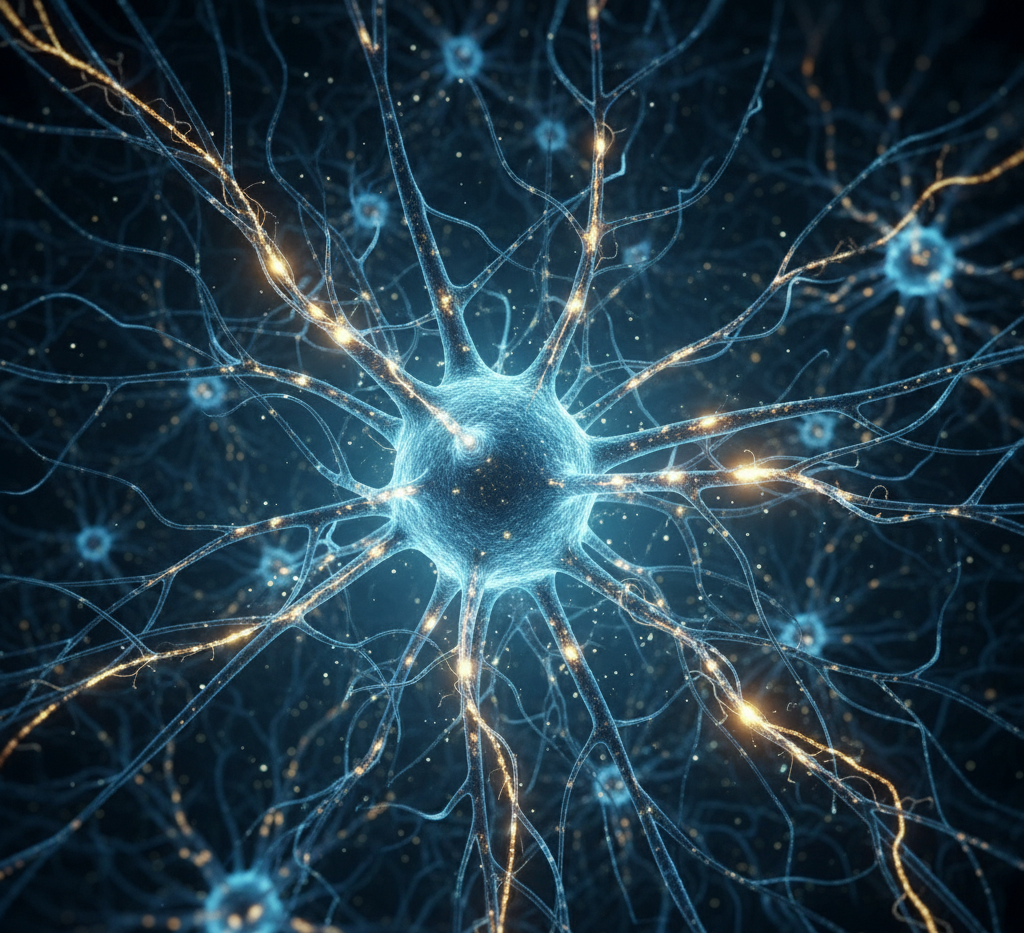
Even in my twenties—after studying abroad, graduating with an A GPA, getting into a prestigious grad school, doing everything “right”—I still didn’t feel smart enough. Still didn’t feel good enough. Until one day, in the midst of my training in neurolinguistics with Kris and Tim Hallbom, I uncovered that childhood belief in a session. I remember the moment with my whole body: my chest was tight, my heart started pounding, and my hands were trembling. I went through a four-step neuroplasticity process to rewire that belief—and something inside of me cracked open.
It was as if I’d been crawling under a table my whole life, trying to stand tall in a space too small. And in that moment, I finally stood up straight.
That was when my life began to shift—not in theory, but in practice. I began to understand that my limitations weren’t personal failings—they were internalized cultural messages, etched into my nervous system like grooves in stone. I had carried powerlessness in my DNA, even while excelling on the surface.
By age seven, I had left Pakistan for America, but the cultural imprint didn’t disappear with a new zip code. I was raised with fear around visibility and shame around expression. By 16, I was doing yoga just to survive. By 19, I was in India chasing healing. But it wasn’t until I began working with the subconscious—through neurolinguistics and neuroplasticity—that the transformation became real.
I realized that my resistance to change wasn’t laziness—it was loyalty. A subconscious contract to stay tethered to my family’s pain and the unspoken rule: Don’t outshine. Don’t surpass. Don’t rise too far.
But once I started listening to my own beliefs—really tracing where they came from—the doors began to open. My pain wasn’t just mine. It was a mirror of a system that taught women to be small, silent, and grateful to survive. And once I realized I could change my brain, I asked myself the question that changed everything:
If we can rewire our brains, what else is possible?
That question became the blueprint for everything that followed. Because healing isn’t only self-work — it’s system-work. The same wiring that keeps a woman silent in her family keeps her silent in the economy. The brain’s patterns and the world’s patterns mirror one another. And that’s why leaders like Jacqueline Novogratz matter — they remind us that reprogramming belief, whether personal or political, is where real transformation begins.
My Aunt and Mother: Blueprints of Defiance
My mother’s decision to divorce my father after he moved to the U.S. was radical – especially in Afghan culture. She walked away from a man, a marriage, and a narrative. She had no financial support, didn’t know the language, and yet she gave us the greatest gift: freedom. She put our education first and redefined what strength looked like.
And my aunt? She was fire. A medical student in 1930s Afghanistan who refused to wear a headscarf – a simple act that landed her under house arrest for five years. When she was released, she went to Russia to finish her education and devoted her life to helping other women rise. Her act of defiance was both cultural and neurological. She believed she had the right to lead – and that belief rewired not just her brain, but the trajectory of our family.
The Neuroscience of Empowerment
Here’s what I’ve learned through the science of neuroplasticity:
Belief changes the brain.
And belief can be inherited – just like trauma.
Empowering beliefs, like the ones my mom and aunt carried, aren’t fluff. They’re neurological frameworks that create resilience, focus, and possibility. When we act from that belief, we trigger neural circuits for hope, motivation, and action. We literally fire new patterns into being.
It’s why helping others matters. Altruism, purpose, and courage aren’t just spiritual concepts—they’re biological catalysts for transformation.
Empowered belief is mental health. It’s what helps us override suicidal programming, cultural despair, and learned helplessness.
And I’m living proof.
Jacqueline Novogratz: Impact as a Pathway to Healing
If belief can rewire the brain—and I know it can—then the people who hold belief as a practice, as a discipline, as a framework for leadership, become neurological architects. They don’t just create hope. They create change.

When I first encountered her work, something in me lit up. Not in a surface-level, “here’s another amazing woman changing the world” kind of way. But in that rare soul-shifting way where someone’s presence, their clarity, and their belief make your own nervous system recalibrate.
When I met Jacqueline Novogratz in Dubai, it felt like encountering the external architecture of what I had been rebuilding internally — dignity, belief, and the nervous system of trust. Our conversation about her vision for people and for dignity stayed with me; it didn’t just impress me, it recalibrated me. It became the seed of the book I’m writing now.
As I learned more about her, I had a moment of realization that stopped me in my tracks:
Her work isn’t charity. It’s not even just leadership.
It’s architecture.
She builds systems—blueprints for a world where dignity isn’t optional. Where empowerment isn’t just discussed, it’s engineered. Jacqueline doesn’t just believe in people. She invests in them. Not just with capital, but with rigor, trust, and radical empathy. Her organization, Acumen, is what I now call a model of evidence-based empathy—funding real change, creating real returns, and redefining capital through justice.
From a neurobiological lens, belief is circuitry — a living pattern that shapes how we perceive worth. What Jacqueline and Acumen have done is rewire the global circuitry of dignity. Where my work maps emotional synapses, hers maps economic ones. Both begin in the same place: the human brain’s capacity to believe in possibility.
This shook me—not just professionally, but neurologically.
Because when you come from a lineage of cultural trauma, especially as a woman from a historically silenced background, belief doesn’t come easily. It’s not just something you learn—it’s something you fight for. Not just externally, but internally.
And yet—belief is everything.
Jacqueline embodies this. Her work, her presence, her writing—it all radiates from a core belief that people are not broken, but brilliant. Not after they’ve proven themselves, but just as they are. That belief isn’t just inspiring—it’s neuroplastic. It literally changes the brain. Not just hers. Not just mine. But every person her work touches.
In her book The Blue Sweater, she writes about her transformation from international banking into global social entrepreneurship. She tells the story of walking through Rwanda and spotting a young boy wearing the exact blue sweater she had donated to Goodwill years earlier. It floored her—not because it was surreal, but because it obliterated the illusion that our lives are separate.
She speaks often of interconnectedness—a concept that’s not just spiritual, but neurologically essential for healing. Our brains thrive in connection. Our sense of self expands when we feel like we belong to something greater. That’s what Jacqueline offers—especially to women, especially to the underserved: a seat at the table where their existence matters.
One of the most powerful things she’s said was on Tim Ferriss’s podcast, when she declared:
“Traditional charity and aid are never going to solve the problems of poverty.”
Why? Because charity—even when it’s well-meaning—often reinforces hierarchy. It assumes the person in need is helpless, rather than powerful. Impact investing, as Jacqueline practices it, begins with dignity. It starts with belief.
And that’s exactly the shift we need in mental health.
We don’t heal from shame.
We don’t heal when we’re treated like problems to be solved.
We heal when someone looks at us—even in our lowest moment—and says, I see you as whole.
Even Tim Ferriss, who’s known for his performance and productivity mindset, has spoken openly about his own struggles with mental health. That’s the kind of courage we need. Because what Jacqueline is doing with economics, we must also do with emotion. With trauma. With the inner poverty that so many of us carry silently.
When I think of Jacqueline, I think of my mother. I think of my aunt.
Women who refused to stay broken.
Women who chose belief—when the world gave them none.
That belief saved them.
It saved me.
And now, it’s saving others—through my work, through hers, and through this growing movement of neuro-emotional liberation, visibility, and voice.
If You Don’t Know Where to Start, Here’s a Framework
This isn’t just about inspiration. It’s about motion. So here’s a simple but powerful framework that I’ve used with clients and in my own life:
5 Steps to Rewire Through Action + Reflection:
- Identify What Moves You
Not what’s trending. What’s real. What makes your heart beat faster. - Educate Yourself
Knowledge builds confidence. Learn the history and the systemic patterns around your cause. - Connect with People Doing the Work
You’re not meant to do it alone. Community is your nervous system’s best regulator. - Act Strategically
Use what you’re good at. Influence doesn’t mean millions—it means momentum. - Reflect + Recalibrate
Pause. Track the impact. Notice how you feel. Reroute if needed. You are your own data.
Looking Ahead: From Personal to Global
The legacy of my mother, my aunt, and women like Jacqueline reminds me daily that healing is not just personal. It’s political. It’s structural. It’s neural. It lives in the nervous system, but it ripples out into families, into economies, into futures.
You don’t have to have it all figured out. You don’t have to wait until you feel ready. If you know your “why,” and you’re willing to move through the friction of becoming visible—even when your voice shakes, even when your old beliefs whisper “stay small”—then you’re already ahead.
Because every time we choose to disrupt silence, to make a different decision than the one passed down, we’re not just healing ourselves.
We’re shaping culture.
We’re rerouting history.
And in doing so, we create a world where others can rise, too.
I often imagine a future where neuroscience and social entrepreneurship meet — where emotional rewiring and impact investing share one blueprint. What if leadership programs taught the science of safety alongside strategy? What if the next revolution wasn’t fought in boardrooms or therapy rooms, but in the shared space between them? That’s the world I’m building toward.
Concluding Thoughts
Because the will to rise isn’t just defiance — it’s design.
Every belief we change is a bridge between who we were and who we’re becoming.
And when one woman rises, the world rewires with her.
About the author
Amina Zamani is a neuroplasticity specialist, executive coach, writer, and global speaker who helps individuals and organizations rewire limiting beliefs, unlock emotional resilience, and step into visionary leadership. Born in Pakistan and raised across cultures, she bridges neuroscience, soul, and systems thinking to catalyze both personal and generational transformation.
Amina has worked with Fortune 500 executives, award-winning creatives, and founders across venture-backed startups. Her upcoming book—rooted in her passion for financial literacy and equity for women—explores the neuroscience and spirituality of money: how early emotional trauma shapes our financial behaviors, beliefs, and capacity to receive. She has been featured on CBS, USA Today, and Lifestyle Magazine, among others. Through her writing, media, and workshops, she champions a future where visibility becomes medicine and belief becomes biology.