
Every generation of parents has had to make hard choices with imperfect information. But something new is happening. The problem is no longer a scarcity of information — it’s a flood of it, and much of it is wrong.
Dr. Ari Brown, a pediatrician with over three decades of practice in Austin, Texas, and a spokesperson for the American Academy of Pediatrics, puts it plainly: access to health information on demand feels like a gift, but the real challenge is curation. “Not everything that people see and hear and read is factual,” she notes. “That’s where we come in as healthcare providers — to help people make sense of it all, and tell them which things actually warrant concern.”
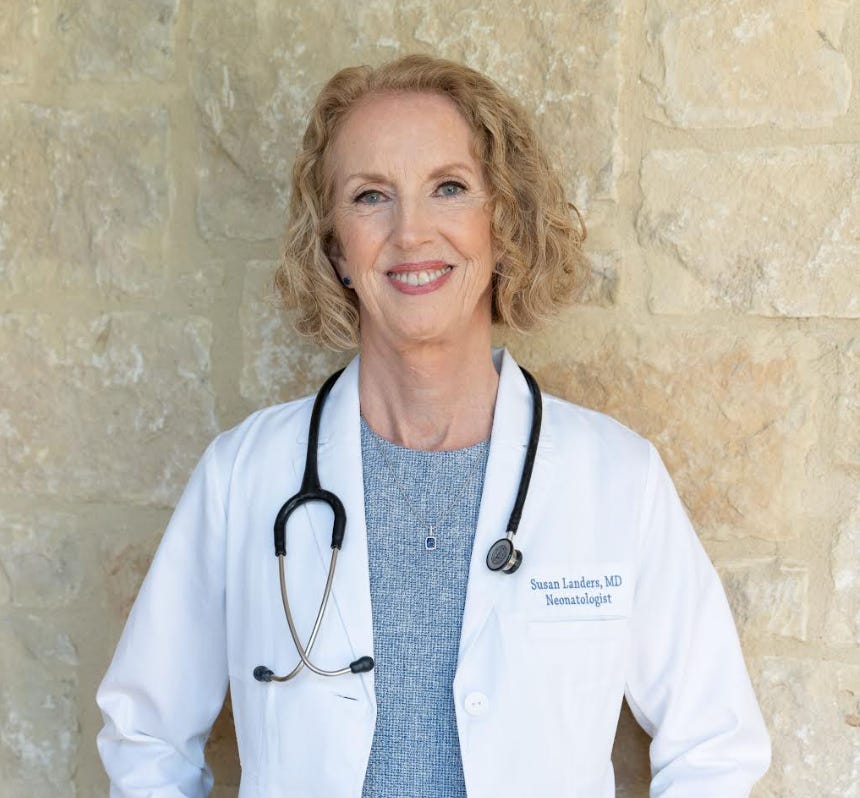
In a recent conversation with neonatologist Dr. Susan Landers, author of Good Enough Is Your Superpower, these two physicians unpacked the questions keeping parents up at night. Their combined insights offer a clear-eyed framework not just for raising healthy children — but for navigating complexity, managing anxiety, and making confident decisions in an era of chronic uncertainty.
The real crisis: information without context
Decades of research in cognitive psychology confirm what these doctors see daily: more information does not automatically lead to better decisions. In fact, a well-documented phenomenon called “information overload” shows that an excess of data can paralyze judgment, increase anxiety, and make people more — not less — susceptible to misinformation.
In health contexts, this effect is compounded. When a parent reads ten conflicting articles about vaccines, their brain tends to apply what psychologists call “naive realism” — the assumption that their own interpretation of the evidence is the most objective one. Social media algorithms amplify this by serving content that confirms existing fears rather than challenging them.
“On the surface, having all this information would feel like a good thing. The difficulty is curating it and putting it in context.”
— Dr. Ari Brown, Pediatrician
The antidote, both doctors agree, is not more information — it’s a trusted relationship with a clinician who can serve as a north star. “Your true north should be your pediatrician,” Dr. Brown says, “somebody that you trust to put it all in context for you.”
Curiosity is healthy — skepticism requires calibration
Neither doctor argues that parents should stop asking questions. Quite the opposite. Dr. Brown draws a meaningful distinction between healthy curiosity and reflexive skepticism: being curious is an asset; treating every medical recommendation as a suspicious “add-on” is not.
A recurring example in clinical practice is the vitamin K shot given to newborns at birth. It is a vitamin — a simple, safe intervention that prevents life-threatening bleeding disorders in infancy. Between one in 60 and one in 250 newborns are born with a vitamin K deficiency, and without adequate levels, the risk of serious brain hemorrhage is real. Yet social media-driven anxiety has led some parents to decline it.
The vitamin K debate is a useful lens for any high-stakes decision made under uncertainty. Research on risk perception shows that unfamiliar risks feel more threatening than statistically larger familiar ones — and a single frightening anecdote online can outweigh a mountain of evidence. Recognizing this bias is itself a protective act. The same framework applies to vaccines more broadly. Community immunity — the protection that results when a critical mass of people are vaccinated — means that individual decisions about vaccination carry consequences for others, particularly those who are immunocompromised or too young to be vaccinated themselves. “You’re not making that decision in a bubble,” Dr. Brown says. “Other people’s decisions also protect your child.”
Sleep: the most exhausted topic in parenting
If vaccines generate the most anxiety, infant sleep generates the most guilt. Social media is filled with claims of babies “sleeping through the night” at six weeks — timelines that Dr. Brown describes, with characteristic candor, as misleading for most families.
The research on infant sleep is more nuanced than most viral posts suggest. Newborns’ circadian rhythms are not yet developed. Their digestive systems require frequent feeding. Expecting extended uninterrupted sleep in the first three months is a recipe for parental frustration, not a solvable problem.
“Having realistic expectations is really important — so you don’t feel so stressed, and so you don’t feel like you failed.”
— Dr. Ari Brown, Pediatrician
Rather than “sleep training” — a phrase loaded with negative connotations — Dr. Brown advocates for building a consistent bedtime routine, a concept firmly grounded in behavioral science. Consistency, predictability, and gradual independence are the pillars. By around four to five months, most infants’ nervous systems are mature enough to self-soothe if given the opportunity.
The key insight: don’t become what Dr. Brown memorably calls “the Uber to the land of Nod.” When parents consistently serve as the bridge to sleep, infants have no reason to develop their own ability to settle. The solution is not to abandon comfort — it’s to separate feeding from falling asleep, and to let the baby practice the skill of self-regulation.
Practical corollary for any caregiver experiencing sleep deprivation: dividing nighttime responsibilities between partners — or enlisting trusted help — is not a sign of failure. It’s basic operational resilience. Better-rested parents make better decisions and are more emotionally available during waking hours.
Toddler tantrums and the science of emotional regulation
A viral social media trend called “Where’s Jessica?” — in which a parent redirects a screaming toddler by calling out a fictional name — became an unexpected lesson in developmental psychology. Dr. Brown confirmed that it works and explained exactly why.
For toddlers between 12 and 24 months, redirection is an effective tool because their attention systems are still highly responsive to novelty. But as children grow, redirection alone becomes insufficient — and potentially counterproductive. Older toddlers and preschoolers benefit more from what developmental psychologists call “emotion coaching”: naming the feeling, validating it, and helping the child find a path through it. Studies by psychologist John Gottman found that children whose parents regularly named and validated their emotions showed better emotional regulation, stronger social skills, and lower rates of behavioral problems as they aged. The tantrum isn’t just an inconvenience — it’s a developmental opportunity to build one of the most important lifelong skills a person can have.
“That kid needs help when they’re having their tantrum because they’re emotionally dysregulated,” Dr. Brown explains. “Helping them find a way out of that is a really important life skill.” This is true, research suggests, not just for children, but for the adults watching them.
Neurodiversity: moving beyond labels
Parent interest in developmental milestones has increased dramatically, driven in part by greater public awareness that early identification of delays is the first step toward support. Dr. Brown, who completed a fellowship in developmental and behavioral pediatrics, welcomes this attentiveness — but urges nuance in how parents think about development.
She prefers the term “neurodiversity” over the more binary framing of “neurotypical” versus “neurodivergent.” Rather than a divide, she sees a continuous spectrum. “We all are somewhere on that continuum,” she says, “and knowing where you and your child are on it is honestly informative — for how you’re wired and how your loved ones are wired.”
This framing has practical implications for parents. A child who processes the world differently may share those traits with a parent — offering an unexpected opportunity for self-understanding alongside empathy. It also reframes the goal: not to force a child into a narrow definition of “normal,” but to understand and support who they genuinely are.
Where to actually find trustworthy information
Both doctors are consistent on this point: if you cannot speak to a pediatrician, prioritize sources that are evidence-based, non-commercial, and regularly updated. The American Academy of Pediatrics maintains a parent-facing website — healthychildren.org — that covers nearly every childhood health topic with guidance grounded in current research. It is free, peer-reviewed, and designed for non-specialists.
The broader principle: seek primary sources. A YouTube video from a pediatric medical institution is categorically different from a viral post from a wellness influencer, even if both appear equally confident. Trust is earned through track record, expertise, and transparency about uncertainty.
Six things worth remembering
First, identify your north star before a crisis hits. Establishing a relationship with a pediatrician you trust — ideally before birth — means that when questions arise, you have a person, not just a search engine, to turn to.
Second, learn to distinguish curiosity from reflexive skepticism. Asking “why?” is healthy and encouraged; defaulting to suspicion of all medical guidance is a cognitive trap that social media is particularly good at setting.
Third, reset expectations around infant sleep. Newborns are not physiologically capable of sleeping through the night — their circadian rhythms haven’t formed yet. Building a consistent bedtime routine from around three months on is far more sustainable than chasing viral “hacks.”
Fourth, treat tantrums as emotion-coaching opportunities rather than failures. Redirection works for young toddlers; for older children, naming the feeling and helping them problem-solve builds emotional regulation that lasts a lifetime.
Fifth, share the load without guilt. Parental exhaustion is not a personal failing — it is a predictable outcome of an enormous responsibility. Dividing nighttime duties or accepting help is not giving up; it is how caregivers sustain the capacity to actually be present.
Sixth, bookmark evidence-based sources. The American Academy of Pediatrics’ healthychildren.org is a free, peer-reviewed, regularly updated resource for virtually every parenting health question — a reliable first stop after speaking with your own physician.
At the heart of both doctors’ messages is something that applies well beyond pediatrics: the goal is not to eliminate worry, but to direct it wisely. In a world designed to monetize anxiety, the most radical act a parent — or any person — can do is choose their sources deliberately, trust the experts they’ve vetted, and give themselves permission to be good enough. As Dr. Landers has written about at length, good enough really is a superpower. And it starts with knowing which voices deserve your trust.