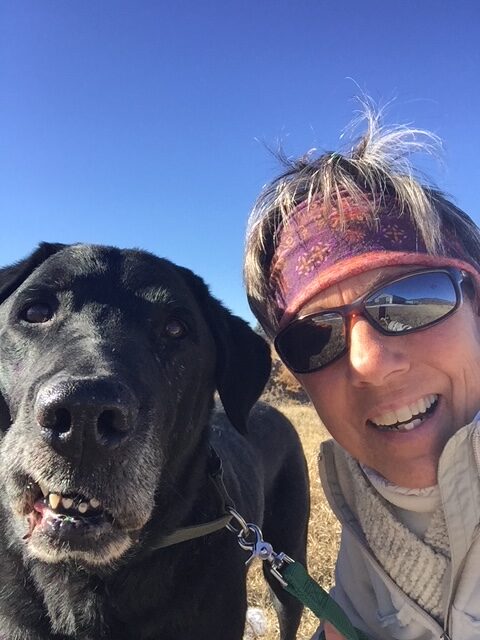

“Your mind isn’t the enemy—it’s just an untrained puppy. When you learn to guide it with patience and love instead of scolding, life becomes calmer, lighter, and a whole lot more joyful.”

Phyllis Coletta

In a world that often glorifies busyness and overthinking, author and teacher Phyllis Coletta offers a refreshingly simple and joyful approach to inner peace. Her book, How to Be a Good Dog, uses the playful metaphor of training a puppy to explain how we can gently train our minds—teaching them to sit, stay, leave it, and heel with love rather than judgment. Drawing from her own colorful life experiences as a lawyer, teacher, and seeker of calm, Phyllis shows that meditation doesn’t have to be mysterious or complicated—it can be accessible, funny, and deeply human.

In this heartwarming and insightful conversation, Phyllis sits down with Stacey Chillemi to unpack the power of presence, humor, and self-compassion. Together, they explore how to calm the “untrained puppy” within us, transform chaos into clarity, and use everyday moments as opportunities to pause and breathe. Through laughter, real-life stories, and practical wisdom, Phyllis reminds us that the path to peace doesn’t require perfection—just a little patience, consistency, and the willingness to sit, stay, and heal.


Thank you so much for joining us, Phyllis! Our readers would love to get to know you a bit better. Can you tell us a bit about your backstory?
I grew up in Philadelphia in a big, loud Italian family—think warmth, food, and strong opinions. I went on to become a lawyer, a teacher, and a writer, so I’ve worn a lot of hats and learned to navigate intensity. Underneath that, I’m really just a happy soul who stumbled into peace through practice. When I realized how much calmer and clearer my life became from training my attention, I wanted to make that path friendlier for others. That’s where How to Be a Good Dog came from—simple “puppy training” cues for the mind that anyone can use.

You call the mind an “untrained puppy.” What does that metaphor unlock for beginners?
Everyone understands puppies: adorable, chaotic, and—without guidance—capable of chewing through everything you love. Our minds are the same. They wander, yap, and make messes when left untrained. Seeing thoughts as puppy energy takes the shame out of meditation. We stop “failing” at quiet and start gently teaching the mind to sit, stay, leave it, and heel with consistency and love.

“Leave it” might be the hardest command. How do we let go of the past without shaming ourselves?
Clinging hurts—full stop. Just like you’d stop a dog from grabbing something harmful, you can lovingly interrupt rumination. I’ll literally tell myself, “Phyllis, leave it.” It’s not repression; it’s redirection. You notice the grab, name it, and guide your attention back to something nourishing: breath, sensation, the present moment. Over time, “leave it” becomes a reflex that protects your peace.

You write that trauma doesn’t disappear—it “heels” with us. What do you mean?
Unintegrated pain pulls us around like a strong dog on a loose leash. The goal isn’t to erase the past; it’s to teach it to heel—to walk beside you as an ally. Meditation helps you relate to your pain differently. It’s still there, but it’s no longer yanking you into old reactions. That shift from enemy to companion changes everything.

Where does focus fit into success, well-being, and this training approach?
Focus is oxygen. When your mind is scattered, your outer life reflects that chaos. I love the story where Bill Gates and Warren Buffett both wrote the same word for the secret to their success: focus. Train attention and the rest of life—work, relationships, health—gets clearer, calmer, and far more effective.

Many people feel intimidated by “rules” of meditation. What’s the simplest way to start “sit”?
Philly version: just sit. Floor or chair, whatever feels kind to your body. Feet grounded or a cushion under your hips, one deep breath to arrive. No mantras required, no spiritual glitter. Lower the bar so you’ll actually do it. The practice works because it’s repeatable, not because it looks impressive.

“Stay” can be excruciating. What gentle leashes help us remain when we want to bolt?
A soft hand on your heart. Slow inhale through the nose, long exhale through the mouth. A one-minute timer to build confidence. In dog training there’s “return”—in meditation, you let thoughts come and go without chasing them. Train stay incrementally: one minute, then two. We’d never expect a puppy to master it on day one; extend the same grace to yourself.

How can humor make meditation easier (and less scary)?
Humor opens the door we’re afraid to touch. Once you notice you’ve been taking orders from the yappy chihuahua at the front of your mind, it’s honestly funny. Laughter dissolves defensiveness and invites curiosity. My book is full of stories about my own missteps because they’re the best teachers—and the best icebreakers.

What’s a personal moment when your “puppy mind” took over—and how did you reset?
Summer traffic at the Jersey Shore turns me into Hurricane Phyllis if I’m not careful. Now I pause—P-A-W-S—take a breath, and narrate kindly: “She’s lost; you’ve been there.” Music on, shoulders down, leash back in my hand. Same trigger, new response. That’s training.

You’ve navigated real health scares, including a brain bleed. How did your practice serve you?
At 3 a.m., inside an MRI with Motown playing, I realized: this is why I meditate. Practice builds crisis muscles. Fear rose and moved through because the mind was steady. Meditation doesn’t prevent storms; it teaches you to captain the boat with clarity when they arrive.

What do you say to the classic line, “I can’t meditate—my mind won’t stop”?
Welcome to being human. Your mind is a puppy—trainable, not broken. Give it a nickname, get friendly, and try one minute. Sit, breathe, return. You’re not trying to stop thoughts; you’re learning not to obey every bark.

High achievers love metrics. How do we avoid turning meditation into a competition?
Make the cushion an achievement-free zone. No gold stars, no comparison. Group settings can trigger “I’m doing it better” tendencies, so start solo. Let this be the one sacred circle where you don’t have to win—only to breathe. Ironically, non-striving upgrades performance everywhere else.

Can you offer a simple 7-day starter plan?

  • Days 1–2: Build your “crate”—same place, same time. One to two minutes morning and evening. Airplane-mode timer.
  • Days 3–4: Three minutes. Add a gentle cue (hand-on-heart or count your breath).
  • Days 5–7: Five minutes if it feels right. Celebrate completion with a tiny reward. Keep it friction-free and repeatable.

What’s a two-minute reset we can do anywhere between meetings or in the car (parked!)?
Shake, breathe, sense. Stand and shake out hands/shoulders to break the thought-lock. Take three slow breaths (nose in, mouth out to cue calm). Land in one sense—feel your feet, hear a distant sound, or sip water. Sit back down and begin again.

How do we work with sticky emotions—fear, grief, self-judgment—without drowning in them?
Feel to heal; name to tame. Let sensations move through the body while the story loosens its grip. Use breath and the five senses to re-anchor in the present. Over time, the rock of shame turns to sand. You’ll still feel, but you won’t be dragged.

Any tips for practicing in a busy, digital household?
Build the crate: a dependable nook, a short protected window, and a kind boundary with your people. Five quiet minutes makes you a better partner, parent, and colleague. Put your device down—busyness often hides anxiety. Choose simplicity over perfection and show up consistently.

Speaking of kids—how can parents make this playful and accessible for them?
Kids and teens love sanctioned stillness when no one is lecturing. Ring a small bell, sit for a minute, then share one word each: “calm,” “silly,” “grateful.” Invite, don’t force. Start when they’re little if you can; teenagers will surprise you with how eagerly they exhale.

For those wary of “experts” and elaborate methods, where should they begin with your work?
Head to howtobeagooddog.com. The book is short, practical, and very human. There’s a free sample chapter via the contact form. I’m not building an empire—just offering a simple, friendly path you can start today.

If readers remember only a few takeaways from today, what should they be?
Don’t buy the complexity. Train your mind like a puppy: sit, stay, leave it, heel. Lead with self-love, not scolding. Build a tiny daily habit and keep it playful. Less chaos inside creates less chaos outside—at home, at work, everywhere.

How can our readers further follow your work online?
The best place to connect is howtobeagooddog.com. You can download a free chapter of my book, explore blog posts with short meditation prompts, and access simple tools to help train your “puppy mind.” There’s also a contact form if you’d like to reach out directly—I love hearing from readers—and you can join my email list for updates on upcoming workshops, new writings, and resources to keep your practice light, loving, and consistent.

Phyllis, this was such a joy—clear, kind, and refreshingly doable. I love how you took something that can feel overwhelming or “out of reach” for so many people and made it warm, funny, and completely relatable. The way you blend practical wisdom with humor and heart makes it so much easier for people to actually want to start. Thank you for reminding us that meditation doesn’t have to be perfect or mystical—it can simply be human, loving, and even playful. I know our readers will walk away inspired to give their “puppy minds” a little more compassion and a lot less judgment.
Oh, thank you, Stacey! This was an absolute delight. Your warmth and curiosity made the conversation so natural—it felt like chatting with an old friend. I’m really grateful for the chance to laugh, share stories, and hopefully make meditation feel lighter and more human for your listeners. If everyone walks away today feeling just a little calmer or a little kinder to themselves, then that’s the best outcome I could hope for.

Phyllis Coletta is an author, teacher, and former lawyer whose passion lies in helping people find peace through humor, self-awareness, and simplicity. Blending real-life stories with down-to-earth wisdom, she created How to Be a Good Dog, a playful yet powerful guide to training the “puppy mind” through meditation and mindfulness. With her warm, relatable approach, Phyllis inspires others to let go of perfection, embrace self-love, and create calm in a chaotic world—one breath, one laugh, and one wagging tail at a time.

Author(s)

  • A renowned 20 Times Best-Selling Author, Speaker, Coach & Podcaster

    The Advisor With Stacey Chillemi

    Introducing an extraordinary individual, a renowned speaker, an esteemed coach, a captivating podcaster, and a remarkable 20-time best-selling author! With such an impressive record of accomplishments, it comes as no surprise that she has been recognized as one of the Top 10 Entrepreneurs of 2023 by Apple News and featured in a prominent story on Grit Daily. But that's not all! This dynamic individual has garnered attention across major media outlets, including ABC, NBC, CBS, Psychology Today, Insider, Business Insider, and Yahoo News, accumulating an astonishing 17 million views! Furthermore, she has graced the stage of the Dr. Oz Show not once but five times, collaborated with influential figures like Ariana Huffington, and made captivating appearances on numerous TV shows, news segments, podcasts, and radio programs. Originally launching her career at NBC, where she contributed to Dateline, News 4, and The Morning Show, this inspiring professional redirected her boundless talents and capabilities toward becoming a full-time speaker and writer. With an unwavering passion for empowering both men and women to conquer their challenges and rise to the pinnacle of success, our speaker, coach, podcaster, and author invites you to unearth your true potential. Embrace the opportunity to be motivated by Stacey Chillemi's invaluable insights and strategies for living life on your own terms. Join this esteemed speaker today and allow yourself to be inspired to take that first transformative step toward lasting success! Welcome to a world of possibilities where you can thrive with Stacey Chillemi as your guide.