
“Your brain has an incredible capacity to heal and renew itself—when you give it the right environment through sleep, balance, connection, and nourishment, you’re not just preventing decline, you’re unlocking your full potential for a vibrant, lasting mind.”

— Dr. Yuan-Di Halvorsen

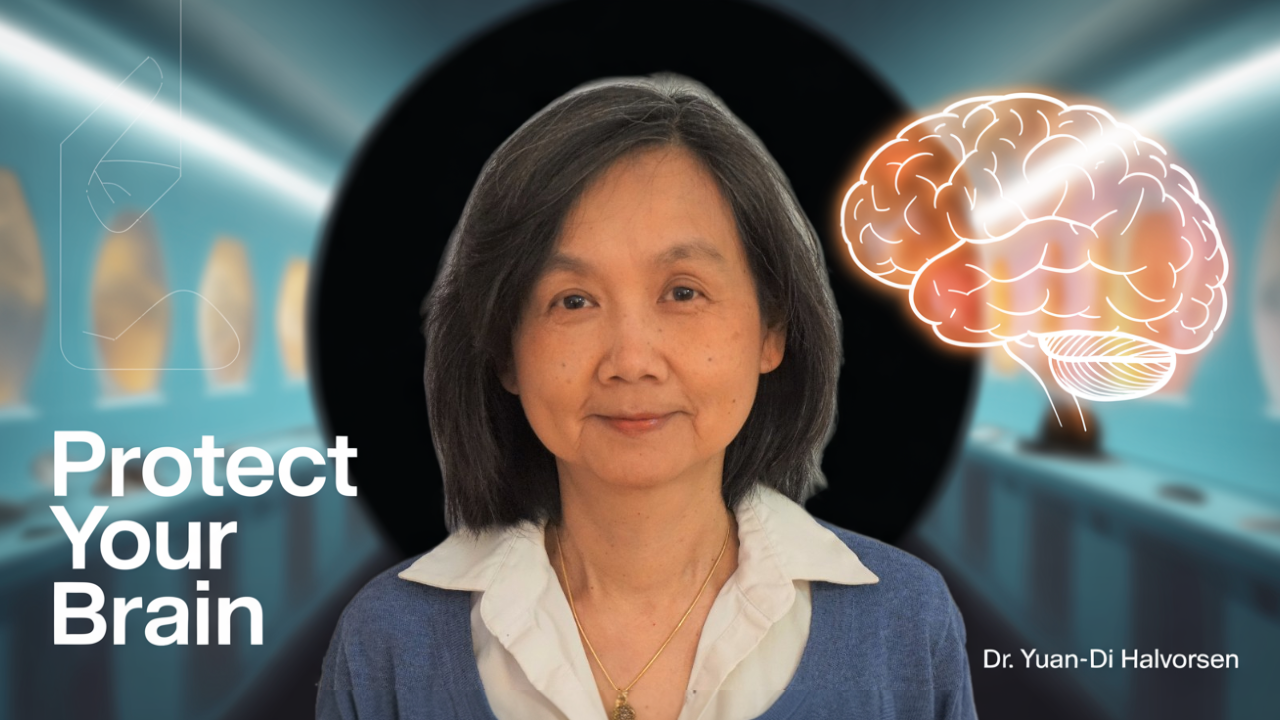
In a world where cognitive decline is becoming increasingly common—and often begins far earlier than we realize—protecting brain health has never been more critical. Studies show that symptoms of decline can start as early as our 30s, yet the good news is that the brain is remarkably resilient and capable of healing when given the right support. Dr. Yuan-Di Halvorsen, a neurologist and biochemist who has spent decades translating groundbreaking research into real-world solutions, joins Stacey Chillemi for an enlightening conversation about how lifestyle, mindset, and science converge to preserve memory, sharpen focus, and extend cognitive vitality.

As a leading figure in brain health innovation and collaborator with renowned Alzheimer’s researcher Dr. Rudy Tanzi, Dr. Halvorsen has dedicated her career to understanding how natural compounds, lifestyle practices, and modern neuroscience can help people thrive well into older age. In this interview, she shares the power of the SHIELD method—a science-backed lifestyle framework proven to protect brain health—alongside the story of how cutting-edge research inspired the creation of a supplement designed to promote memory, reduce inflammation, and support long-term cognitive function. This is more than a discussion about prevention—it’s a roadmap to aging with clarity, confidence, and purpose.


Thank you so much for joining us, Dr. Yuan-Di! Our readers would love to get to know you a bit better. Can you tell us a bit about your backstory?
It’s a pleasure to be here. I’m Dr. Yuan-Di Halvorsen and I’ve spent nearly four decades following my curiosity about how life works at the molecular level. I grew up in Taiwan studying botany, then came to the United States for graduate work in biochemistry because I wanted to understand how molecules cooperate to create health—or dysfunction. After years in biotech, I was recruited to Massachusetts General Hospital to lead a Translational Medicine group—our job was to turn brilliant scientific ideas into real therapies, moving promising molecules from test tubes to animals and then to human trials. Some of those programs became medicines used by millions, which was profoundly fulfilling. My commitment to brain health is also personal: my father developed Alzheimer’s late in life, and witnessing his decline galvanized my resolve to help people protect their cognition.

What drew you from broad drug development into the specific world of brain health and Alzheimer’s prevention?
A pivotal phone call from Dr. Rudy Tanzi—one of the most respected Alzheimer’s researchers—changed my trajectory. He pioneered a “mini-brain” model: neural cells grown in a dish that capture key features of Alzheimer’s biology. Instead of waiting years to observe changes in humans, you can watch disease mechanisms and test interventions over weeks. Using this tool, we screened about 1,700 known drugs and roughly 3,500 natural products. Around 50 natural compounds stood out for helping clear toxic proteins and reduce neuroinflammation, two pillars of cognitive decline. The data were compelling, the mission resonated with my family experience, and that convergence led me to co-found a company to translate these insights into practical support for the public.

You teach a lifestyle framework called SHIELD. What does SHIELD stand for, and why does it matter?
SHIELD is a simple, science-guided blueprint for brain longevity created by Dr. Rudy Tanzi: Sleep (7–8 hours of deep, restorative sleep), Handle stress (make recovery a daily practice), Interact with friends (protective social connection), Exercise (about 150 minutes weekly), Lifelong learning (continually challenge your brain), and Diet (fiber-rich, balanced, lower in saturated fats). Each pillar influences inflammation, vascular health, protein clearance, and synaptic resilience. Together, they create a biochemical environment where your brain has a real chance to keep pace with your lifespan.

Is there evidence that these habits actually improve cognition?
Yes—both small pilots and large trials show measurable benefits. In one 20-week program built around diet quality, targeted supplementation, stress management, meditation, and structured activity, more than 40% of participants improved on cognitive measures, while none improved in the control group. A separate, much larger two-year study following over 2,000 people found that intensive lifestyle management produced robust gains in cognitive performance and brain-health biomarkers. These aren’t anecdotes; they’re data.

What’s the flip side—the “do-not-do” list for brain health?
Think of a red-flag SHIELD: Smoking (don’t), High blood pressure (prevent and treat), Infections (avoid and treat promptly), Excessive alcohol (avoid), and Dental gingivitis (address oral health). These factors accelerate inflammation and metabolic stress that drive cognitive decline. Managing them is just as important as practicing the positive SHIELD habits.

Why is sleep first in SHIELD? What’s uniquely happening at night?
Deep sleep is when your brain’s “cleanup crew” is most active—metabolic by-products and misfolded proteins are cleared more efficiently, memory consolidates, and neural circuits reset. Consistent 7–8 hour nights of true restorative sleep support clarity, mood, and cellular housekeeping that protects long-term cognition.

Stress feels unavoidable for many people. How can we ‘handle’ it in a brain-protective way?
Aim for daily micro-recoveries rather than occasional long resets: 5–10 minutes of breathwork or meditation, a short nature walk, and a few authentic social interactions. You’re training your nervous system to return to baseline more quickly so cortisol and inflammatory signaling don’t become your default chemistry.

How do social connections shift brain biology?
Quality relationships buffer stress pathways and correlate with healthier inflammatory profiles and better cognitive trajectories. Loneliness is a risk factor for decline. Regular connection functions like a neurochemical multivitamin—small, consistent doses matter.

What exercise “dose” do you recommend, and why does it help the brain?
A practical target is ~150 minutes per week of moderate activity. Movement increases trophic factors such as BDNF that support neuroplasticity, improves vascular health for better brain perfusion, and helps regulate blood pressure, insulin sensitivity, and inflammation—all critical to cognitive vitality.

“Lifelong learning” sounds abstract. How does it protect cognition?
Novelty and challenge build cognitive reserve. Learning a language, instrument, or new skill compels your brain to lay down fresh neural pathways, making it more resilient even if age-related pathology accumulates. Curiosity is therapeutic.

Diet advice can be confusing. What pattern do you emphasize for brain health?
Focus on fiber-rich whole foods—vegetables, fruits, legumes—prioritize healthy fats, and keep saturated fats and ultra-processed foods lower. This supports metabolic health, gut-brain signaling, and systemic inflammation control. Your brain is downstream of your body’s chemistry.

With so many “brain boosters” on shelves, how should consumers evaluate supplements?
Read labels and look for transparent science. Ask: What are the active ingredients and mechanisms (e.g., protein clearance, inflammation modulation, synaptic support)? Is there preclinical or clinical evidence? Who manufactures it, and what quality controls are used? Be cautious with vague proprietary blends and unrealistic claims.

You helped bring a supplement to market grounded in Dr. Tanzi’s discovery work. What’s the scientific idea behind it?
We formulated four ingredients to support two critical domains: (1) clearance of amyloid-type proteins—the plaque-forming material that accumulates with age—and (2) reduction of neuroinflammation. Two compounds promote cellular pathways for debris clearance; two well-studied plant flavonoids—like fisetin (rich in strawberries and apples) and quercetin (found in onions)—modulate inflammatory cascades. Purity, bioavailability, and synergy were priorities so the whole is more effective than the parts.

Have you seen encouraging early feedback from real people?
While we await larger trials, early reports are motivating. An 80-year-old retired teacher who enjoys the Lumosity brain-training game saw her scores trend back up after years of decline. My sister, who had frequent headaches and fog, noticed marked improvement within weeks—likely via inflammation pathways. These stories don’t replace trials, but they underscore why this work matters.

How do you think about safety—supplements versus pharmaceuticals?
Pharmaceuticals are essential and rigorously regulated, but they’re synthetic and take a decade or more to approve for narrow indications. Many nutraceuticals are nature-derived compounds people have consumed safely for generations. At evidence-based doses from reputable manufacturers—and in coordination with your clinician—they can be a safe, complementary way to support brain health now.

Could technologies like the “mini-brain” model lead to more personalized brain care?
Absolutely. These models let us rapidly characterize mechanisms and responses, which opens the door to targeted combinations informed by a person’s biology. As we integrate biomarkers, cognitive testing, and lifestyle data, personalization becomes very realistic.

Health headlines about “miracle cures” change daily. How should people interpret brain-health news?
Consider the source and the study design. Is it peer-reviewed human research or an early animal study being over-interpreted? Was the sample size adequate and duration meaningful? Are mechanisms plausible? Rely on reputable researchers and institutions, and be skeptical of claims that ignore sleep, stress, connection, exercise, learning, and diet—no pill can replace those fundamentals.

If someone is starting from zero, what three actions should they take this week?
First, protect sleep with a consistent schedule and wind-down routine. Second, move most days—brisk 30-minute walks quickly add up to your 150-minute goal. Third, add one daily real-food habit—a fiber-rich salad or veggie-forward meal. Layer in short stress-recovery practices and nurture one meaningful social connection each week. Then consider targeted supplementation with your clinician’s guidance.

How soon might people feel a difference once they begin SHIELD?
Everyone’s baseline is unique, but when sleep improves and inflammation decreases, many notice clearer thinking, steadier energy, and better mood within weeks. Objective cognitive changes typically emerge over months. Consistency matters—SHIELD is a lifestyle, not a weekend project.

Where can people find the supplement you referenced?
It’s available on Amazon and through our website at cognishield.com. Promotional windows—like Prime Day—can offer favorable pricing. As always, align any supplement with your personal needs and physician’s advice.

What single message do you most want readers to remember from this conversation?
Act now. Sleep well, handle stress, connect, exercise, keep learning, and eat for your brain. Use high-quality, evidence-informed supplements when appropriate. The aim is simple and profound: help your brain health match your lifespan.

How can our readers further follow your work online?
You can learn more about our science and updates at cognishield.com, and you can explore Dr. Rudy Tanzi’s research at DrRudyTanzi.com. I encourage everyone to stay curious, read the research, and put SHIELD into practice starting today.

Dr. Halvorsen, thank you for such an insightful and actionable conversation. I’m grateful for your work—and for helping our readers see the practical steps they can take today.
Thank you, Stacey. It’s been a pleasure. I appreciate your thoughtful questions and the opportunity to share this message of hope and action with your audience.

Dr. Yuan-Di Halvorsen is a neuroscientist and biochemist with over 40 years of experience in biomedical research and drug development. A former leader in Translational Medicine at Massachusetts General Hospital, she has worked on dozens of programs that brought breakthrough treatments from the lab to patients worldwide. Now collaborating with renowned Alzheimer’s researcher Dr. Rudy Tanzi, Dr. Halvorsen is dedicated to advancing brain health through the integration of lifestyle medicine, neuroscience, and natural compounds. Her mission is to help people protect their cognition, prevent decline, and live longer, sharper, and more fulfilling lives.