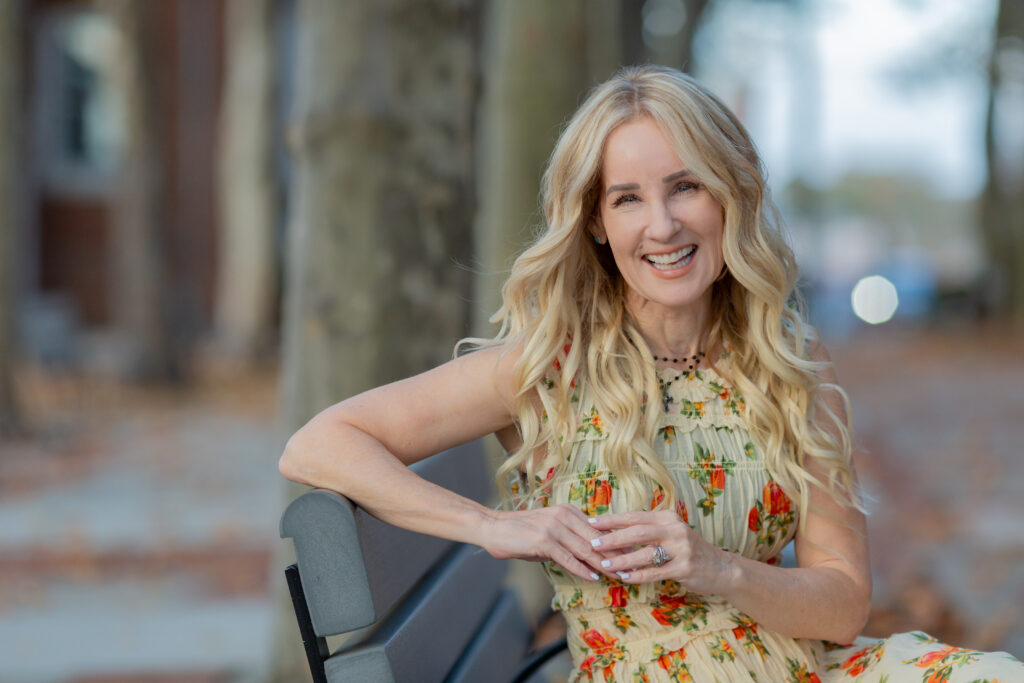

“Saying the feeling out loud in and of itself is a healing. In and of itself something magical happens.”
Dr. Deana Plaskon, licensed clinical mental health expert and author of the Bella and Bird the Emotion Explorers series
One week after her therapy horse, Bella, arrived in southwest Florida, Hurricane Ian tore through the community. Bella had just made the journey across the country to join the equine therapy practice of Dr. Deana Plaskon, a licensed clinical mental health expert and educator with a PhD in human behavior. The storm was catastrophic. In its aftermath, as Plaskon looked at her neighbors and thought about the children living through it, one question stayed with her: how are they managing this? She started writing. What she built became the Bella and Bird the Emotion Explorers series, published through Bella and Bird Books LLC, a children’s book series that Kirkus Reviews, BlueInk, and Clarion Reviews have each recognized for the value it brings to children’s emotional development.
The Strong Horse, the Cheeky Bird, and a Community in Recovery
Plaskon has long held a single conviction that runs through her decades of work as a therapist and educator: every behavior is a story. “Every behavior that we see, that we experience, tells something,” she says. “It tells a story of some kind.” That conviction shaped the architecture of every book in the series. Each one, she explains, is designed to walk readers through what an actual equine therapy session might look like, without ever feeling like one. “I wanted to actually take a therapy session and create it into each of the books,” Plaskon says. “So you’ve walked through what an equine therapy session might look like, but it doesn’t feel as if you’re in a therapy session. It feels still part of a story.”
Bella provides the steady presence. Bird, a real barn swallow who lives in Bella’s stall and, as Plaskon tells it with evident delight, makes nests with Bella’s hair, provides something equally essential. “I needed a sidekick,” she says, “and it just came naturally. Bird. He’s funny, he’s wise, he’s a bird.” Bella brings grounded wisdom. Bird brings mischief and something closer to the child’s own wavelength. “When you read the stories, you’ll see that Bird relates to the kids.” For a parent looking for a starting place, the first step is the same one Plaskon discovered in her therapy work: notice the characters your child already returns to. That is where the emotional door is already open.
What the Body Knows Before the Words Arrive
When a child is in the middle of a meltdown and cannot explain why, the problem is not willfulness. It is, as Plaskon describes it, overwhelmingness. “We’re not born with being able to pause,” she says. “What we are all born with are emotions, and we’re also not given the tools to know what to do with them.” The absence of tools, she points out, does not belong only to children. “Parents don’t know what to do either. So you can have a child melting down, and the parent wants to fix it, but they don’t have the tools to know what to do in that moment, as well. And it can turn into just a complete meltdown for both child and parent.”
For Plaskon, the entry point to any emotion is not language but the body. Before a child can name what they feel, they need to recognize where they feel it. “The first step is actually being able to recognize that emotion in your body,” she says. “What is your body telling you? With anger, you have the clenched fist, and you might have a racing heartbeat. And so that split second of being able to ask, what is my body saying to me, that is giving pause to the emotion. And once you can capture that pause, you can go into the next step without it exploding.” For a parent in a hard moment, this is the place to start: before asking a child what they are thinking, ask them where they feel it in their body. The question itself becomes the pause.
Henry’s Angry Face and Why That Opens the Door
In the first book in the series, a boy named Henry stomps into the pasture, furious. Bella and Bird do not rush to fix him. They wait. Then Henry announces, “Can’t you tell? This is my angry face.” That line, small as it is, opens everything. “That opens the conversation,” Plaskon says, “for Bella and Bird to come in and say, yeah, that’s an angry face all right, do you want to tell us what happened? And that gives the opportunity for Henry to start to talk and open up.”
In the sadness book, a girl named Molly arrives quiet and withdrawn. Plaskon made a deliberate choice in how that scene begins. “It was very intentional for me to have Molly and Bella and Bird sit in the sadness,” she says. “I was very intent on the beginning of them sitting in silence until Molly was ready.” When Molly finally cries, Bird offers a tissue. Bella says simply that it is okay to cry. “If kids can see Bird offering the tissue and Bella saying it’s okay to cry, that’s relatability.” The lesson for adults reading alongside a child is built right into the scene: sometimes a tissue and quiet are more useful than an explanation.
Why We Hijack Good Terms and Go to the Extreme
Plaskon has watched the conversation around social-emotional learning develop for a long time. Her doctoral research focused on bullying before the term was widely used, and she has seen what happens when important ideas become overcrowded with expectation. “I feel like we do hijack these terms,” she says. “We do hijack these phrases. And then we go to the extreme with them.”
Before the 1990s, she explains, the dominant response to children’s emotions was suppression: push it down, move on. The correction that followed overcorrected in the other direction. “Starting in the 90s, we went the opposite way, so extreme, where we are teaching kids to express every single thing, and that’s exhausting. And it’s not necessary.” The answer she has built her work around is balance. “It is really about the communication first,” she says. “Simple is better. Less is more.”
One principle cuts through all of it: “Emotions need motion.” Walking, writing, riding, playing, yelling into the woods if that is what the moment calls for. The particular outlet matters less than the understanding that a feeling needs somewhere to go. That is the thing most programs, in Plaskon’s view, fail to make simple enough.
The Emotion Wheel on the Refrigerator
Each book in the series contains at least three concrete tools. The anger book introduces box breathing. The happiness book includes a gratitude jar. Running through all four is the Bella and Bird Emotion Wheel, a vocabulary tool Plaskon developed specifically for this series, spending considerable time making sure the feeling words attached to each emotion were accurately matched. “A lot of times you’ll see emotion wheels where they’re not matched appropriately,” she says. The result is a tool that gives both children and adults the language they are reaching for. “I’ve had clients with kids just print out my emotion wheel, put it on the refrigerator, and just having it there and seeing it walking by, if you’re feeling a certain emotion, you can look at the words.” Older adults, she notes, have told her they keep it at their desks and refer to it during meetings.
The emotion wheel is a free download on her website, and she is direct about its purpose: it plants a seed. “It’s that reminder,” she says. The tools are lifelong by design. “These tools are lifelong. And as Bird would say, you’re planting the seed.”
Saying It Out Loud Is Already the Healing
The most striking thing Plaskon says is also the simplest. Many adults, she observes, were never taught that it is acceptable to say what they feel. Not that they lack vocabulary, though many do, but that they were never given permission. “It’s like giving them permission,” she says. “It’s okay to express that you might be afraid. And actually saying the feeling out loud in and of itself is a healing. In and of itself, something magical happens.”
That magic, she explains, does not stay internal. When adults begin naming their emotions to the people they love, the relationship itself shifts. “When you start to have those communications with your spouses and those that you love, the relationship just starts to thrive because you start to go on the same page. When you start to understand each other and open up these conversations, it becomes something beautiful.”
For the parent who feels they are getting it wrong, Plaskon offers something worth holding onto. “It’s okay if you’re getting it wrong,” she says, “and what’s fantastic is that you’re recognizing that. That recognition is fantastic because it gives you the opportunity and the step to do something.”
There is a phrase Plaskon returns to at the end of the conversation, the same idea that started the whole series after a hurricane passed through her community. “Every behavior has a story, and behind that story there are tools. Simple, very simple tools that we can give kids and ourselves that we can learn for a lifetime. Those kids, especially, will always come back to. If we plant the seed early, that’s the tools that we’re going to give them to thrive as adults.”
The seed does not require a complex program or a long conversation. It can begin with a barn swallow offering a tissue to a sad little girl. It can begin with a vocabulary wheel on a refrigerator door. It can begin with a parent saying, simply and out loud, exactly what they are feeling, so that a child nearby learns that emotions are not problems to be solved but a language to be learned. That is the work Dr. Deana Plaskon has been building, one story at a time.