

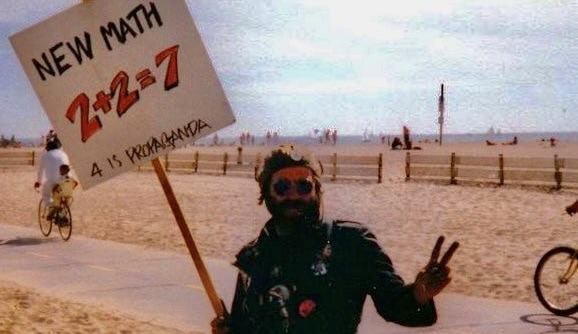
Human beings are fascinating creatures. Our belief in our own rationality is patently absurd. Poker players will tell you that if you can’t spot the sucker at the table, it’s probably you. Similarly, it’s obvious when someone else is a hypocrite or employing what is commonly referred to as “girl math,” yet we are usually blind to our own blindness.
What qualifies in our minds when our mouths pronouce the word “expensive” shifts with every purchase. Our judgments are influenced by the situation, the urgency, the values with which we were raised, and most importantly our subconscious financial anchors. These are scales developed over a lifetime, from what we witnessed our parents complain about to the current salaries of our former college roommates.
Comparison is the thief of joy and we are masters at it.
Behavioral economists such as Daniel Kahneman, Amos Tversky, Richard Thaler and Dan Ariely have documented the foibles of human financial rationalizations: we judge prices by comparing them with hidden benchmarks and creating contextual stories that we tell ourselves.
Let’s talk about our annual iPhone rituals: we upgrade perfectly good iPhones for indiscernible speed improvement and marginally better photos justifying the trade-in costs in terms of supposed higher individual productivity. Yet that same money could fund practical and essential purchases that lack the same dopamine spikes. Or think about Taylor Swift or Adele concerts: two hours of shrieking communal bliss whose admission price would easily cover two glorious weeks in Paris or most tropical paradises. Adrenaline and scarcity waylay our mathematical skills; long-term utility vanishes and any cognitive dissonance that rears its ugly head is soon rationalized away.
If couples comment that marriage counseling is expensive I will rhetorically ask if they are aware of how much divorce costs? Yes, marriage counseling is relatively expensive until you anchor it against the hourly rate of multiple divorce attorneys and the cost of two households versus one.
Everything is relative: one hair on your head isn’t enough; one hair in your soup is too much. Prices work similarly: all of us have subconscious anchors that provide a set of “should”s that we use to measure the value of every potential purchase and label it as expensive, fair or reasonable, or inexpensive.
How to immediately realize that you’re a sucker? Subscription crawl. The psychological cost of remembering to cancel a subscription after the free trial period is way too challenging for most humans. If you scan your credit card bills for $7.99-$19.95 monthly charges the sucker at the table isn’t Netflix, Hulu, Max, Apple, Paramount, Disney+, ESPN, your dating app(s), your news service(s), or your gym. It’s you. These companies know that you’re too lazy to cancel and their shareholders are laughing all the way to the bank.
So the next time the word “expensive” passes your lips, ask yourself, “What’s the context? What’s the anchor in my subconscious for this pronouncement and when was it installed? What are the opportunity costs of buying this item or service? What are the emotional and psychological benefits of this purchase? What are the costs to other people and the planet (when this unrecyclable plastic container ends up in the ocean or a landfill)? What’s the story I’m telling myself here? And am I just virtue signaling?”
With practice we can become conscious of the justifications we posit about the ways we choose to spend and not spend (save) money; we can learn to spot artificial scarcity and point-of-purchase heart-tugs and manipulations; we can acknowledge how privileged and silly we are and make honest appraisals of our needs versus our desires.
Mere awareness won’t make us rational but if we can crawl out of our primordial mental soups and reevaluate our array of justifications then we can chuckle at our own absurdity.
I’m not suggesting bargain-hunting for a cardiologist when you’re having a heart attack; I’m just saying that the dopamine rush of many purchases may be later outweighed by buyer’s remorse. Look around your home at the number of beautiful yet uncessary gadgets gathering dust and you’ll get a sense of what I mean. At this point we are all keenly aware that instant gratification takes too long.
Recognizing our own “girl math” makes our daily financial decisions more palatable and whatever Band-Aids of joy we gain as consumers stay on a little longer.
If we can laugh at ourselves first, then we may not be the suckers at the table.