

I recently stumbled across “Spiritual Jazz Essentials” on Apple Music and it took me back to the ten years I taught spiritual psychology workshops at the Esalen Institute. During yoga I would play Alice Coltrane’s “Journey in Satchidananda” because Alice Coltrane espoused Vedanta, a major school of Hindu philosophy that is the origin of the yoga we practice today. What a surprise to discover that an entire genre has spawned from John and Alice Coltrane’s devotion!
This lineage emerged from John Coltrane’s albums such as “A Love Supreme”, “Meditations” and “Om” that functioned as prayers, the sound of someone employing a saxophone the way a monk employs a mantra. When John Coltrane died in 1967, his widow Alice, who had been playing piano in his band, continued her husband’s legacy in her own register, turning to Swami Satchidananda and Vedanta for the architecture of her sound. Her 1971 album “Journey in Satchidananda”, recorded on harp and organ and laced with ragas and sitar, is the clearest statement of what spiritual jazz was reaching for: a cosmic universality that embodied every religion inside it at once. Pharoah Sanders erected a similar cathedral in his 1969 album “Karma” with its symphonic “The Creator Has a Master Plan,” which is as close as instrumental music has come to an actual sermon. What united this community was the conviction that a horn or a harp could function as a tool of transcendence and not just as entertainment.
I think of the painter Mark Rothko whenever I look for a visual analogy because Rothko was doing with color exactly what the Coltranes were doing with musical notes. He believed that people who cried viewing his paintings were having the same religious experience he had while painting them. There is a Jewish practice of writing “G-d” rather than spelling the name fully, which is rooted in knowing that words cannot fully express the divine. G-d is ineffable and can only be “indicated” or “pointed toward”. Rothko, the Coltranes, and the spiritual jazz artists who followed them are all doing exactly that indicating and pointing through their art and music.
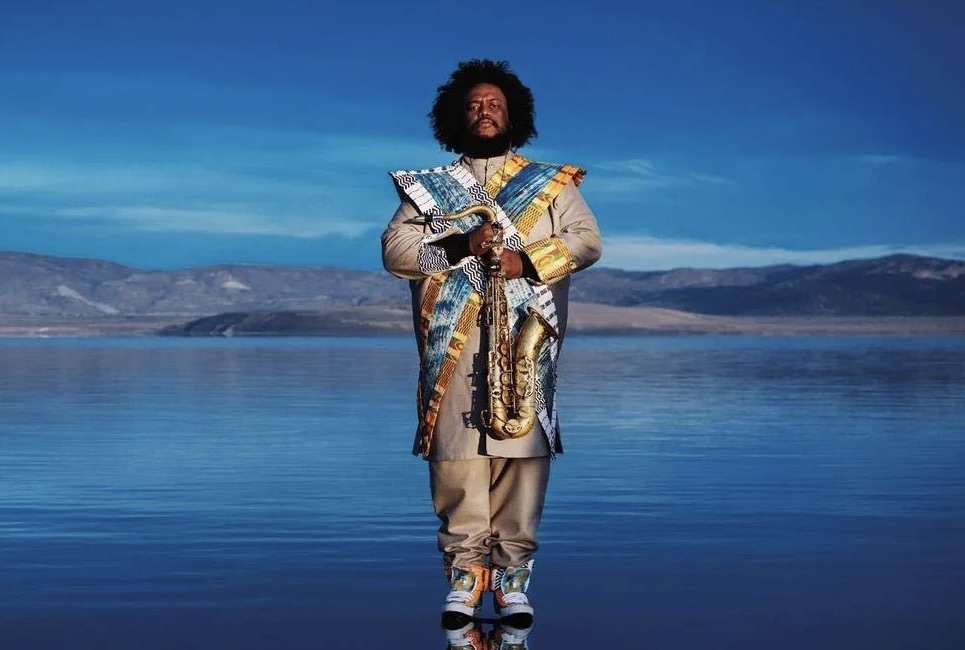
Kamasi Washington is the clearest inheritor of this tradition. “Music is a spiritual thing,” he says. Every song he creates carries that same intense emotional charge regardless of what genre it gets filed under. He credits his father with bringing Coltrane and Sanders into the house long before he understood what he was hearing. What I love about Washington’s respect for the lineage is what it proves about the work itself: that a saxophonist playing today can draw from the same well that Alice Coltrane and Pharoah Sanders were drawing from 60 years ago.
There is a reason people weep in front of certain paintings and certain records without being able to explain why. Kabbalah gave us the vocabulary for it centuries before we had a psychological explanation: it is because the vessels meant to hold the divine light shattered due to the fact that the light was more than they could contain; the work of a lifetime becomes gathering those scattered sparks back into something whole.
A therapy client who cannot yet sit with the full weight of their own grief or their own quest for meaning and purpose can find something in musicians and artists whose compositions and paintings point toward that wholeness and holiness, a vessel large enough to hold what they cannot yet hold on their own. They find solace knowing that other people are wrestling with the same questions.
What music like John and Alice Coltrane’s does is create a container capacious enough to hold tragedy and ecstasy at the same time. Their sonic explorations can show clients new paths through feelings that once seemed unmanageable and teach them to fit what may feel like overwhelming chaos into a coherent melody.
All of us are vessels gathering those scattered sparks back and learning on a daily basis what we can hold.
The genre of spiritual jazz indicates new paths down that journey.