We live in an age in which the distance between a question and its answer is becoming almost imperceptible.
We can summon explanations in seconds, generate images of worlds that do not exist, and ask machines to make sense of things we have barely begun to contemplate. Our capacity to produce answers is expanding at an extraordinary pace.
But I wonder whether our capacity to be astonished is keeping up.
There is a difference between knowing something and being changed by what we know. Between possessing information about the world and feeling ourselves in relationship with it.
Consider something science has made possible for us to know: the carbon in our bodies was forged in stars. The elements that make life possible have traveled through billions of years of cosmic history to become, among other things, us.
We are not simply living in the universe. We are an expression of it.
This is a scientific truth, but it is also an invitation to reconsider the boundaries we draw between ourselves and everything else. What happens to our sense of belonging when we understand that our existence is not separate from the natural world, but continuous with it? What might that recognition ask of us?
To me, this is where wonder becomes something more consequential than a feeling of awe.
Wonder unsettles the illusion of separateness.
It reminds us that the world is not merely a collection of things to be understood, managed, or used, but a vast web of relationships in which we are already participating.
And when we begin to see ourselves as participants rather than observers, the question changes. It is no longer simply What can we know? but How shall we live in relationship with what we know?
Perhaps this is one of the quieter challenges of our technological age. Not that we have too much knowledge, but that we risk mistaking the accumulation of knowledge for the cultivation of wisdom.
Information alone does not guarantee intimacy, care, or responsibility.
Wonder may help us cross that distance.
Children seem to understand this instinctively. They ask questions not simply to arrive at answers, but because the world remains alive with possibility. Their curiosity is not detached from what they encounter. It is a form of participation.
Thousands of years of various spiritual texts have also emphasized the space between the question and the answer, the space before form takes shape.
Contemplation itself as a sacred location.
Over time, we learn to prioritize certainty, efficiency, and expertise. We become more practiced at naming things and sometimes less practiced at encountering them. I have come to believe that wonder is not something we outgrow. It is something we must resist forgetting.
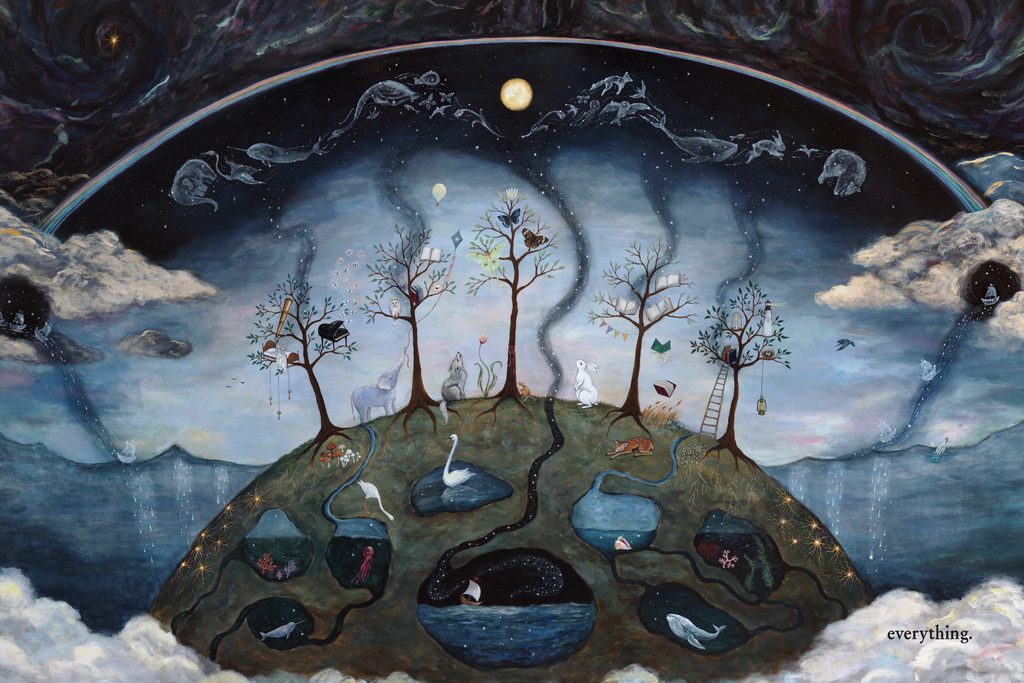
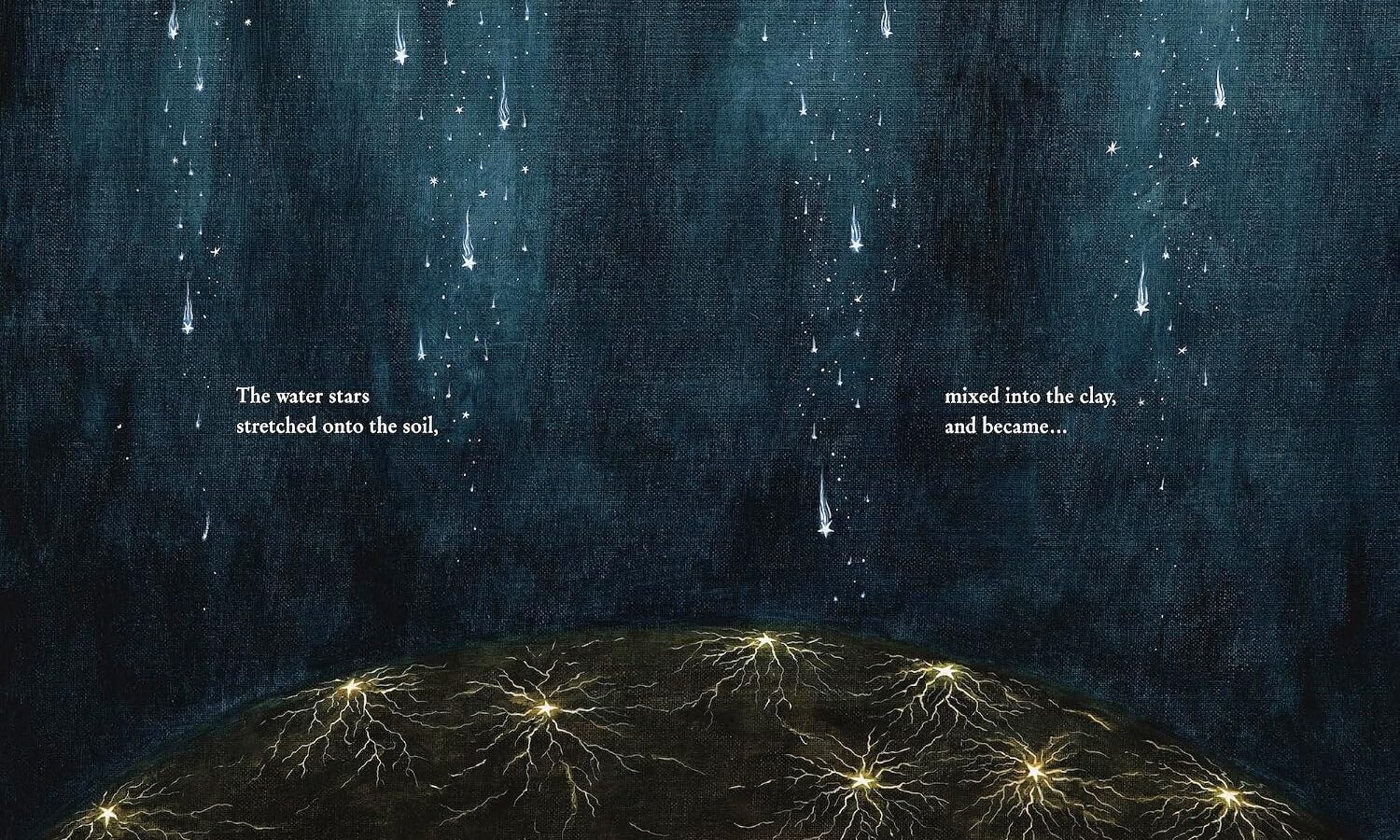
These questions eventually found their way into Ocean of Stars, a children’s book I created with the artist Rebecca Rebouché during a period of my life shaped by longing, uncertainty, and the mystery of what it means to bring a life into being. The book became a way of exploring something I was slowly coming to understand: that even in the presence of what we do not know, we are already part of something immeasurably larger than ourselves.
One line in the book reads, “You are the wish you once wished for.”
I return to it as a reminder of the extraordinary improbability of being here at all.
Perhaps the task before us is not to choose between knowledge and mystery, or between technological intelligence and the intelligence of the living world. Perhaps it is to become capable of holding them together, without allowing one to diminish the other.
Because the measure of our understanding may ultimately be found not in how many questions we can answer, but in the quality of attention, care, and responsibility those answers awaken in us.