

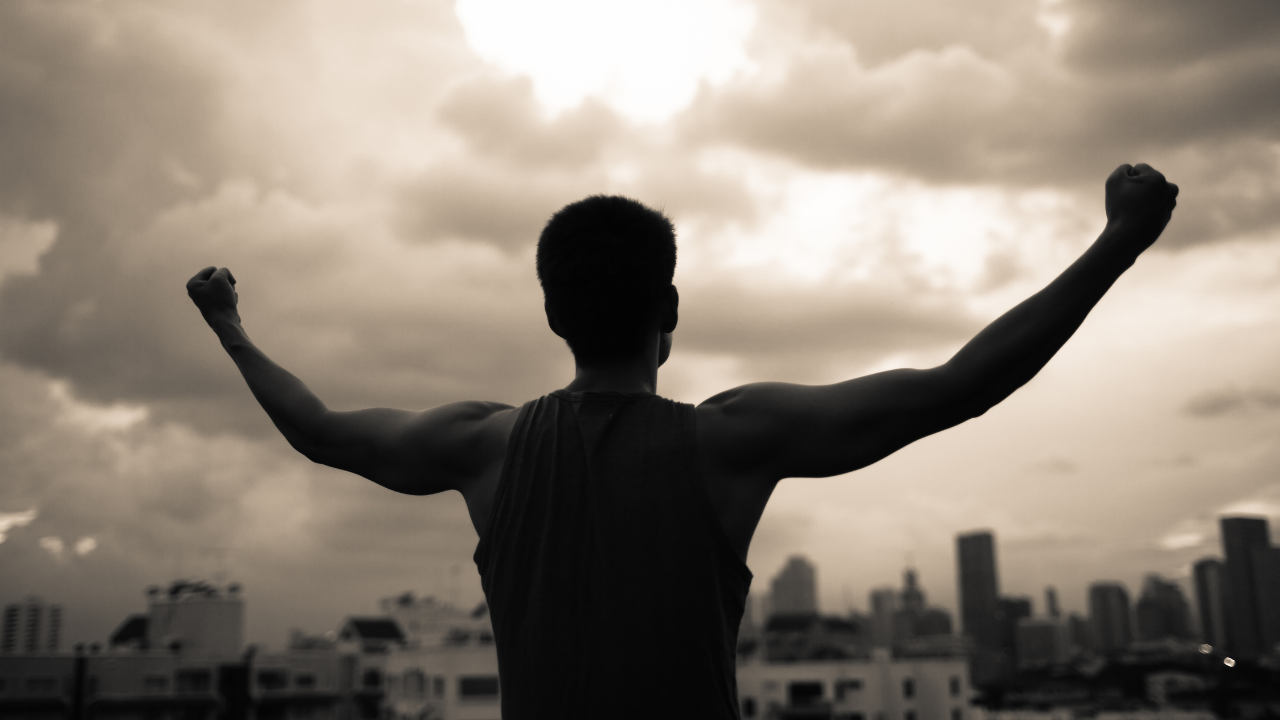
“Real strength isn’t built in the gym — it’s built in the recovery, the listening, and the willingness to work with your body instead of against it.”
There is a moment, usually after weeks of grinding through workouts, skipping meals, and pushing through exhaustion, when the body finally says enough. For most people, that moment arrives as burnout, injury, or illness. For Hassan Moaminah, it arrived as kidney failure.
What happened next is not just a survival story. It is a masterclass in what happens when a person finally stops fighting their body and starts listening to it instead.
The lessons from his experience reach far beyond fitness. They touch on stress physiology, cellular hydration, nervous system recovery, and the kind of mental resilience that no supplement can manufacture. Here is what the science — and his story — can teach the rest of us.
1. Your Cells Are Hungry — And Not for What You Think
Most conversations about nutrition focus on macronutrients: protein, carbohydrates, fat. But there is a foundational layer beneath all of that which rarely gets discussed in mainstream wellness spaces: electrolyte balance, and specifically the relationship between sodium and potassium.
Every cell in the human body relies on sodium and potassium to maintain hydration at the cellular level. Without adequate sodium, cells cannot effectively absorb water — no matter how much you drink. This is the basis of what sports scientists call the sodium-potassium pump, a mechanism essential to nerve signaling, muscle contraction, and cellular repair.
When sodium is chronically low — whether from under-eating, excessive sweating, or restrictive diets — the nervous system operates under strain. Muscle cells cannot fully hydrate. Recovery slows. And paradoxically, you can drink more water and feel more dehydrated, not less.
A simple self-check: If drinking water makes you feel more dehydrated rather than relieved, your body may be signaling a sodium imbalance rather than simple thirst. This is worth discussing with a healthcare provider, particularly if you are training regularly or eating a low-sodium diet.
Actionable takeaway: Before overhauling your protein intake or supplement stack, examine your electrolyte balance. Foods like plain yogurt, coconut water, and potassium-rich fruits work alongside adequate sodium to support genuine cellular hydration.
2. Recovery Is Not Rest — It Is Where Growth Actually Happens
There is a pervasive myth in fitness and productivity culture alike: that more output equals more progress. Work harder. Train more days. Sleep less if you have to. Push through.
The biology tells a different story entirely.
Muscle growth does not happen during training. It happens during recovery. When the body is under stress — physical or psychological — cortisol rises, inflammatory pathways activate, and the nervous system shifts into a sympathetic, fight-or-flight state. In that state, the body is surviving, not building.
Research on resistance training consistently shows that the repair and synthesis of muscle tissue occurs during rest, particularly during deep sleep, when growth hormone is most active. Overtraining — training before the body has fully recovered — does not accelerate progress. It interrupts it.
This principle extends beyond the gym. Cognitive performance, emotional regulation, and creative output all follow the same recovery curve. The brain, like muscle, consolidates gains during downtime. Sleep, play, and genuine rest are not rewards for hard work. They are the mechanism through which hard work pays off.
Actionable takeaway: Track how you feel 24 to 48 hours after intense effort — physical or mental. Persistent fatigue, mood disruption, or reduced performance are signals that recovery is incomplete. Honor those signals before adding more input.
3. Stress Has a Physiology — And Ignoring It Has Consequences
When Hassan described his kidney failure, something important emerged beneath the medical details: his body had been sending signals for weeks before the crisis. Dehydration, unusual cravings, disrupted sleep, persistent pain. Each one was a message. Each one was initially overridden.
This pattern is not rare. Research in psychoneuroimmunology — the study of how psychological stress affects immune and physical health — has established clear links between chronic stress, cortisol dysregulation, and the breakdown of physical systems over time. The kidneys, the gut, the immune system, and the cardiovascular system are all stress-sensitive organs.
The body communicates through sensation. Cravings, fatigue, inflammation, and pain are not weaknesses or inconveniences. They are data. Learning to interpret that data — rather than suppress it — is one of the most undervalued health skills available to us.
Actionable takeaway: Begin a simple daily body scan practice. Once a day, take two minutes to notice what your body is communicating — tension, fatigue, hunger, pain. Journaling these observations over time reveals patterns that are easy to miss in the noise of daily life.
4. The Mind-Muscle Connection Is Real — And It Applies to More Than the Gym
One of the less obvious insights from exercise science is that building physical capacity requires neurological adaptation, not just muscular effort. The brain must learn to recognize, coordinate, and activate new muscle tissue. This is why beginners often feel clumsy with new movements even when they have the physical strength to perform them. The neural pathway has not yet been established.
Bruce Lee understood this intuitively decades before neuroscience caught up. His emphasis on speed, precision, and conscious movement was not aesthetic — it was functional. He was training the nervous system as much as the body.
This same principle applies to any new skill, habit, or behavioral change. Building a new pattern — whether it is a morning routine, an emotional regulation strategy, or a communication habit — requires repetition not just for muscle memory, but for genuine neural rewiring. Consistency is not a motivational concept. It is a biological one.
Activities like dancing, martial arts, and learning a new language all accelerate this process by demanding full mind-body engagement, which strengthens neural pathways faster than passive repetition alone.
Actionable takeaway: When building a new habit or skill, pair it with physical movement or sensory engagement where possible. The mind-body connection is bidirectional — engaging the body accelerates cognitive and behavioral learning.
5. Play Is Not Optional — It Is Physiological
Hassan described something striking about his recovery days: he felt like a child again. He wanted to move freely, play with his children, laugh without reason. He did not dismiss this as silliness. He recognized it as a sign that his nervous system had genuinely recovered.
This makes biological sense. Play — defined by researchers like Dr. Stuart Brown as purposeless, intrinsically motivated activity — activates the parasympathetic nervous system, reduces cortisol, increases dopamine, and supports neuroplasticity. In children, play is the primary vehicle for physical, emotional, and cognitive development. In adults, it does not lose its function. We simply lose permission to access it.
Chronic seriousness, overwork, and the suppression of joy are not signs of discipline. They are risk factors for burnout, reduced immunity, and deteriorating mental health. The capacity to play — genuinely, without productivity attached to it — is a marker of nervous system health.
Actionable takeaway: Schedule unstructured time with no goal or outcome attached. This might look like a walk with no destination, a spontaneous creative activity, or time with children or animals. Notice how your body feels before and after. That difference is data.
6. Strength Is a Mindset Before It Is a Measurement
Perhaps the most transferable insight from Hassan’s journey is this: the same qualities that build physical resilience — consistency, patience, listening, recovery, and self-compassion — are the same qualities that build psychological resilience.
Research in positive psychology, particularly the work of Dr. Martin Seligman and colleagues, identifies resilience not as an innate trait but as a learnable skill built through repeated navigation of difficulty, supportive relationships, and the cultivation of meaning. It is not about avoiding struggle. It is about developing the internal resources to move through it without being destroyed by it.
The body is one of the most honest teachers available to us. It does not lie, perform, or pretend. It simply responds to what we give it — and communicates clearly when what we are giving it is not enough.
A Final Reflection
The most important shift Hassan made was not in his training program or his diet. It was in his relationship with his own body. He stopped treating it as a machine to be optimized and started treating it as an intelligent system to be understood.
That shift is available to all of us — not just athletes.
Start here:
- Drink water and notice how your body responds. Genuine thirst relief or increased discomfort both tell you something real.
- Rest before you think you need to. Recovery is where growth lives.
- Pay attention to persistent cravings, pain, or fatigue. The body is speaking. It is worth learning its language.
- Play without purpose at least once this week. Your nervous system needs it.
- Remember that strength — real strength — is built slowly, honestly, and from the inside out.
This article draws on insights from a podcast conversation with Hassan Moaminah and is grounded in broadly accepted frameworks from exercise physiology, stress research, and positive psychology. It is intended for educational purposes and does not constitute medical advice. Always consult a qualified healthcare professional regarding personal health concerns.