
James Hayden spent most of his life as an only child. Adopted at birth, he would walk down streets and quietly wonder if a passing stranger might share his blood. He built an extraordinary career over nearly four decades, generating over a billion dollars in revenue for more than 140 companies, advising governments, speaking at TEDx, and writing a book on selling strategy. From the outside, everything looked complete. On the inside, something important was missing.
Then he took an Ancestry DNA test and found eleven siblings he never knew existed.
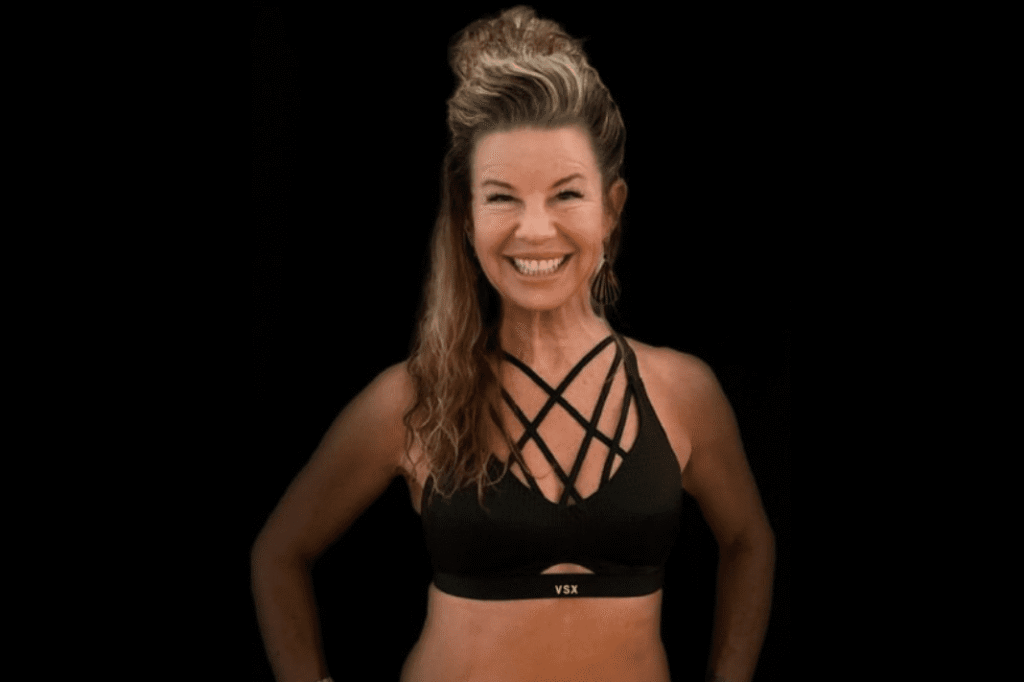
The first person he connected with was Dawni Rae Shaw, an executive wellness coach, certified yoga instructor, and founder of the women’s transformational retreat Child to Wild. She had spent 25 years helping executives at Microsoft, Meta, and T-Mobile build healthier, more grounded lives. She, too, had grown up carrying wounds from the same absent father. And she had been doing the deep personal work to heal them for nearly as long as she had been helping others do the same.
As it turned out, Dawni had been running a yoga studio three-quarters of a mile from James’s home in Seattle. He had worked out at the gym where she once taught fitness classes. Their paths had crossed for years without either of them knowing the other existed.
What their story reveals about identity, trauma, and belonging goes far beyond a DNA result.
“A puzzle piece came together in my life, and the trauma and the searching I had been seeking my whole life was gone.” — James Hayden
Your identity is a story, not a fixed fact
We tend to think of identity as something stable. Something we either have or we don’t. But psychologists have known for decades that identity is actually a living narrative, something we are constantly writing and rewriting based on new information, new relationships, and new understanding of our past.
When James discovered eleven siblings, he did not just gain family members. He gained a revised version of his own story. And that revision shifted something real. The anxiety that had quietly driven him for decades, the need to outwork everyone in the room, the instinct to prove himself before someone could decide he wasn’t worth keeping, began to loosen its grip.
This process has a name in psychology. Narrative integration is what happens when we absorb disorienting new information and fold it into a coherent, expanded sense of who we are. It is not always comfortable. But it is one of the most powerful forms of healing available to us.
You don’t need a DNA test for this to apply to your life. Any major disruption, a job loss, a diagnosis, a relationship ending, a family secret finally spoken out loud, can trigger the same need to revise the story you have been living inside. The healthiest response is not to resist the revision but to let it teach you something.
Try this: Write down the story you tell yourself about who you are. Then ask honestly: is that story still true? Is it complete? What would you add if you weren’t afraid?
The wound beneath the success
Abandonment leaves a specific kind of mark. Not always visible. Not always acknowledged. But present in the way a person moves through the world.
Dawni grew up loving a father who could light up any room he entered. A professional baseball player, a beloved coach, a gifted teacher. She has described the feeling of being near him as being in the presence of a celebrity. And then, when she was nine years old, he dropped her off after a trip to Disneyland and disappeared from her life for a decade.
What follows an experience like that is rarely simple grief. It is confusion. It is a child learning to split off the pain in order to keep functioning, a process psychologists call dissociation. It is a young person becoming hypervigilant to signs of rejection and learning to perform happiness as a survival strategy. Dawni has spoken openly about the years of neglect, abuse, and unsafe environments that followed. She channeled the pain into becoming an athlete, a performer, someone who looked more than fine from the outside.
James’s version looked different but came from the same place. Instead of splitting off into performance, he channeled everything into work. Relentlessly. Brilliantly. At a cost he didn’t fully understand until much later. “I had something to prove to the world,” he has said. “There was this instinct about being abandoned or deserted.” He once walked away from a major financial stake in a company he believed was failing, driven not by analysis alone but by a lifelong reflex: leave before you get left.
The research on abandonment and the nervous system is clear. Early experiences of unpredictable parental presence shape the brain’s threat-detection system in ways that persist into adulthood. These patterns are not character flaws. They are adaptations. Smart ones, at the time. The problem is that they keep running long after they are needed.
The good news is that the brain can change. With the right support, over time, it genuinely can learn new responses.
Try this: Think about one recurring pattern in your life, in work, in relationships, or in how you respond to stress. Ask yourself when you first learned that pattern and whether it is still serving you.
Healing is not a destination. It is a direction.
Dawni Rae Shaw has been doing serious therapeutic work for nearly 20 years with the same practitioner. Not because she hasn’t made progress. Because she has made enough to know how much more is possible.
She recently completed a four-day solo therapeutic intensive that she describes as one of the most significant experiences of her life. “I was able to come together with parts of me, with that inner child,” she has shared. “I’ll never be the same.” She describes the experience as finally being able to reach a younger version of herself, a small girl hiding behind a rock in a dark fortress, and bring her home.
This is not a metaphor for its own sake. It reflects something real in how trauma is stored in the body and mind. Developmental psychologists and neuroscientists have confirmed that early childhood experiences create neural pathways that continue to shape behavior and emotion far into adulthood, often without conscious awareness. The work of healing involves bringing those fragmented, buried parts of ourselves back into an integrated whole.
Shaw puts it plainly: “We can only take people as far as we’ve gone ourselves.” It is why she keeps doing her own work even as she guides others through theirs. It is also why she believes the inner work is not optional for people who want to show up fully, whether as parents, partners, leaders, or friends.
Hayden has arrived at a similar place from a different angle. Since the DNA discovery and the conversations it opened, his professional voice has shifted. He no longer shapes his message to please a room. He speaks plainly, sets clear boundaries, and lets the fit reveal itself. More clients have come, not fewer. “I know who I am now,” he has said. “I know what my voice is.” That is what genuine self-knowledge looks like in practice.
Try this: Ask yourself what you needed most as a child that you didn’t consistently receive. Safety? Acknowledgment? Stability? Then ask what small thing you could do today to begin giving that to yourself now.
“Now they’re scars. They’re not wounds.” — Dawni Rae Shaw
Belonging is not sentimental. It is biological.
In one of the most cited papers in social psychology, researchers Roy Baumeister and Mark Leary argued that the need to belong is a fundamental human motivation, as essential as food or shelter. When that need goes unmet chronically, the consequences show up in the body. Elevated stress hormones. Disrupted sleep. Weakened immunity. Significantly higher rates of depression and anxiety.
James and Dawni both experienced belonging’s absence in different ways, and both felt its return as something almost physical. Dawni has described feeling safer in the world since finding her brother, not because her external life changed overnight but because something internal settled. “I feel safer in the world because of Jim,” she has said. “He’s one of those people in my life like that.”
James, who grew up with older parents and no siblings, spent decades without anyone who simply knew him in the bone-deep way a sibling can. “We’re social beings,” he has reflected. “That’s the way we were created. I didn’t have that sense of belonging. And it manifested in ways I didn’t fully understand until now.”
Belonging doesn’t require a DNA discovery. It requires honesty about where it is missing, and courage to seek it. Research consistently shows that two or three relationships of genuine depth are enough to create the kind of psychological safety that changes everything. Quality matters far more than quantity.
Try this: Think about who in your life makes you feel truly seen and safe. Not impressed or entertained. Safe. If the list is short, that is important information. Belonging is a need, not a luxury.