


The phrase Thank God it’s Friday isn’t really about Fridays; it’s about the weekend. Or rather, it is about how the cumulative stresses and pressures of the workweek make us yearn for a break. And we need one. Studies show that the number of errors we make at work peaks on Fridays. Not surprisingly, our productivity reaches its lowest levels of the week on Fridays as well.
Stress and exhaustion wear down our ethics too. New research has been studying what happens to our moral compasses in the workplace, and the findings are alarming. The demands and pressures of our jobs can make us view behavior we had considered to be objectionable as more reasonable when we see our coworkers engaging in it. In time, we can become detached from the ethical anchors that kept our conduct in check, and we’re likely to be unaware of the extent to which our moral compass has drifted.
A 2024 survey documented that 38% of workers say they would act unethically if asked by a manager to do so. Other surveys estimate that 10% to 20% of workers might act unethically in ways that solely benefited their manager or company. Such behaviors range from mild offenses like lying to clients to actual felonies. Some of these violations are bewilderingly brazen. In 2015, several Volkswagen executives were indicted for rigging the emission controls on 500,000 vehicles sold in the United States. One of them even served several years in jail. A year later, 5,000 Wells Fargo employees lost their jobs for opening millions of fraudulent accounts without their customers’ authorization. They did so in order to meet unreasonable sales quotas.
Researchers found that one of the main culprits leading to these kinds of unethical behaviors is overidentifying with an employer. Workers who felt strongly connected to their employer, its brand, or its mission perceived unethical and even illegal acts as dutiful displays of loyalty and corporate good citizenship (going above and beyond their own responsibilities to contribute to the success of their colleagues, team, or company).
Identifying with or admiring a charismatic leader who acts unethically can create a similarly slippery slope. Seeing a respected figure behave unethically can put us into cognitive dissonance—an emotionally uncomfortable clash of beliefs and behavior. To resolve the inner tension cognitive dissonance creates, we can either downgrade our regard for the leader or excuse or justify their unethical behavior, as my fellow trainees did with our teacher. When employees do the latter, they are at risk of violating their own ethical standards going forward because they have reclassified unethical behavior as acceptable.
Taken together, these examples, along with the growing prevalence of incivility, bullying, harassment, bias, and toxic cultures, paint a bleak picture of moral decline in the workplace. And yet, those incidents represent only half the story.
The other half hides in plain sight because of another bias—we are far more likely to notice abuse than we are to notice neglect.
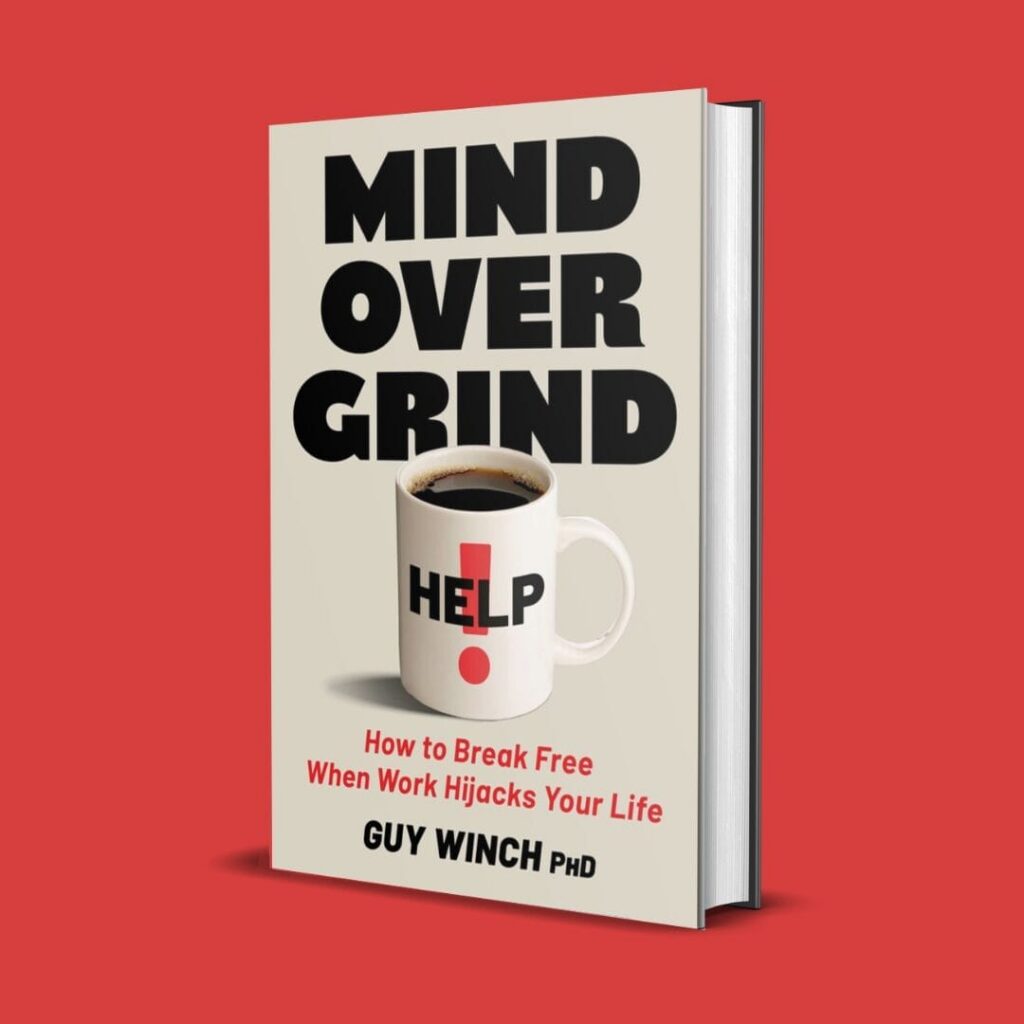
Excerpted from Mind Over Grind: How to Break Free When Work Hijacks Your Life by Guy Winch, Simon & Schuster (February 10, 2026)