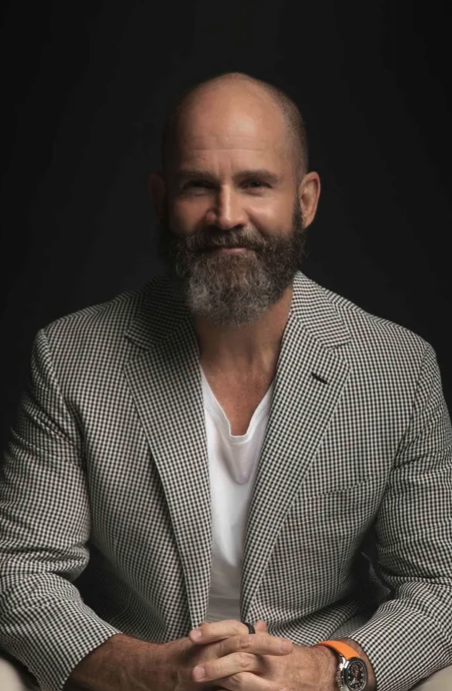
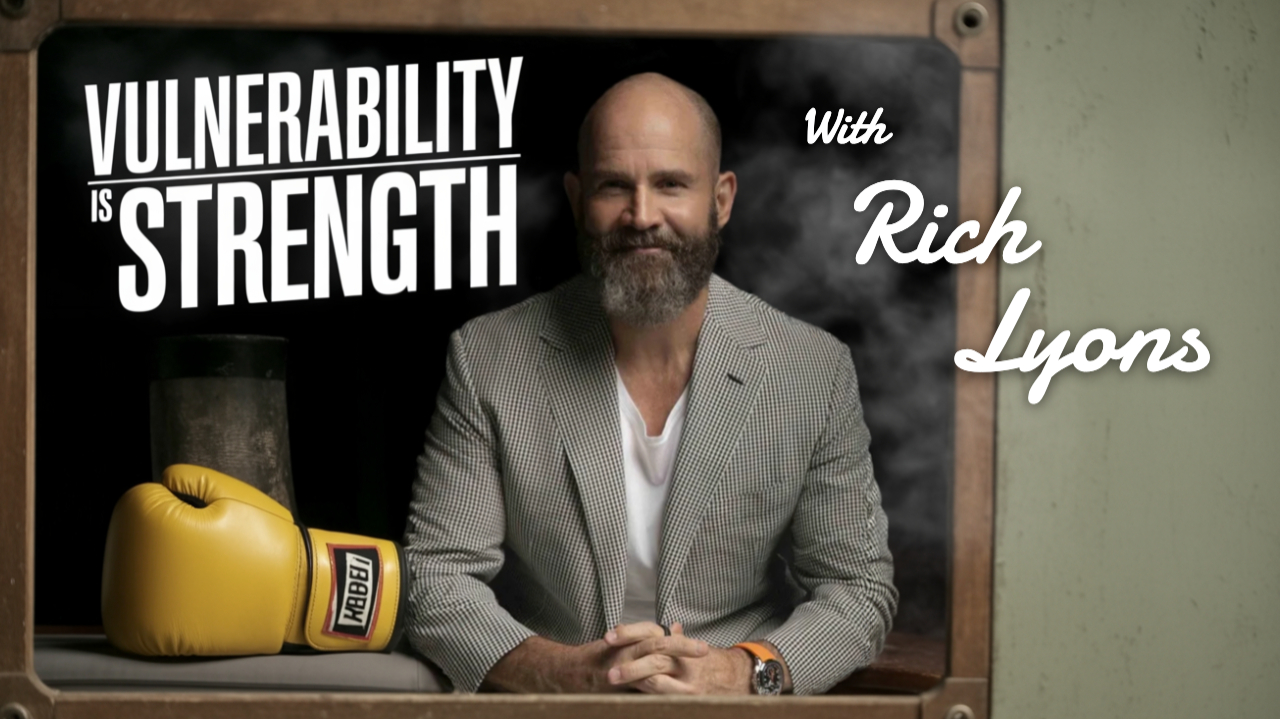
I wanted to model an emotional man for my daughters, not a robot.
– Rich Lyons
For generations, many men have been taught a narrow definition of strength: endure quietly, suppress emotion, and push forward at all costs. Phrases like “man up” and “real men don’t cry” may sound outdated, yet their influence persists — shaping how boys grow into men, how leaders show up at work, and how partners relate at home.
The consequences of this emotional silence are far-reaching. Relationships suffer from unspoken resentment. Leaders appear confident on the surface while privately battling fear and burnout. And too often, men reach a breaking point without ever having said out loud that they are struggling.
Against a backdrop of growing awareness around men’s mental health, there is an increasing recognition that emotional awareness is not a liability — it is a critical leadership and life skill.
For Rich Lyons, this realization came after decades of living by a model of masculinity that rewarded toughness and emotional restraint while quietly eroding connection, creativity, and self-trust.
How Emotional Suppression Becomes a Survival Strategy
Many men learn early that sensitivity invites ridicule. Being emotionally expressive can lead to labels that sting and linger, especially during childhood and adolescence. In response, emotions are often pushed down, replaced with performance, productivity, or physical toughness.
While this strategy may help boys navigate social pressure, it carries long-term costs. Suppressed emotions do not disappear — they resurface as anger, irritability, disconnection, or chronic stress. Over time, the habit of emotional avoidance narrows the range of human experience and limits authentic connection.
For many men, anger becomes the only socially acceptable emotion, masking fear, hurt, or sadness underneath.
Why Awareness Changes Everything
Emotional awareness does not mean acting on every feeling. It means recognizing what is present internally without letting it hijack behavior.
One useful framework simplifies emotions into a small set — fear, hurt, anger, sadness, and joy — reminding us that human experience is rarely singular. Most moments contain a mix. When emotions go unnamed, they tend to spill out sideways, often misdirected toward colleagues, partners, or teams.
Awareness interrupts that pattern. By noticing and naming emotions, individuals gain choice. Instead of reacting automatically, they can respond intentionally.
Leadership Without Emotional Literacy Is Fragile
High-pressure environments often reward decisiveness and control while discouraging vulnerability. Yet leaders who lack emotional literacy are more likely to misinterpret situations, project unresolved feelings onto others, and create cultures of fear or disengagement.
Emotional awareness strengthens leadership by improving clarity, empathy, and communication. It allows leaders to separate personal stress from professional judgment and to model steadiness rather than suppression.
True confidence is not the absence of fear — it is the ability to move forward with awareness despite it.
Courage Requires Fear
Courage is often misunderstood as fearlessness. In reality, courage only exists in the presence of fear. Speaking honestly, leading through uncertainty, and showing vulnerability all require facing discomfort directly.
Pretending fear does not exist may look strong on the outside, but it limits growth. Acknowledging fear, by contrast, expands capacity. It allows individuals to act with integrity rather than denial.
Marriage, Fatherhood, and Emotional Presence
Close relationships tend to expose emotional habits more clearly than any professional setting. Patterns of withdrawal, shutdown, or avoidance that once seemed manageable often become unsustainable in marriage and parenting.
For fathers, emotional presence carries added weight. Children learn how to relate to their own feelings by watching how adults handle theirs. When men model emotional awareness, they normalize honesty, resilience, and compassion.
Small practices — like naming emotions aloud or creating space for shared reflection — can shift family dynamics in lasting ways.
The Hidden Cost of Silence
Men’s reluctance to speak openly about emotional pain has serious consequences. Suicide remains one of the leading causes of death among men, and many who struggle appear outwardly stable until they are not.
Often, the most dangerous moments are invisible. A simple check-in, an unplanned call, or a moment of genuine listening can interrupt isolation and save lives.
The challenge is not that men do not care — it is that many do not feel safe expressing what they carry.
Why Medication Alone Isn’t the Answer
While medication can play an important role in mental health care, it cannot replace emotional skill-building. Numbing anxiety without addressing its source may reduce symptoms, but it does not teach resilience, self-understanding, or emotional regulation.
Life is inherently emotional. Developing the capacity to experience and process feelings — rather than eliminate them — is essential for long-term wellbeing.
The Importance of Support Systems
Leadership and responsibility can be isolating. Many men feel they must project certainty at all times, leaving no room for doubt or fear. Without external support, emotional pressure accumulates.
Healthy support systems — trusted partners, coaches, mentors, or peers — provide safe spaces for honesty. These relationships allow men to arrive at work and family life resourced rather than depleted.
Support does not weaken leadership. It sustains it.
From Identity to Integration
One of the most profound shifts men experience through emotional work is the realization that feelings do not define identity. Emotions are temporary states, not permanent truths.
Recognizing this allows men to feel deeply without becoming overwhelmed. Fear can exist alongside courage. Sadness can coexist with purpose. Vulnerability can strengthen rather than undermine self-respect.
Integration, not suppression, becomes the goal.
Changing the Cultural Narrative
For men to feel safer expressing emotion, vulnerability must be normalized — not as crisis behavior, but as routine human experience. Regular check-ins, structured conversations, and emotionally literate leadership models make openness sustainable rather than exceptional.
Cultural change does not happen through slogans alone. It happens through consistent, everyday practices that redefine what strength looks like.
Strength, Reimagined
On the other side of emotional honesty is not weakness, but relief. Many men describe a sense of calm and clarity after finally naming what they feel — proof that emotional expression is not dangerous, but freeing.
Redefining strength does not require abandoning ambition or responsibility. It requires expanding the definition of what it means to be human.
Emotional awareness is not the opposite of strength.
It is one of its most essential forms.