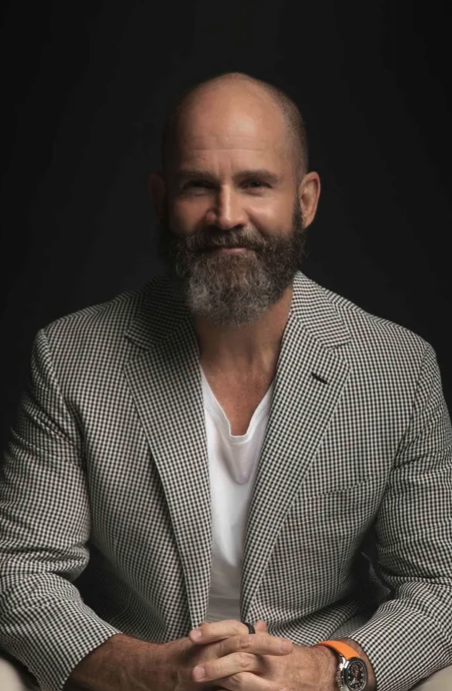

I wanted to model an emotional man for my daughters, not a robot.
– Rich Lyons
In a world that still promotes that “real men don’t cry,” too many guys are trying to white‑knuckle their way through fear, hurt, and stress in total silence. The cost shows up everywhere—from relationships that never quite get honest, to leaders who look unshakable on the outside while they’re crumbling on the inside. Against the backdrop of Movember and a growing awareness of men’s mental health, the conversation about what it really means to be strong has never been more urgent.
That’s where Rich Lyons steps in. As the author of Life Is Sales and the founder of lifeissales.com, Rich brings together high‑performance sales and leadership with emotional awareness, vulnerability, and service. In this candid interview with Stacey Chillemi, he unpacks how feelings became his greatest superpower, what it means to raise emotionally aware daughters, and why simple check‑ins can literally save lives.
Thank you so much for joining us! Our readers would love to get to know you a bit better. Can you tell us a bit about your backstory?
I’m 60 now, and I grew up in a time when the message to boys and men was simple: be tough, don’t feel, don’t talk. I was actually a very sensitive, emotional kid and close to my mom, and that got me labeled a mama’s boy, which hurt more than I let on. When my parents divorced, I decided conflict was dangerous and tried to keep the peace by pushing my own feelings down. Later, I channeled everything into sports and the gym to “man up,” but over time, marriage, fatherhood, leadership, and my work with Life Is Sales showed me that shutting down my emotions also shut down passion, creativity, and problem‑solving—so I had to consciously bring that emotional part of me back online.
You’ve worked with so many people in high-pressure environments. Why do you think men especially struggle to talk about what they feel?
A lot of it comes from the programming many of us grew up with—this idea that toughness means silence and that feelings, other than anger, don’t belong. I bought into that stoic model for years: never share what’s going on inside, just suck it up and drive forward. That might help you survive in certain situations, but it destroys intimacy and real connection in relationships and teams. When anger becomes the only acceptable emotion, fear and hurt just get buried, and after decades of that, opening up can feel like weakness instead of strength.
You often talk about five core emotions and how awareness becomes a superpower. Can you walk us through that?
I simplify emotions into five core ones: fear, hurt, anger, sadness, and joy. People usually say they only want joy, but the truth is, we’re always feeling a mix of all of them. I picture it like a tornado swirling inside; I don’t have to express every feeling, but pretending they’re not there is a lie. When I can name what I’m feeling and see where it sits on a scale, I’m no longer at the mercy of that tornado, and that awareness becomes a superpower in how I walk into rooms, conversations, and decisions.
Can you share a moment when emotional awareness actually changed how you showed up as a leader?
There was a day I walked into a manager’s meeting and, for no obvious reason, felt like I hated everyone in the room. They hadn’t done anything—it was just this surge of anger I was carrying. Instead of unloading on them, I sat down, got curious, and mentally tracked my day backwards. I realized someone had said something earlier that really hurt my feelings, and once I acknowledged that hurt, the anger toward my team disappeared, and I could refocus on the real intention of the meeting.
What did strength mean to you when you were younger, compared to what it means to you today?
As a kid, being sensitive meant getting teased, so in middle school I basically decided, “I’m not doing emotions anymore.” I threw myself into sports and lifting, built this identity of being physically strong and emotionally shut down, and thought that’s what respect looked like. Back then, I believed strength meant never showing fear or sadness and never letting anyone see they’d hurt me. Today, strength looks more like being willing to feel fear, hurt, and sadness and still move forward with courage, honesty, and an open heart.
You tie courage directly to fear. How do you define real courage?
For me, courage doesn’t exist without fear—if someone tells me they’re never afraid, then they can never truly be courageous. Courage is facing your fear and doing the thing anyway, not pretending the fear isn’t there. Public speaking is a great example; even very experienced speakers feel anxiety and butterflies before big stages, and that energy is proof that it matters. Real courage is saying, “Of course I’m afraid,” and then choosing to step up, speak up, and act from intention instead of denial.
You’ve said we shouldn’t become our feelings, even when they’re intense. How do you practice that in your everyday life?
I remind myself that feelings are energy, not identity—they’re real, but they’re not who I am. People joke about waking up on the wrong side of the bed and then wearing that mood all day like a uniform, but that’s giving feelings the keys to your life. A coach once told me it doesn’t matter how you feel; you still get to choose how you want to be in the world, and that really stuck. So when I notice fear, anger, or sadness, I try to name it, respect it, and then decide who I want to be right now, rather than letting that feeling define me.
What was the turning point that got you to start doing deeper emotional work?
A big turning point came when my wife and I got engaged and she suggested premarital counseling. At the time, there was a heavy stigma around therapy, so I went in resistant and suspicious, arms crossed, convinced it meant something was wrong. Instead, the counselor described my patterns and childhood so accurately that he had my attention in minutes. He gave us a project to consciously design our wedding ceremony as our first shared “project,” and that experience opened the door to social‑emotional work that I eventually realized I needed not just for our relationship, but for myself.
How did marriage and fatherhood reshape the way you show up emotionally?
Early in our marriage, my default move when things got hard was to shut down and go to bed instead of talking, which didn’t work well with a partner who wanted to engage. My wife later joined a group and did deeper emotional work, and watching her become more alive and confident challenged me in a good way. At first, I stepped into the work because I felt like the train of growth was leaving the station without me, but over time, it became something I owned because I wanted to maximize my potential and be a better husband. When we had two daughters, that raised the stakes and pushed me to think seriously about what kind of emotional man I wanted them to see every day.
How did that “new model” of masculinity change what you wanted your daughters to see in you?
I didn’t want my daughters to grow up believing their dad was never afraid, never hurt, and never had problems, because that’s not real and it’s not fair. I wanted them to see a man who could be tough when needed and also feel deeply, care openly, and admit to fear and hurt. We started a “feelings game” at dinner where each of us shared moments of fear, hurt, anger, sadness, and joy from the day, and I participated fully as their father. That helped normalize emotional language and showed them that being a man includes being emotionally present, not just being a strong provider.
You’ve seen firsthand how dangerous it is when men keep everything inside. Why is men’s mental health and suicide prevention so personal for you?
It’s personal because I know six grown men who have taken their own lives, and that’s a staggering number for one person’s circle. Some were friends from high school who died years later after marriages, divorces, and kids; one was my cousin; others were men I knew in my community. One was a guy I coached soccer with for years—our daughters were close, he seemed upbeat and supportive, and then he died by suicide, and the entire community was shocked. Those losses drive home how little we sometimes know about what’s really going on behind the smiles, and they’re a big reason I support Movember and talk so much about checking in on people.
You shared a powerful story about a friend who broke down on the phone. What did that moment teach you about reaching out?
I called a friend one day just to check in, and he surprised me by breaking down and crying on the phone, which was completely out of character for him. He kept apologizing, and I told him there was nothing to apologize for because I’m someone who cries at commercials. Later, he told me that at that time he was thinking about taking his life, and our conversation helped pull him back from that edge. I had no idea in the moment how critical that call was, and it reinforced for me how powerful it can be to follow the nudge to text or call someone when they cross your mind.
You’ve also raised concerns about how quickly we medicate anxiety instead of facing feelings. How do you see that playing out?
We live in a culture where talking about anxiety often leads straight to, “Here’s a pill,” and that can short‑circuit the deeper work of building emotional capacity. Medication can blunt the intensity, but it doesn’t teach you how to live with fear, sadness, and stress or grow through them. I’ve seen people, including those close to me, feel like something is wrong with them if they’re not medicated, which is a pretty upside‑down way of viewing deep feeling. Life is emotional and stressful by nature, so what we really need is more self‑care, real support, and honest conversations about feelings instead of trying to make them disappear.
As a CEO and leader, how did you build that support team for yourself?
When I was running my own company, I couldn’t walk in and say, “I’m afraid the company won’t make it,” because that would create panic and instability. My job was to show up with grounded confidence, to hold a vision that we could succeed without pretending everything was easy. To do that, I needed safe places outside the company where I could be fully honest, so I built a support team that included a coach, a mentor, my wife, and trusted friends. I talk about going to work “full,” not hungry—feeling affirmed and resourced enough that I could pour into employees, customers, and partners—and that fullness came from good habits and from people who reminded me of my vision when I forgot it.
When you started acknowledging that you’re “a man with emotions” again, what changed for you?
The biggest change was feeling more real and aligned with who I actually am instead of who I thought I was supposed to be. I once told a leadership group, “Don’t wait until you’re 56 to let people know who you are,” because so many of us hide behind an image while battling impostor syndrome. I’ve achieved a lot and still have doubts and fears, and saying that out loud makes those feelings more human and less shameful. As entrepreneurs often ask when fear will go away, my honest answer is that if you’re truly growing, fear doesn’t disappear—you just expand your capacity to hold it and still lead.
For men out there who feel like they’re on their own, without a built-in support system, where can they start?
I’d encourage them to start by looking for even one person they can go deep with and tell the truth to. Most of us have overlapping circles—social friends, sports buddies, colleagues—but not all of those spaces are built for real vulnerability. When you begin doing deeper work, like getting sober or becoming more emotionally aware, you may lose some friends who aren’t interested in that version of you, and that’s painful but clarifying. A coach or structured group can help too; I can remember walking into my coach’s office as the CEO of a big company, breaking down, and saying, “I don’t know what I’m doing,” and having that space made it possible to step back into my role with more integrity.
What do you think needs to change so men feel safer talking about their emotions at home, at work, and in friendships?
We need more structured spaces and rhythms that normalize these conversations instead of treating them as rare, dramatic events. Movember is a good example of a movement that creates awareness and resources, but we need that kind of engagement all year long. The hardest time to reach out is when you’re deeply struggling, which is why things like weekly calls, standing check‑ins, and regular groups matter so much. I talk with one friend almost every day and lead leadership groups that meet every few weeks, and those built‑in commitments keep you connected and aware, which is the foundation for real choice and change.
When people say yes to support and vulnerability, what do you want them to remember on the other side of that scary moment?
I want them to remember how it feels afterward, not just how scary the leap was in the moment. That big cry or raw conversation can feel overwhelming while it’s happening, but it often leaves you with a sense of clarity and calm that’s almost spiritual. You realize you didn’t die from feeling your feelings—you actually feel more grounded and alive. If we can hold onto that experience of relief, we’re more likely to lean into vulnerability the next time instead of shutting down, and over time, that reshapes how we see emotional openness.
What’s the most powerful lesson you’ve learned about being human through writing Life Is Sales?
Writing Life Is Sales made it crystal clear to me that we’re all on a journey, and it’s rarely a straight, predictable line. In the book and in my work, I talk about how life is emotional and how the same principles that shape good sales—awareness, service, and choice—also shape how we live and relate to others. Some moments feel terrible while you’re in them, but later you see they were exactly what was needed to happen for your growth. My family has a saying, “Everything works out perfectly,” and choosing to trust that, even when things don’t look the way I think they should, has helped me build a life and relationships that feel more purposeful than just successful.
How can our readers further follow your work online?
People can find me primarily through two sites. At lifeissales.com, they can learn about the Life Is Sales program, which combines sales and leadership skill‑building with coaching, community, and support. There are opportunities there for salespeople, entrepreneurs, and leaders who want to grow both their results and their emotional intelligence. At richlyons.com, they can explore more about my book Life Is Sales, my mission to help people maximize their potential, and additional resources to keep doing this work in their own lives.
You can also follow me on LinkedIn, Instagram, & X.
Rich, thank you so much for your honesty, your heart, and the depth you brought to this conversation. I know a lot of men, and their loved ones are going to feel seen and supported by what you shared today.
Thank you for having me and for creating space for this kind of dialogue. I really appreciate the work you’re doing to shine a light on men’s mental health and to encourage people to reach out and connect—those conversations truly matter.