
Most families believe their wealth is protected. They have a CPA handling the taxes, an attorney managing the entities, and a wealth advisor watching the portfolio. What they do not realize, according to Susan Lindeque, is that the gaps between those three people may be quietly costing them millions. “If they don’t know exactly who’s the person in charge of every opportunity, and especially because everyone works in silos, that’s where the gaps are,” she says. “And that’s one of the dangers that you really need to look out for.”
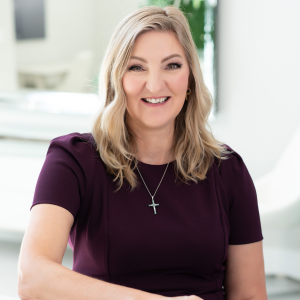
Susan Lindeque is the Founder and CEO of Avestix Group, a woman-led, woman-owned fund management firm built around alternative assets. She is a Chartered Accountant, the Chief Investment Officer of her own single-family office, and has raised, invested, or managed more than a billion dollars across over a hundred private acquisitions. In a recent conversation on The Authority Business Show, Lindeque broke down why the compliance model most wealthy families rely on is no longer adequate, what the early warning signs of exposure actually look like, and how to build a structure that protects wealth across generations rather than quietly undermining it.
Why the Old Compliance Model No Longer Works
For decades, a good CPA and a quarterly review were enough to keep a family office in order. Lindeque is direct about why that era is over: the money has moved.
“Previously, a lot of people just invested in public markets,” she explains. “But these days, a lot of people invest in alternative markets. Alternative markets are like real estate, venture capital, data centers, art, and exotic cars.” Private assets carry private complexity. They do not sit in a brokerage account where everything is visible and reportable on the surface. They sit inside trusts, LLCs, offshore entities, and co-investment structures, each of which carries its own reporting obligations, tax consequences, and regulatory requirements.
The second shift is behavioral. Families no longer want to hand money to a fund manager and wait for returns. They want to sit at the table, participate in due diligence, and make direct investment decisions. Lindeque understands the appeal, but she is clear about what comes with it. “They want to share in the profit, but what they don’t realize is that with that comes a lot of requirements in terms of state taxes, federal taxes, and reporting. And that’s where all the problems are starting.”
The result is a compliance burden that was originally designed for registered investment advisors, now falling on family offices and ultra-high-net-worth individuals who were never built to carry it.
The Specific Obligations Most Families Overlook
When Lindeque is asked which regulatory obligation catches sophisticated families most off guard, her answer is not a tax form or a filing deadline. It is something more structural: beneficial ownership.
“Who is the owner of the investment? Where does it sit?” she asks. The answer is rarely simple. A single family’s holdings might be spread across a discretionary trust, a disability trust, an LLC in one state, and an offshore entity in a tax haven. Each jurisdiction carries its own Know Your Customer requirements, anti-money-laundering rules, and reporting timelines. “Every country is different,” Lindeque notes, “and with that comes your KYC, your AML, but also your reporting.”
What makes this especially dangerous is the speed at which reporting expectations are changing. Quarterly reviews were once standard. Now, Lindeque says, the direction is toward weekly reporting, and she does not think daily or even real-time reporting, is far off. “We’re moving into almost a weekly basis, and that’s possible. I don’t think it’s that far in the future where you’re actually going to have reporting daily or even on a minute basis.” A compliance model built for once-a-year financial statements is not designed to keep pace with that.
How Silos Between Advisors Create Hidden Exposure
The fragmented advisory model that most wealthy families rely on, a CPA for taxes, an attorney for legal structure, and a wealth manager for the portfolio, fails not because any one advisor is doing poor work. It fails because no one is watching the whole board.
Lindeque describes the mechanism clearly. “If your wealth manager triggers a position and that position creates a tax event, or a liquidity event, or there’s a capital call from an investment you’ve made, and your tax person is not aware of that” — that is where the problem begins. Each advisor operates in their own lane. No one has the full picture. And when something happens, the gaps between those lanes are where families get hurt.
She has seen this play out in one of its most painful forms: wealth transfer. “When the patriarch of the family office falls away, all of that wealth gets transferred to the woman, and we see this happening over and over daily. The women just don’t even know where to start looking.” A list of advisors is not a system. Without a consolidated, integrated view of every holding, every obligation, and every decision-maker, the people who inherit that wealth are left to piece it together under the worst possible circumstances.
“If you don’t have a complete dashboard that gives you 24/7 exactly what’s happening and where, that’s the big danger — because they inherited some wealth and they’ve got no idea.”
~ Susan Lindeque
What the Slow Accumulation of Small Failures Actually Costs
The risk Lindeque returns to most often is not a single catastrophic error. It is the pattern that forms when small failures pile up over time without anyone noticing.
“If you miss one, you’re okay,” she says. “If you miss two, you can maybe say that was a problem. But if it’s starting to be continuous, then there’s a real big problem somewhere.” That pattern, when it becomes visible to regulators or the IRS, reads as systemic failure rather than isolated oversight. The consequences reflect that. “If the IRS comes after you and they start having penalties, they can put liens on your assets. They can even take over your bank account. The banks can even step in and close your bank account.”
The families most at risk, Lindeque says, are the ones who believe the complexity of their structure is being managed simply because they have advisors. “People don’t always think: I’m just creating all this wealth and I’ve got my CPA and my lawyer and my wealth advisor to look after all of them. But what they don’t realize is if they don’t know exactly who’s in charge of every opportunity, and what the implications are, that’s where the danger is.”
She sees AI as part of the solution to this accumulation problem. The technology can identify patterns across large, complex data sets that no human team could realistically monitor in real time. The back-end burden that has built up over decades of regulatory complexity, she believes, is exactly where AI will have its most significant impact on wealth management.
How to Build Compliance as Architecture, Not an Afterthought
Lindeque makes a distinction that changes how most people think about compliance entirely. The families who are genuinely protected do not treat compliance as a cost to minimize. They treat it as architecture, built into the structure of their wealth from the foundation up.
When a family comes to her to redesign their compliance from the ground up, she does not start with software or systems. She starts with a whiteboard. “I literally start and look at where all your investment holdings are, where you have it, where it is from a jurisdiction perspective, and who’s the advisor responsible for all of that.” Public assets — stocks in a brokerage account — are visible by nature. The harder work is mapping the private assets: the real estate, the venture capital, the gold held in a vault in London, the yacht, the digital assets sitting on a consumer exchange.
Once that map exists, the architecture can be built around it. The goal is a consolidated view that is accessible at any time, by anyone who needs it, including the family members who will eventually inherit it. Lindeque is emphatic about succession as part of this conversation. “It’s not just about preservation. It’s really about your legacy and what you want to ensure will continue. And what does that look like? And what do you need to put in place?”
She also advocates for physical backups alongside digital systems. “If you’ve got a solid, clearly explained document of where everything is, where your holdings are, I think that’s important.” In a world where software can be corrupted and digital access can be lost, a clear written record of structure and ownership is not old-fashioned. It is essential.
The Map Is the Foundation
The most important takeaway from Susan Lindeque’s work is also the most accessible one, and it requires no technology and no outside advisor to begin. It requires one honest exercise: map everything.
Where are all the investments? Which jurisdictions? Which entities? Who is the advisor responsible for each one? What are the reporting obligations attached to each holding? “If you don’t know your whole holistic picture, if you don’t know where your offshore structure and tax structures are, if you don’t even know where all your investments are and what they mean, then the foundation that you build everything on is so, so weak,” Lindeque says.
That map is not the end of the work. But it is the only place the work can legitimately begin. Once a family can see everything in one place, the gaps become visible, the responsibilities become assignable, and the architecture can be built to hold.
The mindset shift Lindeque asks for is a simple one, but it changes everything. Stop seeing compliance as an invoice to be paid and start seeing it as the foundation the wealth is built. “If you actually consider this — well, this is the foundation on which I built my wealth — then that changes everything the way you look at it.” That shift, Susan Lindeque believes, is what separates the families who sleep at night from the ones who discover the gaps only after someone else finds them first.