

When I first read The Year of Living Dangerously, Christopher Koch’s novel set amid Indonesia’s failed coup of 1965, I became as fascinated by a hotel as by any of the characters. The Hotel Indonesia—and particularly its Wayang Bar—was where foreign correspondents gathered every evening over gin and whiskey to sift through the rumors, casualties, betrayals, and shifting alliances of a nation tearing itself apart. It wasn’t merely a bar. It was the newsroom, the courtroom, and the confessional where history was debated before it was written.
Years later, arriving in Jakarta, there was never any question where I’d stay. I ordered a drink at the Wayang Bar, hoping that somehow history lingered in the ice cubes.
Ever since, I’ve found myself drawn to hotels that have quietly altered the course of the world. They are more than places to sleep. They are theaters of diplomacy, mezzanines for conspiracy, salons of revolution, and accidental headquarters where politicians, refugees, generals, royalty, and rogues cross paths. Their corridors absorb secrets; their lobbies become crossroads of civilizations.
Whenever possible, I seek them out—not simply for their architecture, but for the echoes that still reverberate through their walls.
In Berlin, it had to be the Hotel Adlon Kempinski. Long before Philip Kerr made it unforgettable in his Bernie Gunther novels, the Adlon was where diplomats, industrialists, foreign emissaries, and eventually Nazi officials negotiated Europe’s future over coffee, cigars, and crystal. Entire chapters of twentieth-century history wandered through its revolving doors.
In Havana, I checked into the Hotel Nacional, where Lucky Luciano and Meyer Lansky once parceled out casino empires during the infamous 1946 Havana Conference. Years later, during the Cuban Missile Crisis, anti-aircraft batteries occupied its gardens, transforming one of the Caribbean’s grandest hotels into a strategic military lookout.
Every visit to Singapore eventually leads me back to Raffles. Birthplace of the Singapore Sling, which lubricated more than a few colonial pen strokes, it was the drawing room of the British Empire in Southeast Asia, where governors, traders, explorers, and attachés quietly shaped the fortunes of nations over long lunches beneath whirring ceiling fans.
I chose Le Commodore Hotel in Beirut with intention. During the Lebanese Civil War, its corridors became the arteries of history, carrying foreign correspondents, stringers, negotiators and power brokers through a town unraveling and reinventing itself by the hour. Stories were filed from its rooms, alliances tested over chilled arak in the bar, and tomorrow’s headlines argued long past midnight. Thomas Friedman captured that remarkable world in From Beirut to Jerusalem, winner of the 1989 National Book Award for Nonfiction.
When I arrived in 2019, I invited the New York Times bureau chief to dinner at Cucina, the hotel’s restaurant, where we traded observations on the day’s political currents and imagined what lay ahead for the city once celebrated as the Paris of the Middle East. The events in the following weeks and months shattered the city, the country, and our predictions.
And in Washington, D.C., I never tire of the Willard Hotel. It has hosted presidents since before the Civil War and helped define the very culture of American politics. Legend has it that those waiting in the lobby to bend President Ulysses S. Grant’s ear became known as “lobbyists.” The hotel became a symbol of how influence works—not always in chambers of government, but over a cheroot in a comfortable chair.
But no hotel has ever affected me quite like the Athénée Palace in Bucharest.
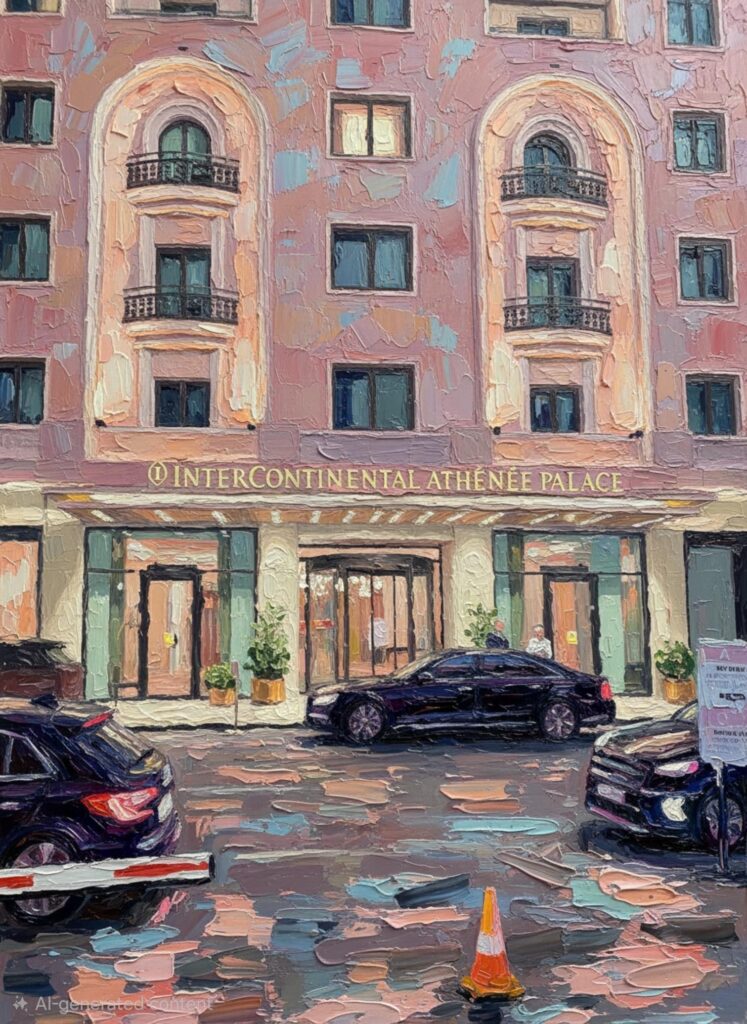
Image by Richard Bangs
Standing beside the Romanian Athenaeum and overlooking Revolution Square, the hotel appears almost understated today. In the Beaux-Arts lobby I watched soignée guests greeting one another, couples discreetly huddling in conversations that might or might not matter tomorrow, others checking their devices while sipping espresso beneath glittering chandeliers. Later I carved into a Josper-grilled entrecôte at JORJ restaurant as conversation drifted lazily around me and wine caught the last of the summer evening light.
Yet beneath the polished marble and quiet elegance lay one of Europe’s great political stages.
I wandered its corridors trying not simply to admire the neoclassical influences and classical details, but to listen.
In one corner I imagined envoys lowering their voices as borders shifted across maps. In another, journalists racing upstairs with notebooks full of rumors before telephoning London, Paris, or New York. Every room seemed capable of telling a story.
At Tea O’clock, between scones and savories and cups of plum-and-cinnamon pekoe in the Café Athénée, Laura Hamzea, a hotel staff member, handed me a copy of R.G. Waldeck’s magnificent Athene Palace. Few books have ever used a hotel so brilliantly as a window onto history. Arriving in Bucharest on the very day Paris fell in June 1940, Waldeck found herself living inside what she called the crossroads of Europe. The lobby swarmed with ambassadors, spies vying with spies, military officers, aristocrats, journalists, and political adventurers. The hotel wasn’t observing history—it was processing it.
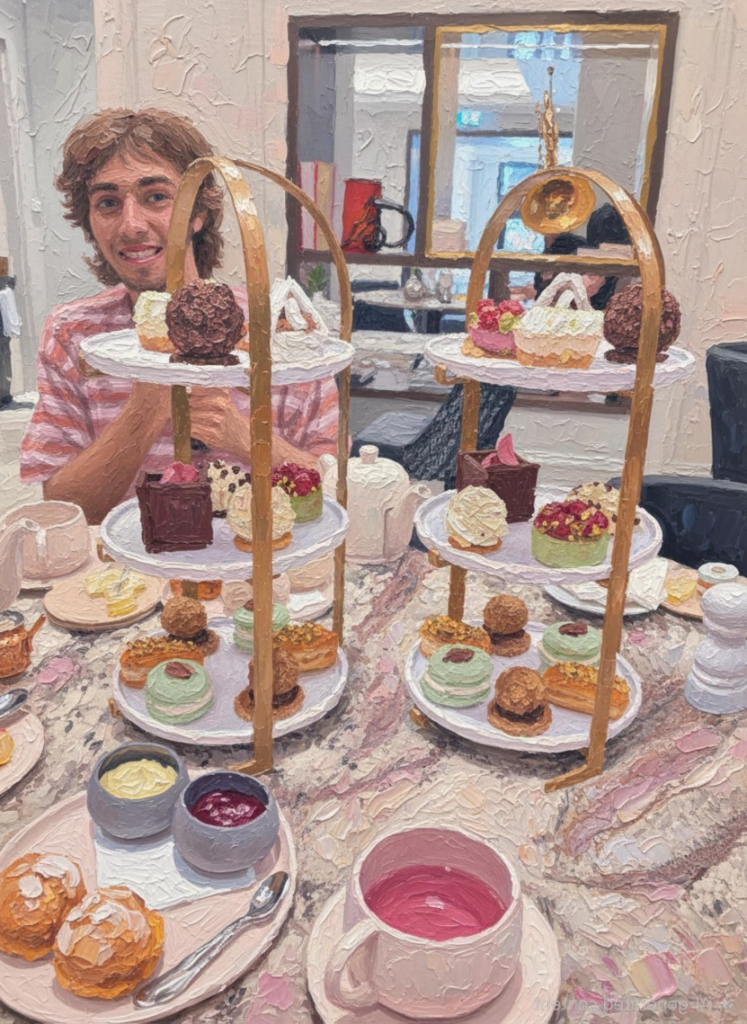
High Tea at Café Athénée. Image by Richard Bangs
Romania sat atop a sea of oil, fuel Hitler desperately needed to sustain his war machine. Waldeck watched Germany tighten its grip, not through annexation, but through intimidation, economic pressure, and the slow corrosion of confidence. Every dinner conversation in the hotel’s eateries, every whispered exchange in the lounge, every arrival of another German official hinted that democracy was eroding long before anyone declared it dead.
That may be Waldeck’s greatest insight.
Authoritarianism rarely arrives with a trumpet blast. It slips quietly through revolving doors.
Waldeck cupped ears to listen to cultivated men in tailored suits discuss culture over cognac while simultaneously enabling barbarism. Newspapers softened their criticism. Politicians compromised one principle after another. King Carol II lost authority as Romania surrendered territory to neighboring powers. The fascist Iron Guard grew bolder. Inside the Athénée Palace, people continued dressing elegantly for dinner as Europe quietly surrendered its soul.
The hotel became both witness and weathervane. If you wanted to know which way Romania’s political winds were blowing, you watched who entered the lobby.
Romania did not fall beneath the tanks of a German invasion; it was drawn into the Nazi orbit by fear, humiliation, and political surrender. By the time German soldiers arrived, the door had already been opened from within.
Nearly half a century later, history returned to the same address.
For decades I dreamed of visiting Romania—its brooding Carpathian Mountains, painted monasteries, gothic castles, wild rivers, feral brown bears, its Batman-like lair Salina Turda, Transylvanian vampires, and Saxon villages where folklore still breathed.
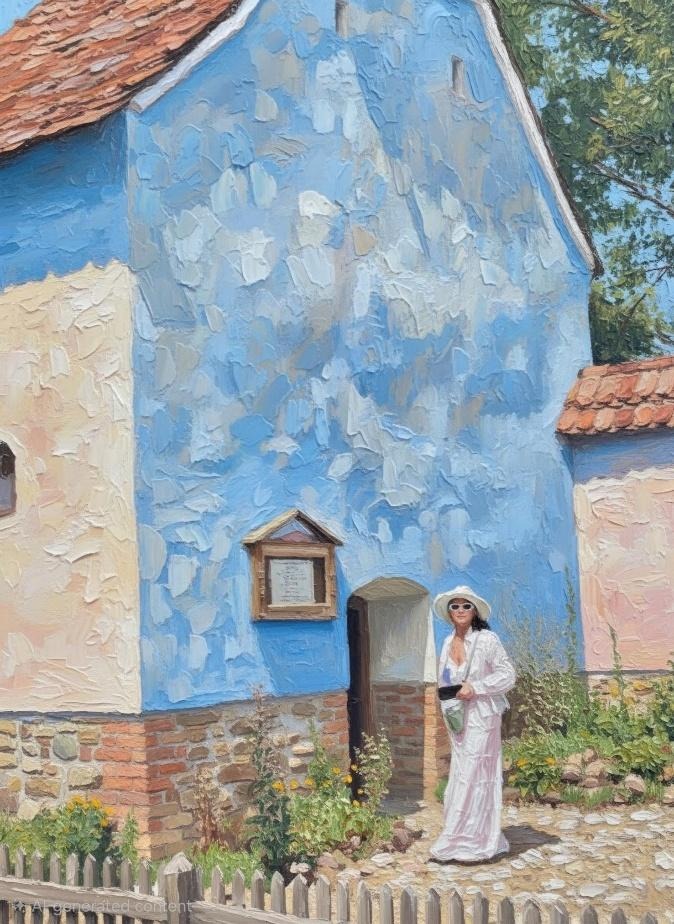
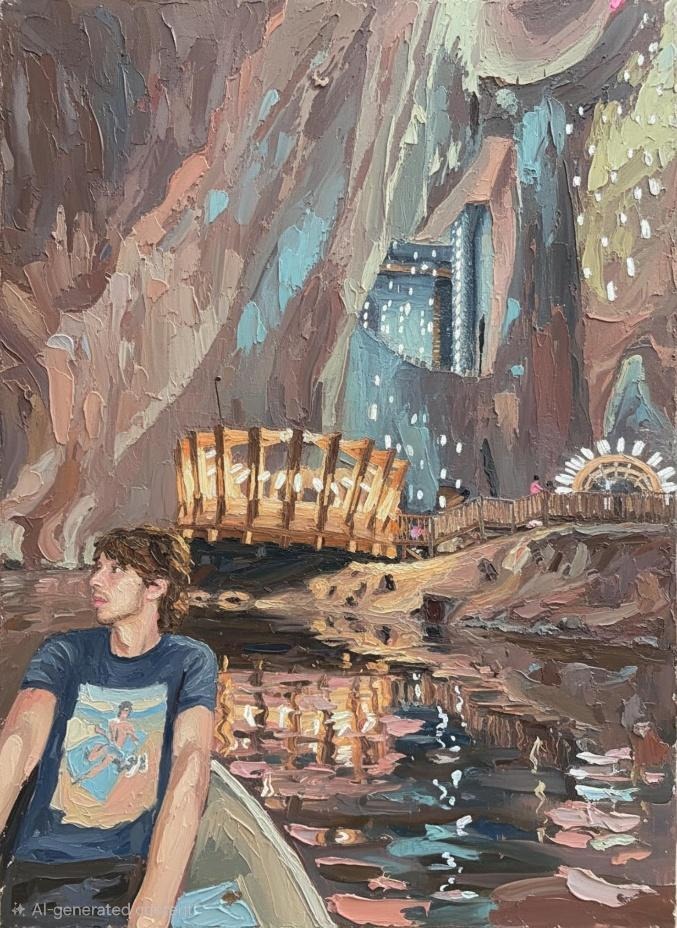
The Saxon Village of Viscri. Photos by Richard Bangs Salina Turda, a giant salt mine that looks like Bruce Wayne’s Batcave.
But during Nicolae Ceaușescu’s twenty-four-year dictatorship, Romania was among the most tightly controlled societies in Eastern Europe. The omnipresent Securitate transformed everyday life into a culture of hushed conversations and cautious glances.
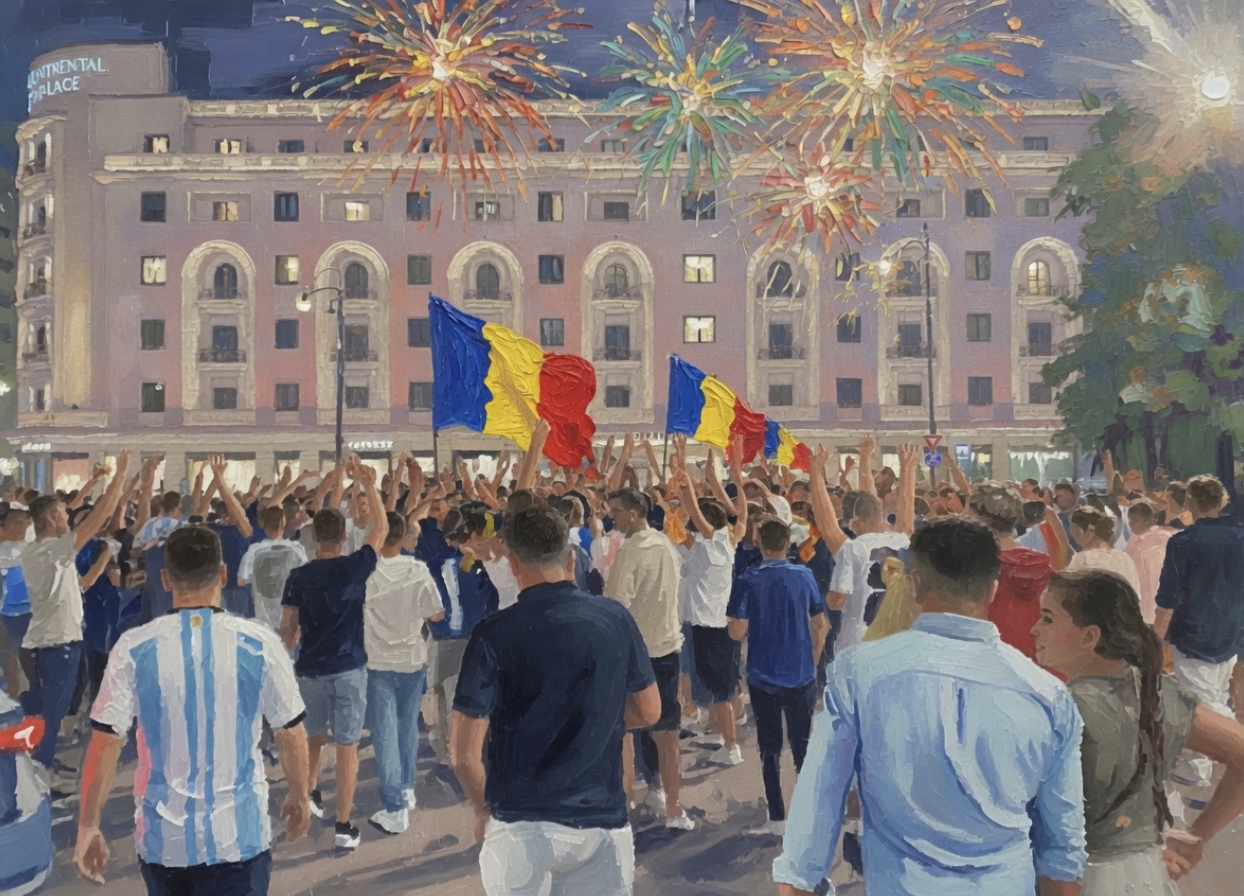
From the front door of the Athénée Palace I walked but a few steps to the infamous balcony and stared at the ghosts of the former Communist Party headquarters, now rechristened Revolution Square. In December 1989, Ceaușescu stepped onto the low terrace expecting another choreographed display of loyalty. Instead, the crowd answered with boos.
Television cameras captured the extraordinary moment. The dictator froze, bewildered, repeating, “Hello… Hello… Comrades…” as the roar below overwhelmed his voice. Within hours, protests engulfed Bucharest.
The Athénée Palace once again became headquarters for the world’s journalists. Foreign correspondents crowded the lobby, filed dispatches from hastily assembled workspaces, traded rumors over coffee, and tried to separate fact from revolution. Nearly fifty years after Waldeck chronicled Romania’s descent into dictatorship from these same rooms, another generation of reporters documented its collapse.
The symmetry is almost unbelievable.
The same hotel that had witnessed democracy’s slow disappearance in 1940 became the place from which the world watched freedom reappear in 1989.
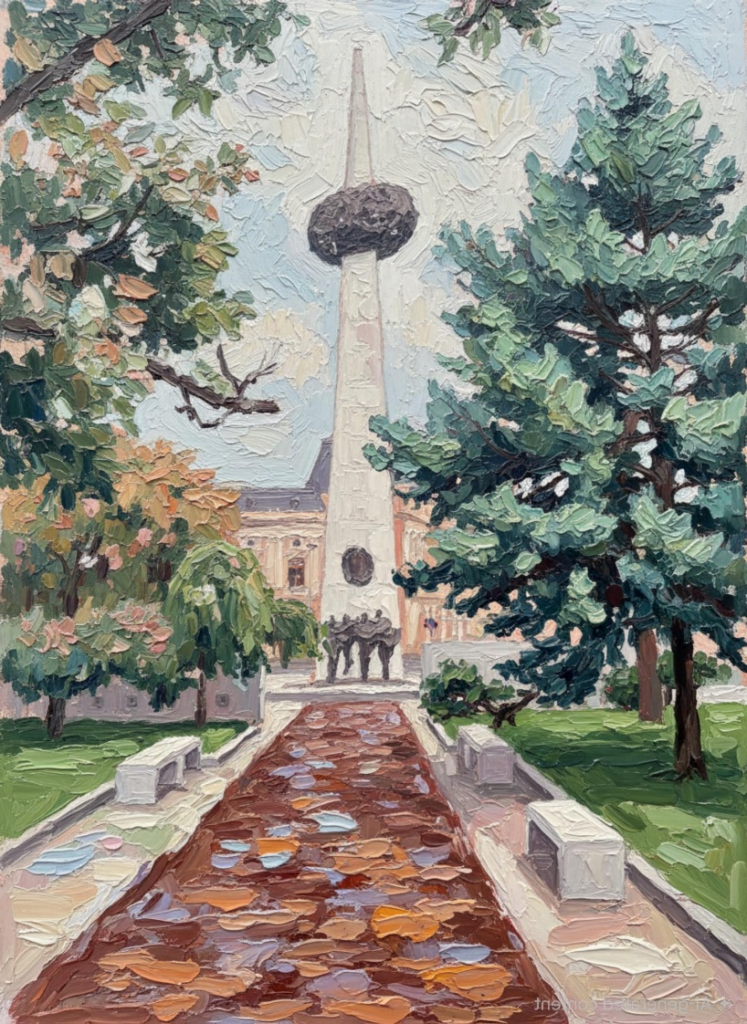
The Memorial of Rebirth, Revolution Square, Bucharest. Image by Richard Bangs
Today the Athénée Palace feels wonderfully serene in a city considered among the safest in Europe. Travelers compare hiking routes through Transylvania. The concierge hands out maps of the city. I found myself drawn to the English Bar, where the past lingers between the polished wood and cut crystal. It was easy to imagine Waldeck slipping onto a barstool after another day of gathering confidences from legates and moles, ordering a Țuică brandy while Europe quietly rearranged itself outside the windows. Today the menu honors her with a cocktail named Room 149, a nod to the room from which she chronicled Romania’s slow descent into fascism. I raised a glass not simply to the past, but to the rare journalist who understood that history is often written first in hotel bars, long before it reaches newspaper headlines.
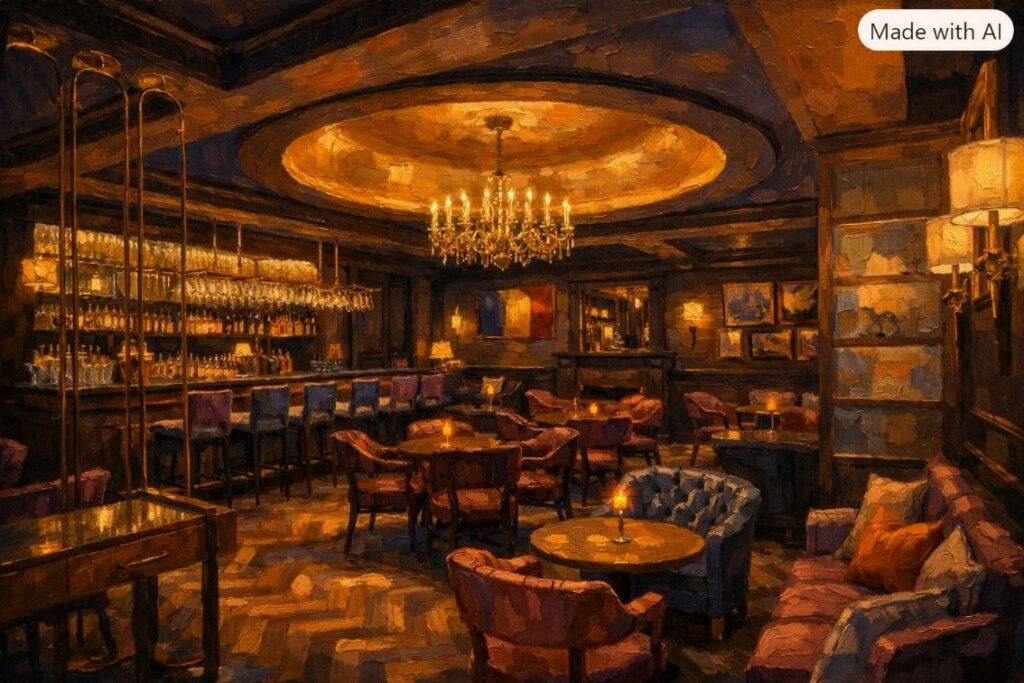
The English Bar. Image by Richard Bangs
Presidents, ministers and celebrities still pass through, though few attract much notice anymore. George W. Bush broke bread with Angela Merkel and Vladimir Putin at a NATO summit dinner in 2008. Lady Gaga, The Rolling Stones, Paris Hilton, Nicolas Cage, Michelle Obama, and Prince Albert of Monaco all tucked into the cotton sateen sheets for the sleep of tranquility.
And perhaps that is the greatest luxury a grand hotel can offer—not marble or chandeliers, but peace.
I’ve often wondered why certain hotels become magnets for political and cultural consequence while others remain merely places to spend the night.
Location matters, of course. The great hotels rise beside seats of power—parliaments, presidential palaces, financial districts, ports, and railway stations. But geography alone isn’t enough.
What transforms a hotel into a crucible of history is its ability to gather unlikely companions under one roof. Journalists share elevators with generals. Revolutionaries brush past aristocrats. Spies eavesdrop on diplomats. Industrialists buy drinks for politicians. Every lobby becomes an ecosystem where information circulates long before it reaches newspapers or official communiqués.
Ideas travel by conversation before they travel by decree.
Perhaps that’s why grand hotels appear so often at history’s turning points. They are the world’s living rooms—the rare places where strangers with influence linger long enough to change one another’s minds.
The battlefields may determine who wins wars. The palaces may ratify treaties. But often it is in the quiet corner of a hotel lounge, over a second glass of wine and the conviction that comes with being far from home, where history first changes direction.
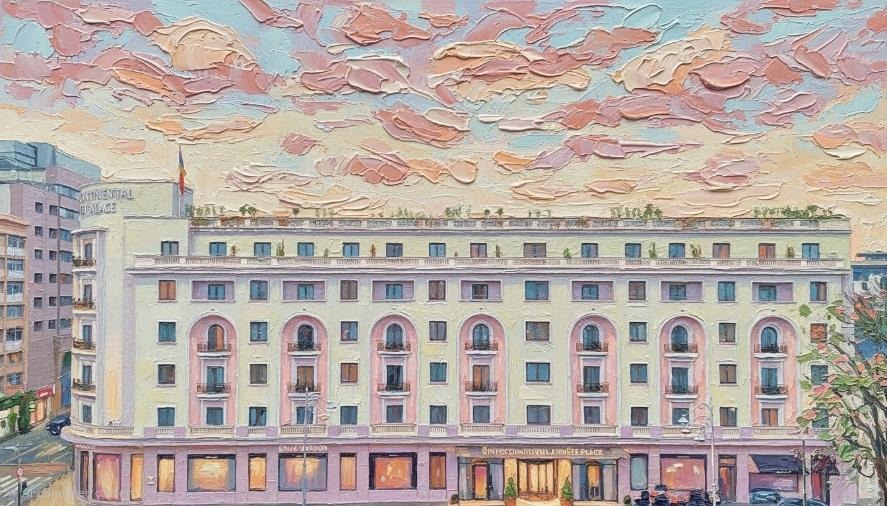
Image by Richard Bangs
##