
She has the career, the accomplishments, the impressive life on paper. She is the one everyone else leans on. She shows up, delivers, and rarely complains. And yet, behind the achievement, she is exhausted. She is quietly wondering why doing everything right still leaves her feeling so depleted. This is not a personal failing. According to one public health professional who has spent years studying the intersection of performance and wellness, it is a structural problem — and it has a name.
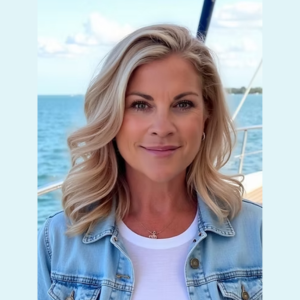
Michelle Ford, MPH, is a public health professional, wellness educator, and founder of Navigating Your World Academy. She is also the creator of the Wholly Well Program, a science-rooted wellness framework built on the six dimensions of wellness developed by the National Wellness Institute. Ford’s work is designed for women who are succeeding by every external measure but quietly running on empty. Her mission, in her own words, is to help women stop compartmentalizing their well-being and start living wholly.
The Real Cost of “Having It All”
The promise sold to women over the past several decades was that they could have it all. Ford does not dispute that. What she disputes is what we leave out of that sentence. “We were told that women could have it all,” she says. “And it’s true. But at what cost? And most of the time, the cost ends up being to us.”
The data behind Ford’s work is not anecdotal. Research cited throughout her Wholly Well Program shows that women still carry more than sixty-three percent of caregiving responsibilities across the board. When you layer that on top of professional demands, social obligations, and the emotional labor of maintaining relationships, the result is a population of women who are constantly pouring from a cup they never refill. Ford points out that this is not a motivation problem or a time management problem. It is a structural depletion problem. “You cannot fill the cup for everyone else if you’re on empty and continuing to try,” she says.
What makes this particularly invisible is that the women experiencing it most acutely are also the ones least likely to ask for help. High performers are conditioned to compare their struggles to those around them and determine that someone else’s need is always greater. Ford describes this as a kind of internal triage system that constantly loses. “It doesn’t matter whether it’s something as simple as an eyelash in your eye or something as serious as open heart surgery,” she explains. “We chart how bad our problem is compared to our kid, our husband, our partner, our business. And if someone else is worse off, we push our own stuff to the side.”
Why the Six Dimensions of Wellness Change Everything
Ford’s framework is built on a model that most people have never encountered in a practical, usable form. The six dimensions of wellness, as defined by the National Wellness Institute, are physical, emotional, social, intellectual, occupational, and spiritual. Ford is careful to clarify each one because several carry common misconceptions.
Emotional wellness, she explains, is distinct from mental health. Mental health carries clinical diagnoses and specific treatment protocols. Emotional wellness is simply how you are genuinely feeling and how well you understand those feelings. Occupational wellness does not require paid employment. It refers to your “doing time,” whatever activity gives your days structure and meaning. Spiritual wellness has nothing to do with religion unless religion is personally meaningful to you. It is about your values and your belief system. And social wellness goes deeper than whether you have friend groups. It is about the quality and nourishment of your connections.
What Ford finds most powerful about this framework is not the individual dimensions themselves, but how they interact. She uses the example of perimenopause to illustrate the cascade effect. Hot flashes are a physical symptom. But if a woman is embarrassed by them at work and they are disrupting her performance, her occupational wellness is now depleted too. The origin was physical, but the impact spread. “One dimension up, the other one,” Ford says. Understanding that relationship is what allows women to stop treating symptoms in isolation and start addressing the whole picture.
The Myth of Balance and What to Aim For Instead
Balance is one of the most frequently prescribed solutions to women’s burnout. Ford has a specific and important disagreement with how that word is typically used. Her issue is not with balance as a concept. Her issue is with the version that tells women to wait it out, to endure a difficult season because things will even out eventually. “If you wait to address a health issue because in three months this is gonna change and get better,” she says, “in three months, something else is gonna get piled on.”
What Ford teaches instead is a process of honest self-assessment. Rather than chasing equilibrium across all six dimensions at once, she asks women to identify where they are depleted and where they still have capacity. That distinction matters because the next step is to borrow from the full areas to shore up the depleted ones. She worked with one woman whose quiz results showed physical depletion as her primary issue, which she expected given her experience with menopause. What surprised her was that intellectual wellness came in second. The connection clicked when she considered that brain stimulation and mental engagement are known to reduce the risk of dementia, something she was already anxious about given her father’s death from Alzheimer’s. Suddenly, two seemingly separate concerns became one practical action plan.
The Whack-a-Mole Model of Modern Life
One of the most clarifying things Ford offers women is a reframe of what life actually is. She describes it as an ongoing game of whack-a-mole. The moles do not stop popping up. The goal is not to eliminate them. The goal is to be equipped when they appear. “The whack-a-mole is not going to stop,” she says plainly. “So how can we look at what’s really going on in our individual lives so we can get ourselves back to having agency, autonomy, the power to take care of ourselves first?”
This framing matters because it dismantles the idea that wellness is something you achieve and then maintain. It is not a destination. It is a practice of ongoing recalibration. Ford built her entire brand, Navigating Your World, around this principle. What works for one woman will not work for another. The quiz on her website, which is free and helps women identify their most depleted dimension, reflects this. No two results look the same, and no two solutions should either.
Ford has lived this model through her own hardest seasons. When she was going through a difficult divorce, her mother was diagnosed with breast cancer, and her father needed quadruple bypass surgery, all in the same quarter of the same year. She had young children and no framework to draw on. “I had to tread water, survive, and get everybody through this,” she recalls. Looking back through the lens she has since developed, she can see exactly where she was depleted across multiple dimensions simultaneously and where, if she had had these tools, she might have set a boundary instead of quietly absorbing everything.
“The reason we say we can’t do something for someone is because we don’t want to disappoint. And the reality is there’s a reason they tell you to put your own oxygen mask on first before you help the person next to you on the airplane. That is true in life too.”
~ Michelle Ford, MPH
The One-Anchor Ritual: A Framework Built for Real Life
Most wellness programs fail not because women lack motivation, but because they ask too much too fast. Ford designed the one-anchor ritual specifically to counter that pattern. Instead of overhauling your entire routine or committing to a practice every single day for six weeks, the one-anchor ritual asks you to identify the single most depleted dimension in your life and take one small, sustainable step toward replenishing it.
She gives a concrete example. A woman she worked with was losing sleep to late-night phone scrolling. Ford did not tell her to put the phone in another room every night. She suggested she try it two nights a week to start. Then three. Then four. “Anytime we have ownership of a decision, we’re more likely to follow through with it versus somebody giving us a written plan or an app or something we have to chart that doesn’t necessarily resonate with us individually,” Ford explains.
The ritual also requires communication. If your one-anchor ritual involves stopping at the park for thirty minutes on the way home three evenings a week, your family needs to know. Not to ask their permission, but because you are telling them what you are doing. You are also modeling something important: that your needs are real, that you are taking responsibility for them, and that meeting them makes you better for everyone around you. “You’re not asking their permission,” Ford is clear. “You’re telling them what you’re doing because you want to be there for them. You want to be whole for them.”
Self-Care Is Not Selfishness. It Is the Opposite.
The internal barrier that keeps most high-achieving women stuck is not a lack of information. It is a deeply held belief that taking care of themselves is self-indulgent, or worse, a betrayal of the people who depend on them. Ford addresses this directly and with specific intention.
She calls the constant apologizing and self-denial that women engage in the “apology tax,” a phrase she uses to name the invisible cost women pay for placing their needs last. The first exploration in her Wholly Well Program is dedicated entirely to reframing this belief, because without that shift, no strategy or ritual will stick. “The only person who can give yourself that permission is you,” Ford says. “Which means that you’re also the only person who can make the world a better place for all those other people you care about.”
This is not motivational language. It is a practical argument. A woman who is chronically depleted cannot give her best to her career, her children, her aging parents, or her friendships. She can give what she has left, which is rarely enough, and she pays for it across every dimension of her wellness. The selfless choice, Ford argues, is to stop running on empty.
The First Step Is Already Within Reach
The entry point Ford offers is deliberately low-friction. She asks women to take the free wellness quiz on her website before doing anything else. Not to sign up for a program, not to overhaul their habits. To take the quiz, identify their most depleted dimension and see if it matches what they already suspected. “Say, ‘What do I think is gonna show up as the most depleted?’ Then take it and see if it charts out the way you think it might,” Ford suggests.
From there, the path is straightforward. Understand where you are depleted. Identify where you still have capacity. Choose one small ritual that addresses the depletion and communicate it to anyone it might affect. Build from there. The goal is not perfection. The goal is agency. Ford describes what happens when women begin this process as a kind of freedom. Not because their circumstances change immediately, but because they have stopped waiting for someone else to permit them to matter. “You gave yourself permission,” she says. “You didn’t wait for someone else, and you didn’t need it from someone else.”
For any woman listening who recognizes herself in this conversation, that is the starting point. One quiz. One honest look. One small step. Michelle Ford has spent years building a framework that proves it is enough to begin.