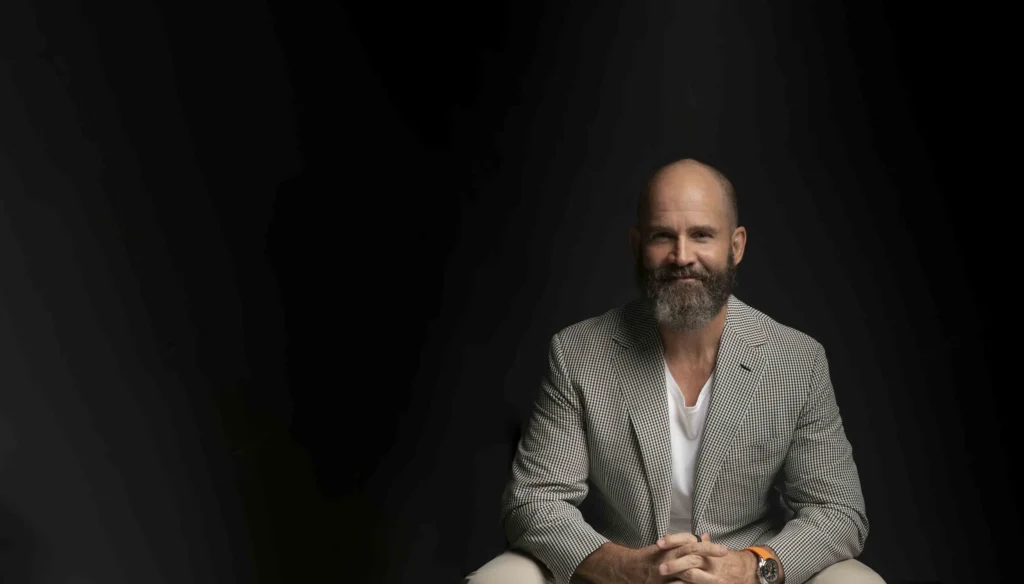

There is a question Rich Lyons hears constantly from the leaders he coaches: when does the fear go away? His answer surprises almost everyone who asks it.
In a recent conversation, Rich Lyons, entrepreneur, former CEO, leadership coach, and author of the book Life Is Sales: A Holistic Approach to Sales, Self-Discovery, and Living a Life of Purpose, made the case that fear never disappears for leaders who are doing meaningful work. It only changes shape as the stakes grow larger. Lyons built and sold his own company, Lyons Consulting Group, in 2017, scaling it to roughly five hundred employees before exiting. Today he runs leadership cohorts, advises boards, coaches executives one on one, and is finishing his second book, this one focused on culture. His framework, called Life Is Sales, treats self-awareness, not charisma or confidence, as the foundation everything else in leadership is built on.
Trust Is Not About Being Perfect, It Is About Being Consistent
When asked why trust feels harder to earn today than it did twenty years ago, Lyons pushed back gently on the premise. Trust has always been fragile, he explained, because a leader can do twenty things right and undo all of it with a single failure. What has changed is the noise surrounding every interaction. With AI now woven into phone calls, marketing, and customer service, people increasingly cannot tell whether they are dealing with a real person or an automated system, and that uncertainty has made some companies pull back toward original branding and human contact specifically to signal authenticity.
Lyons connected this directly to his own experience running an in-office culture before remote work became standard. As CEO, he walked the floor and built relationships with employees face to face. He pointed out that this kind of trust-building becomes much harder when leaders and teams rarely occupy the same room. The lesson here is not that remote work is bad, but that leaders need to be deliberate about creating moments of real connection when physical proximity is no longer automatic.
The Difference Between Defending Yourself and Actually Serving Someone
One of the clearest frameworks Lyons offered was about distinguishing service from ego, particularly under pressure. He described training his customer support team, which handled e-commerce clients whose websites would go down during high-traffic periods like Black Friday and Cyber Monday. Furious customers would call in, sometimes blaming the company unfairly. Lyons taught his team that arguing back, even when technically correct, was an ego response disguised as customer service.
“Am I serving the customer or am I defending myself?”
— Rich Lyons, entrepreneur and author of Life Is Sales
The better move, he explained, was always the same regardless of fault: acknowledge the customer’s frustration, commit to checking into the issue, and follow up. He used to tell his team that the customer is always right, even when they are wrong, because the goal in that moment is not winning an argument. It is understanding what the other person is experiencing and responding to that, not to your own need to be vindicated.
Self-Awareness Starts With Naming What You Actually Feel
Lyons broke emotional self-awareness down into a simple model: five core feelings, fear, hurt, anger, sadness, and joy, with everything else as a derivative. He challenged the common instinct to answer “are you afraid?” with a flat no. Fear, he argued, is never a yes or no question. It operates on a scale, and most people are experiencing some low level of it almost constantly without naming it.
He also pointed to something specific about anger: it frequently sits on top of hurt or fear that a person has not acknowledged. Rather than processing the underlying emotion, people jump straight to anger because it feels more protective. Lyons described the practice of catching that moment, noticing “wow, that really hurt my feelings,” and then consciously returning to whatever the original goal or purpose was, rather than letting the emotional reaction hijack the interaction. This is the self-regulation piece of his framework, and he was clear that the goal is not eliminating emotion. It is staying on purpose while still allowing yourself to feel hurt, afraid, or angry.
Leadership Style Is Not Fixed, It Evolves Through Real Life Events
Lyons traced his own leadership evolution from electrical engineer to CEO, and the throughline was a slow unlearning of stoicism. He described growing up as an athlete with a simple rule: never let anyone know you are hurt. That mindset followed him into early adulthood, reinforced by parents whose divorce left him associating any conflict with relationship failure.
The shift came gradually, through marriage to a partner who wanted him to talk and engage, and then through becoming a father to two daughters. He said he made a conscious decision not to raise his children watching a father who suppressed every feeling, and started actively telling them when he was afraid, hurt, or sad so they would not measure themselves against a false standard of stoic perfection. He framed this emotional openness as connected to what he called the feminine side of leadership, the capacity for creativity and feeling that he believes produces better solutions when it is not cut off. He also described joining a therapy group to work through limiting beliefs formed by watching his parents’ relationship fail without ever seeing a conflict resolved constructively.
Authenticity Outperforms Expertise When It Comes to Building Trust Fast
Asked directly whether authenticity builds trust faster than expertise, Lyons did not hesitate. He described moments in his sales career where he told prospective clients outright that his company was not the right fit for them, sometimes even referring them to a competitor. In the short term, this meant giving away business. Over time, he said, those same prospects often returned with different projects specifically because of the trust that honesty created.
He connected this to a broader point about ego in leadership. Founders and CEOs who believe they have to be right all the time, he said, will struggle to hire strong people around them, because the goal becomes protecting their own correctness rather than finding the best solution. Lyons described his own discipline as CEO this way: his job was to cheerlead his team, not to need his team to cheerlead him. He singled out what he called an “affirm me” culture, where leaders chase validation from their employees, as something he sees often and considers fundamentally inauthentic.
Why Lyons Tells Leaders to Stop Asking When the Fear Will End
When leaders ask Lyons when they will stop feeling afraid, he reframes the question entirely. Fear, in his view, is not a problem to be solved so much as a signal to be read. As a company or a leader’s responsibilities grow, the size of the fear grows with it, because new opportunities bring new problems that have to be managed. The work is not eliminating fear. It is building the capacity to operate alongside it.
His starting practice for clients is deceptively simple: just notice when you are afraid. No action required, no disclosure to anyone else, just observation. Lyons said this single habit of awareness tends to produce a shift on its own, moving a person from a scarcity mindset toward something closer to trust, because the act of acknowledging your own feelings is itself a form of self-trust. He used the word “leaking” to describe what happens in the absence of that awareness, when unacknowledged fear or scarcity spills out sideways and creates problems a person did not intend to create.
What to Remember: Awareness Comes Before Authenticity
If there is one idea that runs underneath everything Lyons shared, it is this: you cannot be authentic with other people before you are honest with yourself. The leaders he describes as most trustworthy are not the ones who have eliminated fear, hurt, or doubt. They are the ones who notice those feelings without judgment and choose, moment by moment, to stay focused on serving the people in front of them anyway.
Lyons offered three concrete starting points for anyone who feels like they are performing a version of themselves rather than living as themselves: build the habit of noticing your own fear without needing to act on it, practice genuine curiosity by asking questions and actually listening to the answers instead of waiting for your turn to talk, and resist the urge to fill every silence. He pointed out that the discomfort of silence, the kind everyone has felt in an elevator, is often just unprocessed fear looking for an exit.
His closing advice for anyone feeling like they are wearing a mask was to take small, low-risk steps toward sharing more of themselves in appropriate settings, rather than waiting for some future moment of total courage. Rich Lyons built a five-hundred-person company and a coaching practice on the belief that the people worth attracting into your life and your work will only show up once you have given them something real to respond to.