

The following is an adapted except from, Why Health? What We Need to Think About When We Think About Health.
There comes a moment when re-evaluation is necessary. We have seen this time and again across sectors, all over the world. Often these reevaluations follow disasters or social shocks which jolt us out of old ways of thinking and make us see how the status quo is unsustainable. For example, the disaster of the Triangle Shirtwaist Factory fire helped shape the labor movement and the Progressive Era in the United States. Then there was the publication of Rachel Carson’s Silent Spring, which addressed the environmental harm caused by widespread pesticide use and helped usher in the environmental movement. These moments saw us awaken to a status quo that was not serving us, a status quo often caused by a dysfunction in fundamental values.
I am concerned with how to improve the health of populations and with narrowing health gaps as much as possible. This work is fundamentally shaped by values, subject to the same process of re-evaluation that shapes every intellectual system over time. The time is ripe for just such a moment of re-evaluation. The challenge of the pandemic exposed much that is wrong with our collective approach to health and much that could specifically be better about public health as a field. As public health worked to address the pandemic, we struggled, coped, and, at times, simply muddled through. We did much right, but it is also fair to say that we were found wanting in many respects. Sometimes this was because we lacked the material capacity or political support to pursue solutions to the pandemic at scale. At other times our efforts were hindered by the limits of our philosophy. There were occasions when we simply lost much of the public, our recommendations falling largely on deaf ears. Our voice tended to carry most when it aligned with partisan dynamics, as public health became more polarized along political lines.
This is perhaps why we were not quite up to the task of making a truly compelling case for some of what we asked of the populations we served during the pandemic. There have been populations throughout history that have mobilized to a staggering degree for the sake of the principles that animated their collective life. Leaders were broadly aligned with these principles and could appeal to them when addressing the population to accomplish miracles of mass effort. Yet we in public health struggled to encourage people to wear a mask and get a vaccine that would protect them from a dangerous pathogen. This reflects more than a failure of know-how or communication. It is a philosophical failure, a failure to effectively engage with the norms that shape the beliefs, behavior, and, ultimately, health of populations.
For this reason, it is more important than ever for us to engage with the philosophical questions that define our work at the level of first principles. Here, I suggest, are some of them:
Why do we care about health? Is health a means or an end?
What are the foundational values that should underlie our work in health?
How much are we willing to invest in ensuring health for us, and for all of us?
What is the potential of the science that guides health in this moment? What are its limits?
How do we actually implement efforts that improve health for as many as possible and make sure there are no health left-behinds?
What does it mean to articulate a radical vision for health even when these radical perspectives can lead us to impracticable places?
These are just some of the questions we need to answer if we are to shape a new vision, a practical philosophy, for the work of improving health in populations. Those of us in this line of work have a responsibility to periodically revisit the philosophical underpinning of our work to ensure it remains fully supportive of the healthier world we seek to build.
I will end on a geological note. According to a study in Nature Geoscience, Earth’s rotating inner core may be changing its spin. While this sounds alarming, scientists believe this change may be part of a regular cycle, with changes in the core’s rotation occurring every 60 or 70 years. These findings reflect how, while the ground we walk on may seem solid, unchanging, it is, in fact, supported by geological processes that are always in flux. This seems a suitable metaphor for the assumptions we accept as foundational to the nature of our work. What seems like solid ground only appears this way; underlying it are shifts and changes that evolve over time. Such an understanding should be a call for us to actively participate in thinking through, shaping, forming the very fundamentals of public health.
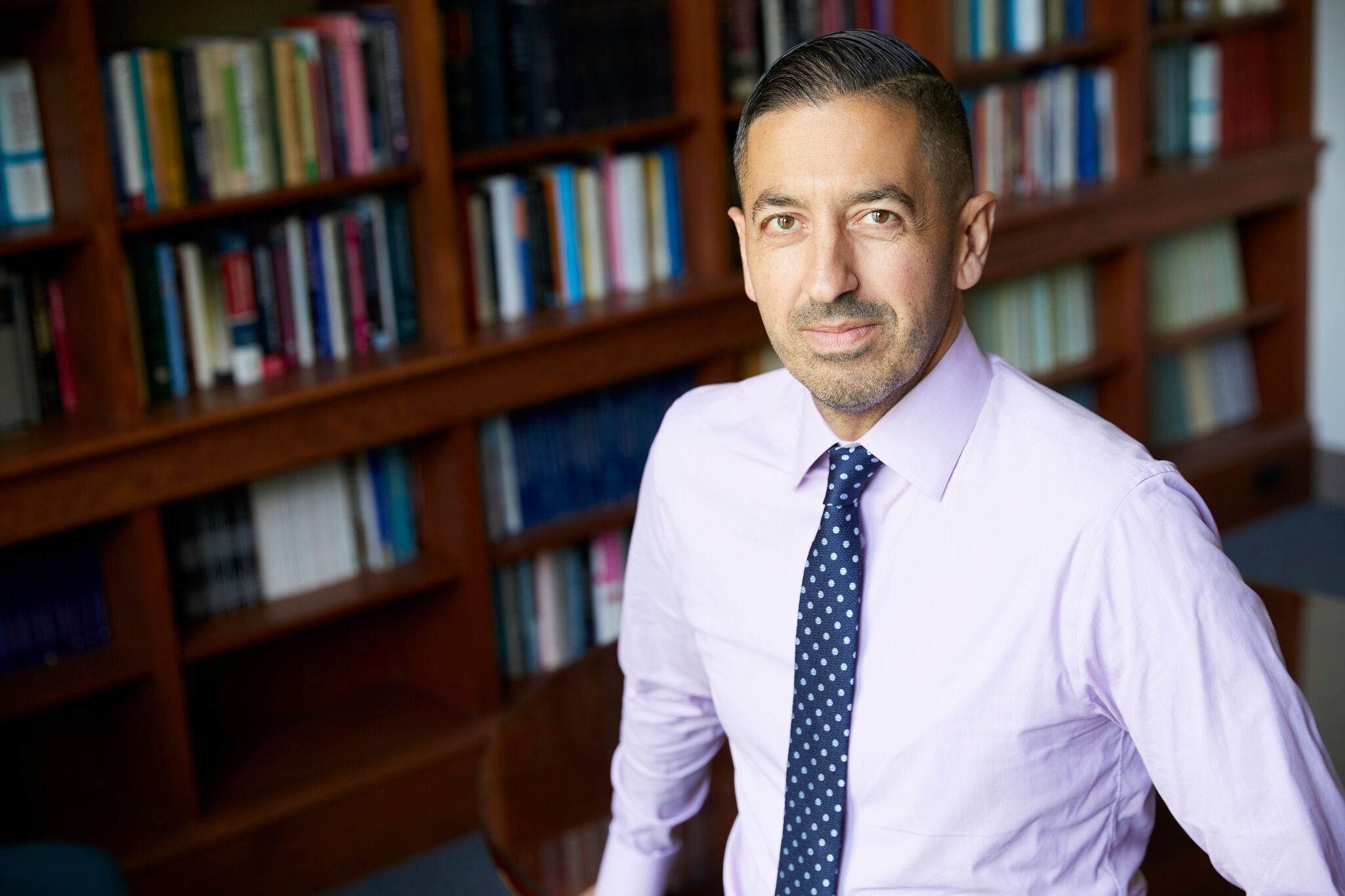
Sandro Galea is Margaret C. Ryan Dean of the Andy M. and Jane M. Bursky School of Public Health at Washington University in St. Louis. His book, Why Health? What We Need to Think About When We Think About Health, is published by Oxford University Press.
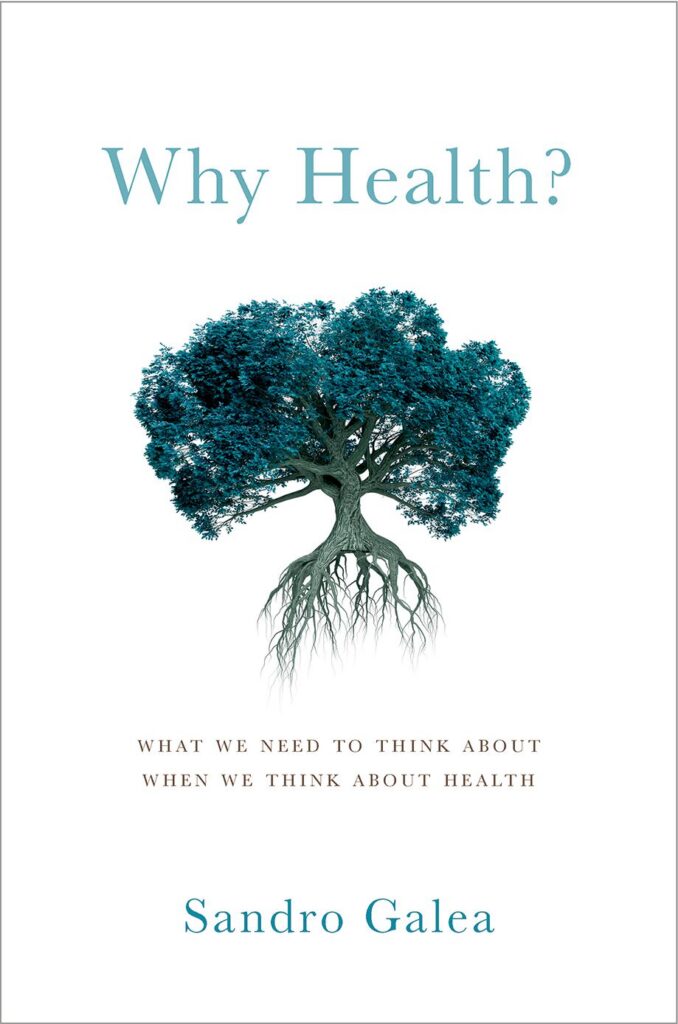
From Why Health?: What We Need to Think About When We Think About Health by Sandro Galea, Copyright © 2026 by Sandro Galea and published by Oxford University Press. All rights reserved.