

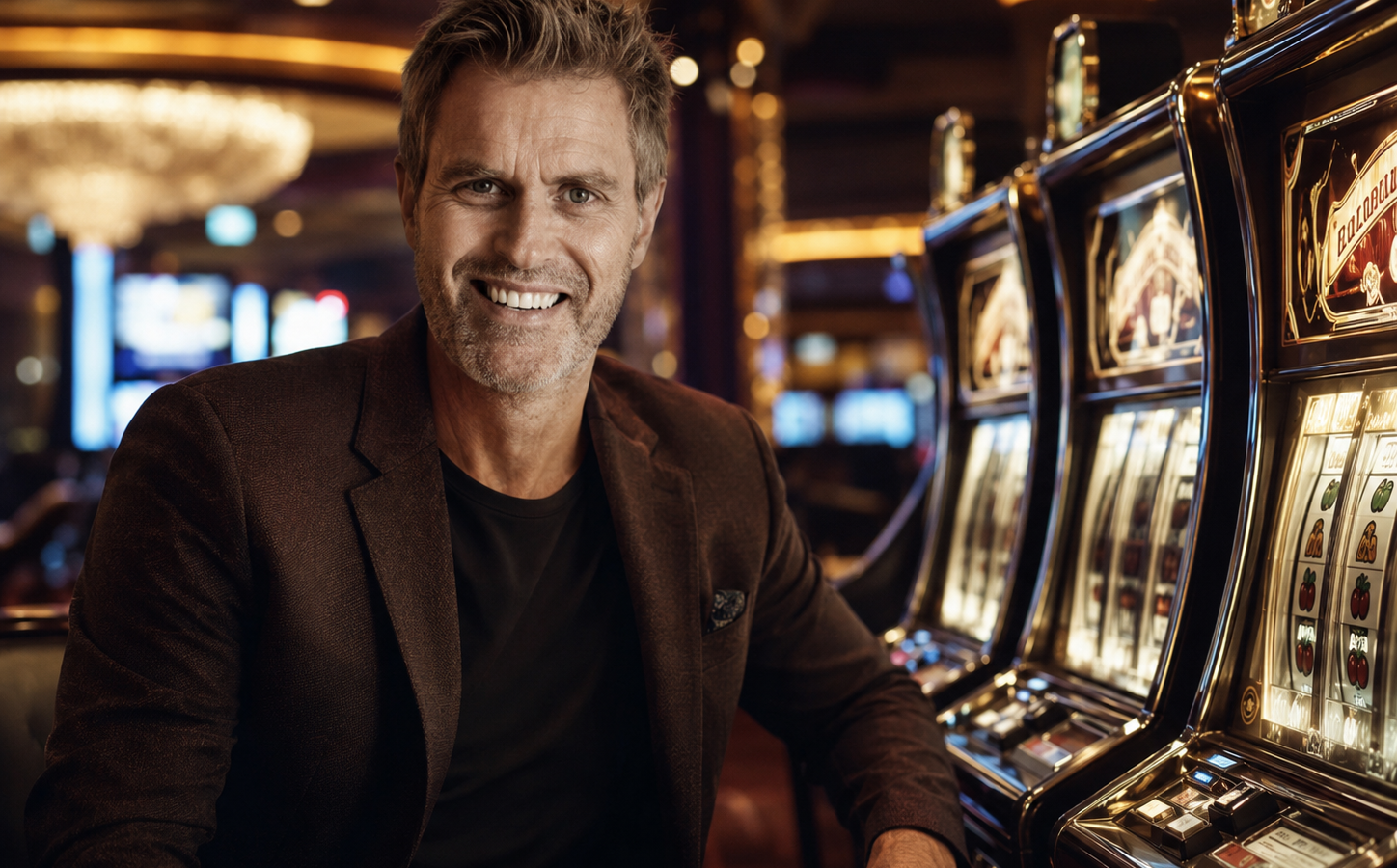
I went to Las Vegas to work on a project and left understanding why most people never become who they meant to be.
There is a particular kind of ache that shows up around three in the afternoon, or on a Sunday evening, or in the quiet minute after everyone else in the house has fallen asleep. It is the feeling that the life you are living is not quite the life that belongs to you. Not terrible. Not tragic. Just slightly off, like a shoe that fits everywhere except one place.
Most of us have felt it. Most of us have also done something about it. We bought the book. We signed up for the course. We watched the talk that made us cry a little and promised ourselves that this time would be different.
And then, months later, nothing had changed.
I used to think that was a discipline problem. I thought it meant I wanted it badly enough on Tuesday and not badly enough on Thursday. It took a conversation in a Las Vegas conference room to show me that I had the whole thing backward.
The city that is really an experiment
I was in Las Vegas working on a project, and through that work I ended up in conversation with a group of neuroscientists who were consulting on casino design.
If you have spent any time in Las Vegas, you already sense what those scientists confirmed. The city looks like entertainment. Underneath, it is one of the most sophisticated experiments in human psychology ever constructed. Every carpet pattern, every absent clock, every sound a machine makes is answering a single question: how do you keep a person doing something that is not in their interest, for as long as possible, while they enjoy it?
I asked them how a slot machine actually works on the mind. What they told me reorganized my understanding of human behavior.
The reel that almost ticks into place
Picture the three reels spinning.
All three line up, and you win. None of them line up, and you lose, and your brain registers it as nothing much at all.
But there is a third outcome. Two reels line up, and the third one, the one you needed, comes climbing into view and almost settles into place and then slips past. You saw it. It was right there. You could have reached out and pushed it.
Technically, you lost. Neurochemically, something very different happened. The scientists explained that in that moment the brain releases a flood of dopamine that is comparable to winning, and in many people, greater than winning.
You lost, and your brain threw you a party for it.
And because your brain threw you a party, the odds that you stay in that chair and keep feeding the machine go up. Not down. Up.
I named that moment the NearWin.
“The brain does not reward you for changing your life. It rewards you for almost changing it, and then it sends you home.”
Then I looked at my own life
I did not stay in that conference room thinking about gambling. I sat there thinking about the shelf in my own home.
Because the NearWin is not a casino mechanism. The casino simply engineered a thing that was already running everywhere.
Think about what actually happens when you buy the book about the life you want. You stand at the counter, and something lifts in you. You are a person who is changing now. You are taking action. You carry the bag to the car, and you feel genuinely, physically better than you did an hour ago.
That feeling is the payout. And here is the cruel elegance of it: you have already been paid. The neurochemical reward for transformation arrived at the cash register, before a single hard thing was required of you. There is a saying about this in the publishing world. Most self-help becomes shelf help. It gets bought, brought home, and never opened, because the buying was the part that felt like winning.
Six months later, you notice the book has not moved. And what do you do? You feel a flicker of guilt, and then you go looking for another book. The machine has your money, and you are still in the chair.
Why your brain would do this to you
None of this is a malfunction. It is your brain doing precisely its job.
The brain is not built to make you happy or fulfilled or aligned. It is built to keep you alive, and its primary strategy for keeping you alive is predictability. Predictable means survivable. You did this yesterday, and you are still breathing, so do it again.
Notice what is missing from that calculation. Nowhere does the brain ask whether the predictable thing is good for you. Nowhere does it ask whether it is who you are, or whether it makes you come alive. It only asks whether it is known.
Which means a life you have merely tolerated for fifteen years is, to your nervous system, a proven success. It kept you alive. Why on earth would it let you dismantle that?
So when you arrive home from the conference lit up with intention, your existing life does not welcome the new idea. It treats it as a threat. And it does not fight you with argument. It fights you with comfort.
What actually has to happen
If you have been carrying quiet shame about all the times you started something and did not finish, I would like to offer you a different explanation for it.
You are not weak. You are not undisciplined. You were up against a reward system that pays out early and pays out generously for effort you never had to make, and almost nobody told you it was there.
Buckminster Fuller said that environment is more powerful than willpower. I have found nothing truer. You did not become who you are in a three-day workshop, so it was never realistic that a three-day workshop would undo it. Decades of conditioning do not come apart in a weekend, no matter how good the weekend was.
What changes a life is not more information. Information feels like transformation and is not. What changes a life is redesigning the systems and structures you live inside, so that the new version of you has somewhere to actually stand.
The first step is smaller than you think, and harder than it sounds. It is telling the truth about where you are dissatisfied, and refusing the comfort of almost.

Chad Lefevre is a design thinker and business philosopher whose work centers on human potential and the conditioning that keeps people from changing. Since 2005 he has worked with leaders at organizations including Coca-Cola, TELUS, Shell and Sony Music Latin. He co-produced the Sundance Thought Leader Summit.