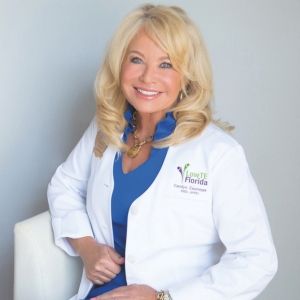
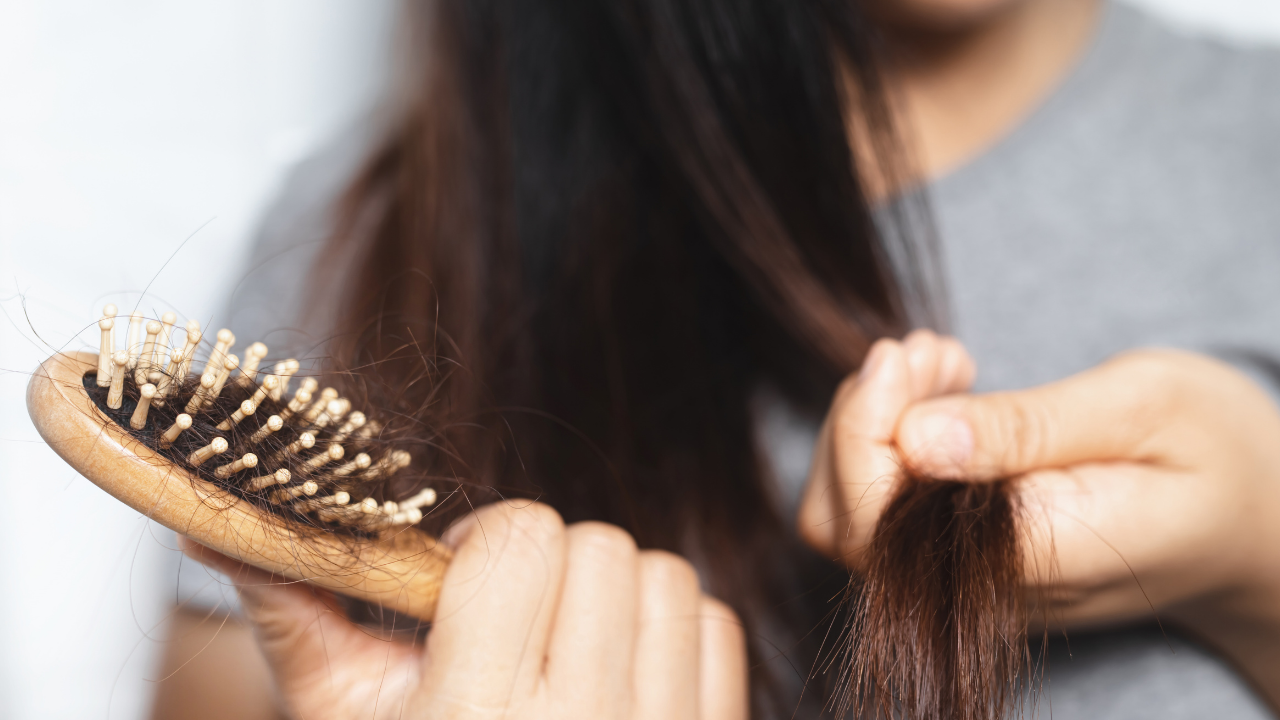
Carolyn Zaumeyer, MSN, APRN, was watching her hair leave in real time. Clumps in the drain. More in the brush. A ponytail that kept shrinking. She had been through surgery, a seizure, anesthesia, a COVID vaccine, and the prolonged grief of helping her brother die of cancer. “I felt like I could feel the hair leave in the building,” she says. “I was like, bing, bing, bing, bing, bing. I’m gonna be bald before this is all over.“
Zaumeyer is a master’s-prepared nurse practitioner and the founder of LoT Florida, a hormone optimization practice in Lottee, Florida, where she has treated more than 26,000 patients. She has spent decades studying bioidentical hormone therapy and nutraceuticals, training under four of the nation’s leading specialists. When her own hair began thinning dramatically, she did what any good clinician would: she diagnosed the problem, threw a comprehensive protocol at it, and got her hair back. Now she helps her patients do the same.
Hair Loss Is Never Just One Thing
One of the first things Zaumeyer wants women to understand is that hair loss is rarely caused by a single factor. “It’s multifaceted,” she says. When patients fill out their intake forms at LoT Florida and report hair loss, many assume the culprit is high testosterone. Zaumeyer almost always finds the opposite. “Most of the women that come to me, their testosterone is so low that you can’t even measure it because they’re just depleted.”
What is actually happening is a web of interacting issues. Hormonal decline plays a role, but so does thyroid function, ferritin levels, vitamin D, cortisol, autoimmune conditions, and even copper and selenium. Heredity is a factor, too. If a woman’s mother or grandmother had a receding hairline or a bald patch at the crown, that pattern is worth paying attention to. “When it’s more hereditary, it’s a tougher fight,” Zaumeyer says, “but we still can fight it and get your hair fuller and more beautiful.”
The key takeaway for any woman noticing thinning: get a thorough blood panel done before reaching for any supplement. Testing that checks red blood cells, white blood cells, kidney and liver enzymes, ferritin, dihydrotestosterone, thyroid markers including free T3, autoimmune indicators like ANA screen and Hashimoto’s thyroiditis, and essential elements like copper and magnesium is the starting point. Without that picture, you are guessing.
What the Hormones Are Actually Doing to Your Follicles
Estrogen, Zaumeyer explains, is the hormone most directly tied to hair fullness. It helps with moisture, and it prolongs what she calls the growth phase of the hair follicles. When estrogen declines during perimenopause and menopause, hair becomes finer, more brittle, and slower to grow. Many women notice their ponytail getting smaller. Others find that their hair grows to a certain length and then stalls completely. The part begins to widen. These are all signs that hormone levels have shifted enough to affect the scalp.
Testosterone plays a dual role in this picture. On its own, testosterone is not the villain. The problem arises when it converts into dihydrotestosterone, which is what drives the pattern of hair going back at the temples and thinning at the crown that most people associate with male-pattern baldness. “Testosterone itself doesn’t cause it,” Zaumeyer says, “but if it converts into dihydrotestosterone, that’s what causes it.“
This is why, when she begins hormone replacement therapy with a new patient who is worried about hair loss, she sometimes starts them on saw palmetto beforehand. This natural supplement helps prevent that conversion. She also recommends DIM, or diindolylmethane, for nearly all of her hormone patients because it helps hormones metabolize more safely while also blocking that same unwanted aromatization. “I strongly encourage it, almost enforce it on everybody on hormone replacement therapy,” she says.
Progesterone rounds out the picture, contributing a calming effect on the nervous system and helping to protect the uterine lining when estrogen is being supplemented. For women who start hormone therapy and notice a little extra shedding in the early weeks, Zaumeyer is reassuring. That temporary increase is often a sign that the body is stimulating new growth, which pushes older hair out. The new hair follows.
The Thyroid Connection Nobody Talks About Enough
Thyroid function is one of the most underappreciated contributors to hair loss, and Zaumeyer says it is also one of the most frequently undercorrected by conventional medicine. She looks specifically at free T3, the active thyroid hormone circulating in the body. A level can land technically within the normal range and still be too low to support healthy hair growth, good metabolism, and consistent energy.
“It may be barely in the normal range,” she says. “That’s not good enough. We want to bring you up to the upper quartile of the range, and that’s where people say they feel their best.” The same logic applies to vitamin D. The conventional reference range goes from 30 to 100, and a reading of 32 might get a clean bill of health from a primary care doctor. But current research, Zaumeyer notes, points to a range of 60 to 80 as the zone where people experience the real benefits for bone health, mood, immune function, and cancer prevention.
There is also a physical sign that points directly to the thyroid: thinning of the outer third of the eyebrows. If a woman notices her brows have become sparse at the outer edges, that is a classic marker of low thyroid function. Optimizing the thyroid, Zaumeyer says, can prompt regrowth both in the brows and on the scalp.
What Stress Does to a Scalp
Cortisol is the stress hormone, and when it runs chronically high, it triggers what Zaumeyer describes as stress-related shedding. This is a real, well-recognized physiological response. The body, flooded with cortisol, essentially deprioritizes hair growth. Zaumeyer lived this herself while caring for her brother through cancer and processing multiple major losses in a compressed period of time.
She recommends a four-point cortisol test, typically done through saliva samples collected throughout the day, to get an accurate picture of the pattern. A single blood draw rarely tells the full story.
Beyond testing, Zaumeyer has developed her own framework for managing the stress that feeds cortisol. She keeps a pen and paper close and writes down what is gnawing at her. Then she asks herself one question: Is this something I can fix, or is it something I cannot fix? “If it’s something I can’t fix, I try to push it out of my head because I’ve got no control over that,” she says. “If it’s something I can fix, then I jump on it.” Exercise and fresh air, she adds, are particularly useful when processing something heavy. “That’s so good for the brain, especially if you’re processing something heavy.”
The Protocol That Worked, and Why Timing Matters
Zaumeyer was deliberate about her own recovery. Rather than testing one intervention at a time, she stacked everything simultaneously. The dietary supplement she credits most consistently is Viviscal Pro, a marine-complex formula that has been studied for over two decades. She took it twice a day to ensure her hair follicles were getting the nutrients they needed to grow. She added vitamin D, iodine, methylated B vitamins, DIM, and saw palmetto. The prescription that she calls a real game changer was Formula 82M, a topical applied to the scalp twice daily that combines minoxidil, tretinoin, and fluocinolone. “I’ve been promised by the pharmacist: if you have hair follicles, it will make it grow,” she says.
Her staff has since used the same protocol with similar results. One team member’s hair, Zaumeyer notes, looks noticeably better after adding saw palmetto. “We’ve taken it. We’ve lived it. And we’ve had good results with it.“
The single most important thing she tells patients who are starting any hair loss treatment is to document with photographs before beginning. Part the hair in multiple places. Photograph the crown. Have someone help capture the back. Redo the pictures at the six-month mark. “You have something where you can actually measure it,” she says. Without that baseline, early growth can be easy to miss.
Hair, she is careful to say, grows slowly. Visible results from any intervention typically take three to six months to appear. That timeline is not a sign of failure. It is biology.
You can make changes. Life is what you want it to be. And if you see that your hair isn’t good or your skin isn’t good, whatever’s bothering you, take the bull by the horns. Don’t just sit and complain to your girlfriend about it.
~ Carolyn Zaumeyer, MSN, APRN
The Bigger Picture
Hair loss is not something to push aside or accept quietly. For Zaumeyer, it is often a signal worth listening to because the body rarely loses hair without a reason. The same hormonal imbalances and nutritional deficiencies affecting the scalp are frequently also affecting bone density, brain health, cardiovascular function, and quality of sleep. Optimizing hormones, thyroid function, and essential nutrients is not cosmetic work. It is foundational to how a woman feels and functions as she ages.
Zaumeyer often points to her 91-year-old mother as evidence of what consistent hormone support can do over a lifetime. Still driving her golf cart, singing in the choir, doing water aerobics, sharp and engaged. “I truly attribute that to having hormones as she aged,” Zaumeyer says, “because they kept her brain healthy. Her bones are healthy, good, and strong.”
That is the real conversation behind the hair. And for women willing to dig into it, Carolyn Zaumeyer is the kind of practitioner who has been through it herself and come out the other side with her answers and her hair intact.