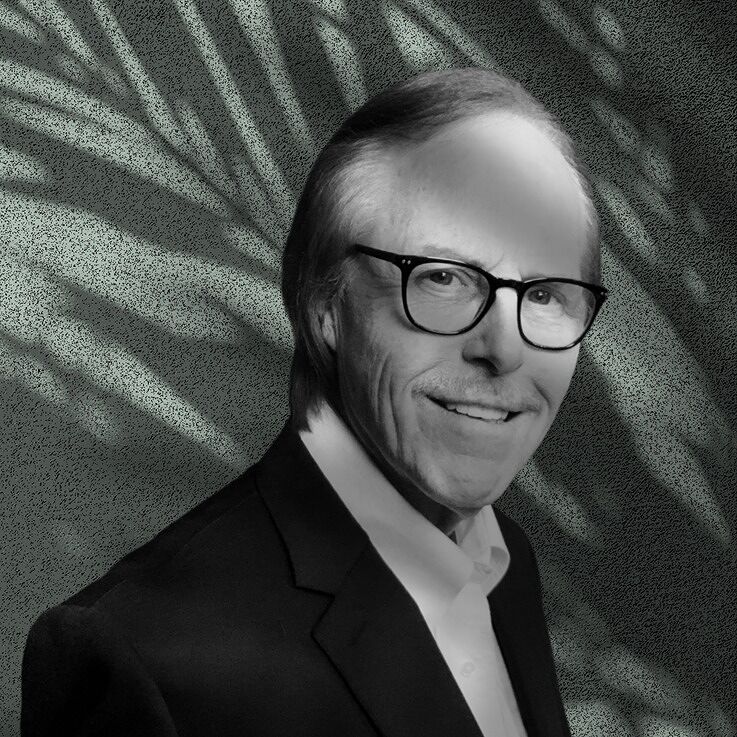

Think about the person who checks every box on paper. Good job. Decent income. A mortgage, a family, the right kind of stability. People around them assume everything is fine. And quietly, privately, they are miserable — or worse, simply numb — and they cannot even name why. That person is not a failure. According to architect, entrepreneur, and author Ted Kopecko, that person is simply living a life they never consciously chose.
Ted Kopecko is a licensed commercial architect, entrepreneur, commercial real estate broker, speaker, and the author of Finding JOY: Journey Of You, a book three years in the making that he describes as a roadmap for anyone who is stuck, burned out, or disconnected from who they really are. Kopecko draws on his architectural background not just as a metaphor but as a real framework: when you design a building, you have a vision, you make deliberate choices, you bring in structural support. Most people, he argues, have never once applied that same intentional thinking to the design of their own life.
The Trap We Walk Into Without Realizing It
The way most of us build our lives, Kopecko explains, is not so much a decision as it is a drift. We go to school, find a job, start renting, the rent becomes a mortgage, we get a dog or two, maybe some kids, and the entry-level job that was always supposed to be temporary quietly becomes the center of everything.
“You have created a lifestyle that you are literally imprisoned by every single day because of the responsibilities you have to take care of,” Kopecko says, “because that’s how you built your life. We don’t think about building our lives. We just kind of go do it.”
The result is what Kopecko calls a life-led or job-led existence — one where life is happening to you, not by you. He uses an acronym for JOB that he says captures this dynamic precisely: Just Over Broke. Not financially broke, necessarily, but existentially so. Working to maintain, never working toward. Paying the bills, checking the boxes, and arriving at the end of a long career to ask, as his own father once did, what happened?
That question — asked too late, by too many people — is what drove Kopecko to write Finding JOY.
What the JOY Framework Actually Teaches
JOY, in Kopecko’s framework, is an acronym. It stands for Journey Of You. Not happiness. Not a feeling. A way of moving through your life with awareness and intention rather than autopilot.
The book is organized around four pillars, each of which Kopecko calls a journey chapter. The first and arguably most foundational is mindset. Kopecko draws on the work of Carol Dweck, the Stanford University psychology professor known for her research on fixed versus growth mindsets, and asks a pointed question: how did we get programmed the way we did?
“From the very moment we were born, what happened to us?” Kopecko asks. “We were slapped on the butt.” And from that moment forward, he argues, we were being downloaded — taught, conditioned, synchronized into a particular way of living that conformed to an industrial work society. We grew up in a system that graded everything on a scale of A to F, where F meant failure. That grading system, Kopecko says, shaped the way most adults still think about risk, change, and possibility.
The second pillar is identity. Who are you? What do you believe about yourself? When you wake up in the morning, are you confident or do you doubt? Kopecko argues that identity is not fixed — it is something a person can re-examine and redesign at any age.
The third pillar is time, which Kopecko considers one of the most important and most undervalued resources any person possesses. The fourth is direction: the deliberate, specific destination a person is building toward rather than just reacting away from.
Your Time Bank Has a Balance You Cannot See
Of the four pillars, time may be the one Kopecko speaks about with the most urgency — and the most care. He describes every person as operating a time bank, making withdrawals every single day to perform, to work, to live. The problem with your time bank, he points out, is that you do not know how much is in your account.
The lesson became real for him when his father — a man who had spent 42 years climbing the corporate ladder at a single organization, who had spent those years coming home with a gray face but looking forward to retirement, who had a plan to finally play all the golf courses he had always wanted — suffered a massive brain stem stroke two years into retirement. The doctor told Kopecko to say his goodbyes. His father survived, but he could no longer play golf. He watched it from the couch.
“Would you bargain two years of retirement for 42 years of work?” Kopecko asks. “When you really think about it, you don’t.”
He is not saying that work is without value or that responsibility is wrong. He is saying that the way most of us account for time — as something infinite, as something we will tend to later, as something we give away freely to jobs, obligations, and distractions — is one of the great unacknowledged costs of a life lived by default.
“I think probably one of the mortal sins in our lives is the fact we don’t treat time as valuable. We just let it slip away.”
— Ted Kopecko, Author and Entrepreneur
The Difference Between Being Busy and Being Fulfilled
Kopecko is direct about one of the most comfortable lies modern life offers: busyness. Most people who feel stuck are also intensely busy. They use the two as evidence of each other — busy means productive, productive means on track, on track means fine.
“Life will keep you busy without you doing anything,” Kopecko says. “Busy will keep you away from your purpose.”
He describes busyness as a kind of self-fulfilling belief system. When you are occupied with everything on your list, it becomes easy to say no to the things that would actually move your life forward — and to feel justified in that refusal. The logic goes: I cannot do that because I am already doing all of this. But Kopecko argues that the question to ask is not whether you are busy. It is whether you are moving forward. Fulfillment, he says, comes specifically from increasing the value of your time by becoming valuable to others — from helping, teaching, contributing in ways that go beyond the transaction of a paycheck.
“Are you there to help others, to increase the value of their time, to increase their awareness?” he asks. “That right there is fulfillment.”
The Friendship Circle and the People Who Shape Your Direction
One of the most practical tools in Finding JOY is what Kopecko calls the friendship circle. Picture a series of concentric circles. At the center is a dot — the blue dot. That blue dot is you. The first ring around it contains your closest friends. The next ring holds your broader associations. The next ring out represents society and the wider world of people and influences you absorb from media and culture.
Kopecko is not suggesting that you place yourself at the center out of selfishness. He is suggesting that you recognize how much the people in each ring are shaping the content of your mind and the direction of your choices. “Show me your friends and I’ll show you your future,” he says, citing the old expression not as cliche but as literal operating reality.
The exercise he encourages is an honest audit: are the people in your inner circle moving you forward or holding you back? Are they reinforcing your doubts or your potential? Are they the kind of people whose habits and values you want to absorb? And equally important, Kopecko asks, what are you putting into your own mind every day? What you watch, what you read, who you listen to — all of it is either expanding or shrinking what you believe is possible for you.
“Don’t be the smartest person in the room,” he says. “Put your ego in your pocket. Realize that you are building your life to greater purpose.”
Mindset Is the Hardest Thing to Change — and the Most Necessary
Kopecko is honest about the difficulty of what he is describing. Changing your time allocation is hard enough. Changing your mindset is harder. It is harder because mindset is less visible, because it was built over decades of conditioning, and because most people do not even realize the degree to which their thinking was shaped for them rather than by them.
The way Kopecko describes mindset change is not as an epiphany that arrives peacefully. It arrives under pressure. “Change happens when the pain of what you’re going through is greater than staying there,” he says. The shift begins when a person reaches the point of saying, genuinely, I am done. I cannot continue this way. I value my time more than what my current choices reflect.
That moment of enough is what Kopecko calls the real starting point. Not a motivational quote. Not a calendar decision. A genuine reckoning with what staying in place is actually costing you — not just in productivity or income, but in time that is leaving your account every single day.
The Life You Were Built For Is Still Available to You
Ted Kopecko did not write Finding JOY as a theoretical exercise. He wrote it because he watched his father bargain 42 years for two, because he has seen people in every profession and at every income level arrive at the same hollow place, and because he believes the alternative is genuinely available to anyone willing to start asking different questions.
The question he returns to most often is the 20-year look-back: if you could travel 20 years into your future and arrive at the life you actually wanted, what would you have changed 20 years earlier to get there? It is not a nostalgic exercise. It is a design brief. It is the architect asking the client to describe the building before the foundation is poured.
Kopecko is clear that this work is available at any age. Whether you are 22 or 62, whether you are just starting out or rebuilding, the four pillars of mindset, identity, time, and direction apply. “Everybody else is an audience of you,” he says. “You are in the play. How are you directing your play?”
The question is not whether the life you were built for exists. According to Kopecko, it does. The question is whether you are willing to stop reacting and start designing.