
Most people assume aging is something that happens to them in their fifties. The gray hair, the stiff joints, the energy that takes longer to come back after a hard week — these feel like the first signs that time is catching up. But according to the science, by the time those symptoms appear, the process has been underway for decades. In some cases, it started in childhood.
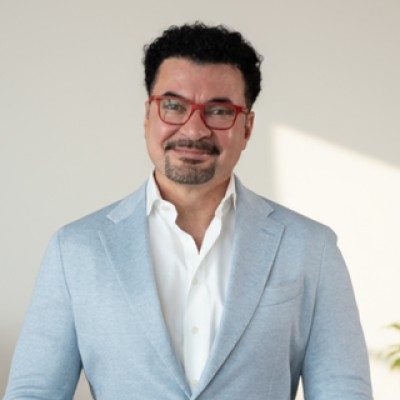
Dr. Hany Demian is a board-certified general surgeon and pain management physician, CEO, healthcare entrepreneur, and one of the leading voices in regenerative medicine, longevity, and preventative healthcare. Running twelve clinics and working with patients across a wide range of health goals, Dr. Demian has spent years studying what separates people who age well from those who do not — and what he has found challenges nearly every assumption most of us carry into a doctor’s office.
Aging Is Not Inevitable — Decline Is
The first thing Dr. Demian wants people to understand is that aging, as most people define it — the slow erosion of energy, mobility, and mental sharpness — is not a fixed biological law. It is, in large part, the result of accumulated choices and unaddressed deficiencies. “Aging, in a nutshell, is multi-organ energy failure,” he explains. “Our organs are failing because our tissues are not getting enough energy.”
The central player in this process is the mitochondria, the energy-producing structures inside every cell. When the mitochondria are not adequately fueled, tissues stop recovering efficiently. Sleep does not fully restore the body. Muscles do not rebuild as easily after exertion. Hormones begin to decline without the raw materials to sustain them. Dr. Demian points out that this is not a process that begins subtly at forty or fifty. The science, he says, is clear: it begins at five.
The reasoning is grounded in how the body develops. From birth through the age of five, the body is in a state of rapid growth and everything is directed toward that growth. By five, that initial developmental phase stabilizes. From that point forward, every choice — how much a child moves, what they eat, how much sleep they get, whether they play organized sports — begins shaping the biological trajectory that will determine how they feel at forty, sixty, and beyond.
Why the Children Who Played Multiple Sports Age Differently
One of the most striking findings Dr. Demian discusses involves what researchers observed when they studied children who played more than one sport. Those children did not just develop better physical fitness during childhood. They developed something Dr. Demian describes as an exercise protein — a cellular and hormonal foundation that persists into adulthood and helps the body respond to physical stress far more effectively throughout life.
“People who exercise, played sports during this stage — more than one sport — will have different kinds of exercise protein,” Dr. Demian explains. “It’s totally different from kids who will not exercise. They don’t have this exercise footing. That will help them during their adolescence, through their adulthood, and the aging process.”
The hormonal dimension matters just as much. When children move their bodies consistently, the sex hormones — estrogen, progesterone, and testosterone — begin developing earlier and remain active longer. Dr. Demian points to military veterans as a clear real-world example: people who entered military service young and were pushed physically during those formative years tend to carry themselves with a posture, strength, and vitality that is visible decades later. The investment made early in the body pays returns long after the training stops.
Even more encouraging is what this means for people who were active in their youth but stepped away during college or early career years. The exercise protein and hormonal foundation laid in childhood and adolescence do not disappear. “Even if they stop for a period of time,” Dr. Demian says, “the protein will be there. So it will be easier for them to get back in shape.”
The Biomarkers Most Doctors Never Check
One of the most practical and important segments of Dr. Demian’s conversation involves the gap between what traditional medicine tests for and what actually matters for long-term health. He describes a case early in his career that took him six months to solve. A male patient had done everything right — his nutrition was on track, his sleep had been evaluated, his testosterone and free testosterone levels were within normal ranges. And yet something was clearly wrong.
“The minute I looked at his estrogen, my eyes opened,” Dr. Demian recalls. “It’s such an important number.” Estrogen in men governs joint lubrication, libido, skin quality, and mood. When it is out of balance — too high or too low — the effects ripple through the entire system in ways that can look like almost anything else. Dr. Demian had simply not thought to test for it, because the standard model did not flag it as relevant. Once he did, the picture became clear.
This experience led him to develop a much more comprehensive testing philosophy. He now recommends what is called a Dutch test — a urine-based hormone panel that does not simply measure whether hormone levels fall within a reference range but examines how those hormones are being expressed and metabolized in the body. “Traditional medicine: we check your testosterone is within the normal level, your estrogen within the normal level. Goodbye. We’ll see you next year,” he says. “We need to understand how estrogen, progesterone, and testosterone are expressed in your system and working or not.”
He also wants to dispel a lingering fear that has kept many people from addressing hormonal deficiencies. The FDA has removed the black box warning that previously suggested hormone therapy caused cancer. Dr. Demian is emphatic on this point: hormone deficiency, not hormone supplementation, is what creates risk. “The lack of hormones or hormone deficiency in your system is way more dangerous. It exposes women and men to heart attacks, strokes, and blood clots.”
The Free Foundation That Outperforms Everything Else
When a listener asked Dr. Demian how to improve health without expensive programs or complicated protocols, his answer was blunt. “Seventy-five percent of longevity is for free,” he says. Sleep, movement, and nutrition done correctly account for the vast majority of what determines how the body holds up over time. Supplements, peptides, and hormones make up the remaining twenty-five percent — and they are largely ineffective without that foundation in place.
Sleep is at the top of his list. Not because a specific number of hours is universally correct, but because most people are chronically cutting it short in ways their bodies register at the cellular level. He recommends sleeping in a dark room and allowing the body to wake naturally at least twice a week, without an alarm. Darkness, he explains, allows hormones and nutrients to be directed to the right tissues for restoration and repair.
On nutrition, Dr. Demian keeps it specific. A high-protein diet — he suggests one to one and a half grams of protein per pound of body weight — provides the highest return on investment of any nutritional approach. He recommends restricting carbohydrates and fats to earlier in the day, when the body is most active, and keeping the evening meal protein-dense. On exercise, his advice is similarly grounded: identify which movements your life actually requires and build from there. He mentions grip strength as one of the most reliable indicators of long-term longevity, something researchers have documented extensively and something that can be trained with basic, consistent effort.
“Seventy-five percent of longevity is for free. Everything else — hormones, peptides, supplements — is only twenty-five percent.”
Dr. Hany Demian, Board-Certified Spine Surgeon and Longevity Specialist
The Supplements That Actually Earn Their Place
With the supplement industry producing thousands of products and influencers promoting nearly all of them, Dr. Demian’s approach is refreshingly precise. He takes a short list of supplements himself and explains the reasoning behind each one.
NMN and NAD+ form the core of his protocol. These compounds fuel mitochondrial function — the same cellular energy system whose decline he identifies as the root of aging. He takes both because some people lack the enzyme needed to convert NAD directly, making NMN a necessary precursor that fills the gap. “It really depends on whether you’re getting the regular fuel or the premium fuel,” he says. “It’s really up to you — but I’m saying both because some people lack an enzyme that can convert NAD directly.”
Vitamin D3, K2, and natokinase form the second tier. This combination works together to clear cholesterol buildup from the arteries and veins before it calcifies. Dr. Demian contrasts this approach with statin medications, which calcify soft cholesterol plaques and hold them in place — an approach he views as outdated when the option exists to clear that buildup entirely. Omega-3 fatty acids or PEA round out what he considers the essential baseline.
He is clear that beyond this core group, most supplements represent wasted money unless testing reveals a specific deficiency. “Other than that, honestly, you’re just wasting money and time if it’s not done within the context of a program.” He does add creatine for its benefits to muscle mass, stamina, and — more recently documented — cognitive function, but he frames it as an addition to a thoughtful program, not a substitute for one.
Where Longevity Medicine Is Headed
Dr. Demian sees the field changing rapidly and in ways that will eventually make personalized health monitoring available to far more people. Countries like Dubai have already created a dedicated Ministry of Longevity, separate from the Ministry of Health — an institutional recognition that preventative biology requires its own infrastructure.
The technology Dr. Demian is most interested in involves AI-powered continuous monitoring — wearables and systems that track health data around the clock, not in quarterly appointments, and can generate daily personalized recommendations based on what the body is actually doing in real time. “It will be every minute of every hour of every day,” he says. “And it will have a homework for you on a daily basis.” In his vision, this kind of monitoring will be tailored to an individual’s specific goals, lifestyle, and genetic predispositions, making the guesswork that currently drives most supplement and health decisions obsolete.
His message for anyone who has accepted fatigue, brain fog, or physical decline as their new normal is simple and direct. “Aging is optional,” he says. “So what would you choose? To age or to defy aging?”
The Work That Is Already Within Reach
What Dr. Demian describes is not a distant or expensive vision. Most of the changes that have the greatest impact on biological aging cost nothing. Sleep in a dark room. Move consistently. Eat enough protein. Find a doctor who understands biology, not just disease. Get the right blood work done, including the hormones your doctor may not think to test.
The more advanced steps — comprehensive hormone panels, genetic testing, targeted supplements, AI-assisted monitoring — build on that foundation. Without it, Dr. Demian is clear: no protocol will compensate for chronic sleep deprivation, nutritional gaps, or a sedentary life.
The most important shift is recognizing that what feels like aging is often something else entirely. It is a system that has not been given what it needs. And in most cases, Dr. Demian is confident that what it needs is more available than most people realize.