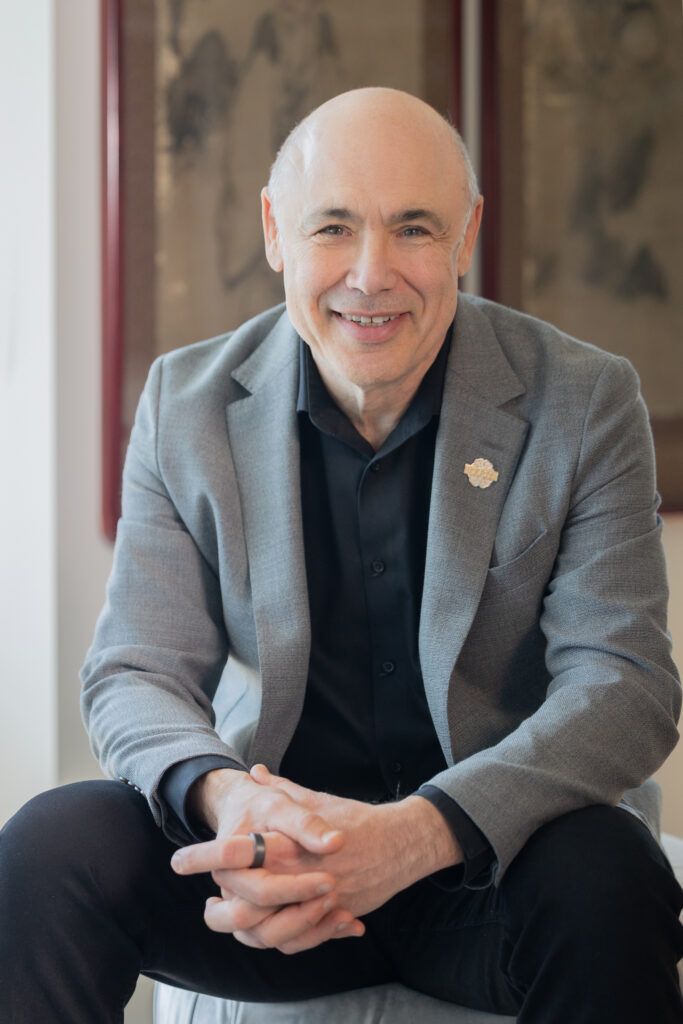
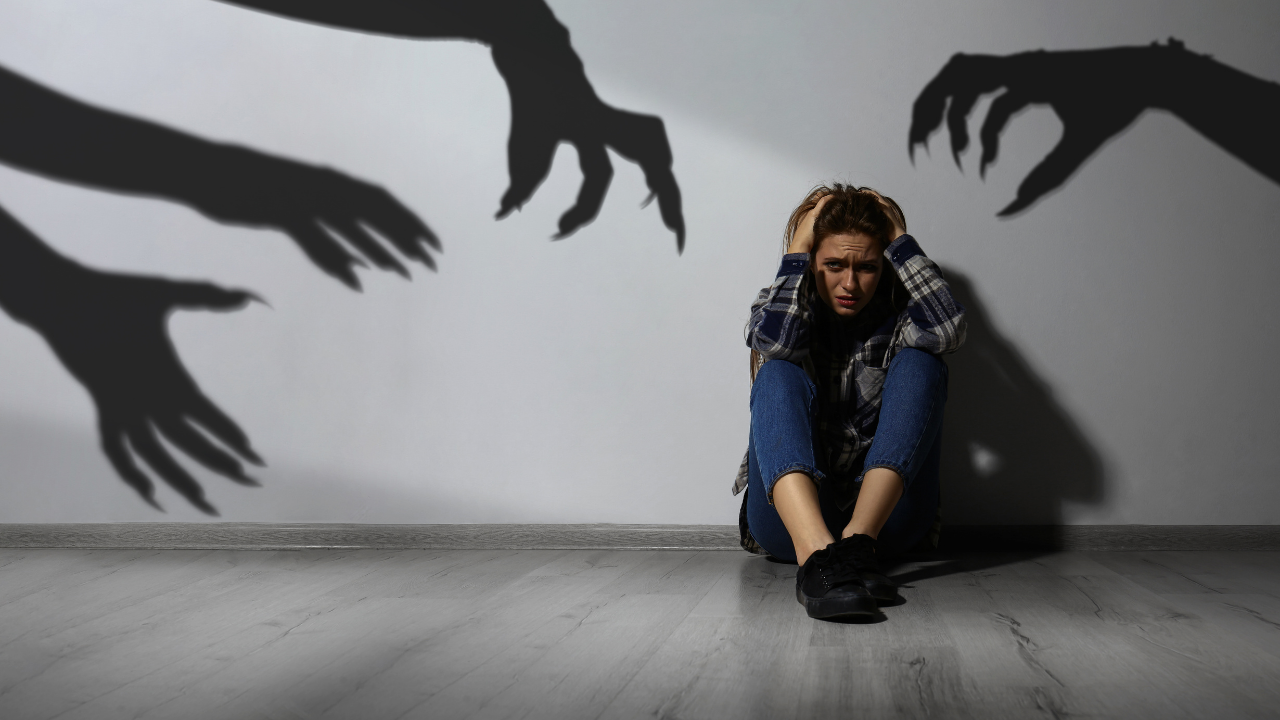
“The brain doesn’t know the difference between a battlefield and a bad childhood. As long as the stress is continuous and there’s no safety — it responds the same way.”
— Dr. Eugene Lipov, trauma researcher and author of The God Shot
Why trauma lives in the nervous system — and what science now says about finally releasing it
For millions of people, the hardest part of living with trauma isn’t the experience itself — it’s the silence around why they can’t seem to leave it behind. The answer, it turns out, has less to do with the mind than most of us have been taught, and everything to do with the body. Emerging science is changing not just how we understand post-traumatic stress, but how we treat it.
The Biology Behind “Just Move On”
There’s a reason telling yourself to move on rarely works. It isn’t a failure of character or willpower. It’s biology.
When we experience trauma — whether a single catastrophic event or years of low-grade, relentless stress — the nervous system adapts to keep us alive. The problem is that sometimes it gets stuck in that protective state long after the danger has passed. And thinking our way out of a physiological response was never going to work in the first place.
Dr. Eugene Lipov is a physician and researcher who has spent over two decades studying post-traumatic stress at the level of the nervous system. His path into this work is deeply personal. Born in Ukraine, Lipov grew up in the shadow of his father’s war trauma — a World War II combat pilot who was one of only 100 men to return home from a squadron of 10,000. His father came back severely affected and, over time, transmitted that distress to the family around him, a phenomenon known as secondary PTSD. Years later, while Lipov was a surgical resident, his mother died by suicide. She had been in active psychiatric treatment the day before she died, receiving care that, decades on, has changed surprisingly little. That loss redirected his career entirely.
Today, Lipov is among a growing group of scientists reframing trauma — not as a psychological weakness or permanent disorder, but as a physical injury with measurable biological markers and, increasingly, effective treatment options.
It’s an Injury, Not a Disorder — and the Difference Is Costing Lives
The term “post-traumatic stress disorder” has been in clinical use since 1980. But the language may be doing more harm than it was ever meant to prevent.
Disorder implies something is fundamentally wrong with the person. Injury implies something happened to them. That distinction carries enormous weight for whether someone seeks help — and for the shame they carry in the meantime.
When Lipov surveyed 3,000 patients about renaming the condition from PTSD to PTSI — post-traumatic stress injury — the responses were striking. People said the change would significantly increase the likelihood they’d seek treatment, give them genuine hope of recovery rather than a lifetime label, and reduce the stigma that causes so many to hide their suffering rather than address it. Stigma, as Lipov notes plainly, kills people.
Modern neuroimaging — PET scans, fMRI, and magnetoencephalography — has made post-traumatic stress directly visible. The amygdala, the brain’s threat-detection center, appears enlarged and hyperactive in those affected. Effective treatment produces a measurable reduction in that activity. This is not a psychological construct. It is a physiological condition with a clear biological signature — and in 2026, it is no longer invisible to anyone with access to a scanner.
Trauma Doesn’t Require a Battlefield
One of the most persistent myths about post-traumatic stress is that it requires something dramatic — combat, a catastrophic accident, or acute violence. Research tells a different story, and the original clinical definition made the problem worse. When the diagnosis first appeared in the DSM in 1980, it required that the trauma be “outside normal human experience” — inadvertently telling an enormous number of suffering people that what had happened to them simply didn’t qualify.
The nervous system doesn’t share that view. It responds to cumulative, chronic stress much the same way it responds to a single traumatic event. Years of bullying, an unpredictable home environment, an emotionally volatile relationship, a childhood shadowed by fear — all of these can produce the same physiological changes as more acute trauma. The brain doesn’t need a singular breaking point. It needs only continuous stress and the sustained absence of safety.
This explains something Lipov encounters regularly in clinical practice: patients — often women — who have never served in the military, never experienced a catastrophic event, yet present with every hallmark symptom of post-traumatic stress. When asked about their histories, the picture clarifies. A frightening father. Chronic bullying. A marriage marked by unpredictability and fear. A slow drip, relentless and without rest. The nervous system responded accordingly.
Secondary trauma adds another layer. When someone living with post-traumatic stress shares a home with others, the people around them are continuously exposed to a chronically dysregulated nervous system. Unpredictability, hyperreactivity, and emotional volatility activate the same stress pathways in partners and children over time. The transmission isn’t viral — there is no pathogen — but the effect on the nervous system can be functionally identical. Healing one person’s nervous system can, over time, change the environment for everyone around them.
What Is Actually Happening in the Body
When we encounter a serious threat, the body releases norepinephrine — the neurochemical that fuels fight-or-flight. For most people, this subsides once the danger passes and the nervous system resets. But when trauma is severe or prolonged, something additional occurs.
A compound called nerve growth factor (NGF) travels from the brain to the stellate ganglion — a cluster of nerve tissue in the neck that connects the brain to the body’s sympathetic stress network. There, NGF triggers the growth of additional nerve fibers. Where there were once four sympathetic nerve pathways, there may now be eight. Each of those additional fibers continuously produces more norepinephrine — independent of whether any real threat exists.
This is the biological engine behind persistent post-traumatic stress, and why its effects can last fifty, sixty, or even a hundred years. The nervous system is not dwelling on the past. Structurally, it has never left it.
Lipov treated a 72-year-old Vietnam veteran who had spent more than five decades in that state — cycling through care facilities, struggling with addiction, and estranged from his family. Three years after receiving targeted treatment, his two sons stood before a crowd and thanked the medical team for giving them their father back. What changed was not his perspective or his willingness to heal. What changed was the structural biology of his nervous system.
Recognizing the Symptoms
Because post-traumatic stress is so closely associated with combat, many people living with it never recognize themselves in the description. The symptoms worth knowing include:
Sleep disturbances. Difficulty falling or staying asleep, or sleeping long hours without feeling restored. Nightmares are common. The inability to reach deep, restorative sleep is both a symptom and an accelerant that makes everything else harder to manage.
Hypervigilance. A persistent, low-level state of alertness — scanning rooms for threat, difficulty relaxing even in objectively safe environments.
Impulsivity and reactivity. An exaggerated startle response, disproportionate reactions to minor stimuli, feeling perpetually on edge in ways that are hard to explain.
A pervasive sense of doom. A background feeling that something bad is about to happen, without a specific or identifiable source.
Depression. Approximately 85 percent of people with post-traumatic stress also experience clinical depression. The two share overlapping neurobiological mechanisms and rarely travel separately.
Sexual dysfunction. Up to 85 percent of men with post-traumatic stress experience sexual dysfunction — reflecting the condition’s broad reach into physical health and intimate relationships.
Social withdrawal. Difficulty maintaining relationships, emotional numbness, and a reduced capacity for closeness or ease with others.
These are not character traits. They are the measurable output of a nervous system structurally modified by sustained stress.
Why Mindset Work Alone Often Falls Short
There is real value in therapy, breathwork, and mindset practices, and for many people, they provide meaningful relief. But when the nervous system is structurally running on excess norepinephrine driven by additional nerve fibers, those approaches have a ceiling. You cannot think extra nerve fibers out of existence.
For people who have worked hard at their healing and still feel stuck, the limitation is not them. It is that the intervention has not yet reached the level at which the problem actually lives.
Lipov describes a 45-year-old Australian police officer whose job had involved recovering bodies from tunnels. Severely affected, divorced, and suicidal, he had received five consecutive years of every intervention his psychiatrist could offer. Nothing held. Two weeks after a targeted nervous system intervention, he was sleeping, communicating clearly, and no longer suicidal. He could finally engage with therapy — because the physiological barrier to that engagement had been addressed first. Therapy works best when the nervous system is in a state that can genuinely receive it.
The Hidden Cost of Fractured Sleep
Among the symptoms of post-traumatic stress, disrupted sleep may be the one that most quietly compounds everything else.
During deep sleep, the brain’s glymphatic system flushes out the metabolic byproducts that accumulate during waking hours. When post-traumatic stress keeps people cycling through light sleep without ever reaching deep, restorative stages, those byproducts remain in the brain tissue — contributing to inflammation, cognitive fog, mood instability, and heightened reactivity that make every other aspect of recovery harder.
Poor sleep also drives systemic inflammation linked to elevated risk of cardiovascular disease, metabolic dysfunction, and dementia. For someone already managing a dysregulated nervous system, the downstream consequences accumulate quietly and significantly. Addressing sleep is not a secondary priority. It may be the single most important biological foundation for recovery.
What Smartphones Are Doing to Our Nervous Systems
The nervous system cannot reliably distinguish between a threat encountered in real life and one witnessed on a screen. Repeated exposure to violent, alarming, or emotionally activating content activates the same stress pathways as lived experience — and the algorithms driving social media are explicitly engineered to surface exactly that content, because arousal drives engagement.
Lipov uses the term “digital PTSD” to describe the cluster of symptoms that can emerge from sustained exposure — symptoms that closely mirror post-traumatic stress and share, at a neurological level, a common denominator: inflammation. The condition is compounded by late-night screen use disrupting sleep, comparison-driven platforms amplifying social anxiety, and the dopamine dysregulation produced by rapid-cycle reward loops.
There is also a subtler dimension worth noting. Researchers have coined the term “technoference” — technology interference — to describe the impact of parental phone use on very young children. When a caregiver’s attention is repeatedly drawn away by a device, the disruption of eye contact and emotional attunement produces measurable anxiety in infants as young as one to two years old. The bonding cues that anchor early attachment are interrupted, and the child’s nervous system registers the absence as a signal of potential threat. The habits we form around our phones are not personal choices in isolation — they ripple outward.
The Expanding Landscape of Trauma Treatment
Current research estimates that conventional therapeutics — primarily therapy and medication — are effective for roughly 40 percent of those who receive them. For a condition as serious and widespread as post-traumatic stress, that gap is significant.
A growing field called interventional psychiatry is addressing it by working at the level of the nervous system directly. Among the most researched approaches is the stellate ganglion block — an injection of local anesthetic into the nerve cluster in the neck that serves as the relay hub between the brain and the body’s sympathetic stress response. When the anesthetic reaches the ganglion, norepinephrine levels drop rapidly and patients often report feeling meaningfully calmer within minutes. The nerve growth factor maintaining the additional fibers is also interrupted, triggering a gradual pruning of the extra nerve pathways sustaining the hyperactivated state.
Crucially, the procedure requires no recounting of trauma. Lipov’s analogy is straightforward: a physician treating a broken leg doesn’t ask whether the patient fell or was pushed. The relevant fact is the injury. The relevant response is to treat it.
Lipov first published on this approach in 2008 and his clinical results now show an 80 to 85 percent success rate, with meaningful improvements in sleep, mood, and the sense of impending doom often reported within days. A large-scale study currently underway at NYU aims to produce the broad-sample evidence base the approach has long warranted. Other interventions expanding the field include intravenous ketamine for treatment-resistant depression and transcranial magnetic stimulation, which modulates brain activity without pharmacological side effects. Together, they represent a meaningful and overdue expansion of what is available to people for whom conventional treatment has not been enough.
Practical Foundations for Nervous System Recovery
Clinical interventions are one part of the picture. The daily environment in which a nervous system is asked to heal is the other. These evidence-informed practices, applied consistently, can meaningfully support recovery.
Protect sleep. Eliminate screens for at least two hours before bed and keep devices out of the bedroom entirely. The presence of a phone — even silent and face-down — sustains a low-grade state of anticipatory attention that competes with deep rest.
Move consistently. Inactivity drives the inflammatory cycle that worsens depression and dysregulation. Even moderate, regular exercise interrupts it. It is among the most accessible and underutilized tools available.
Spend time in nature. Natural environments have a documented calming effect on the autonomic nervous system, reducing cortisol and activating the parasympathetic — rest and repair — state that post-traumatic stress suppresses.
Audit your digital inputs. Limit social media and news to a defined window each day. Algorithmically curated content is designed to generate arousal and sustain engagement. For a nervous system working toward regulation, that is, continuous activation — not passive background noise.
Avoid stimulants. Energy drinks and high-stimulant beverages create sustained physiological arousal that compounds sleep dysfunction. The pattern they produce — wired during the day, unable to sleep at night — mirrors and amplifies the cycle of post-traumatic stress.
Track your recovery. Wearable tools that monitor sleep depth, resting heart rate, and heart rate variability can surface patterns invisible to conscious awareness. A chronically elevated resting heart rate is the body communicating something worth listening to.
The Role of Hope in Healing
Perhaps the most important insight Lipov offers is also the most human: nobody takes their own life if they have a genuine hope of getting better. The work of destigmatizing post-traumatic stress — renaming it accurately, expanding treatment options, educating the public about its biological reality — is, at its foundation, about restoring that possibility.
He is currently seeking 100,000 survey respondents to support a formal campaign to rename PTSD to PTSI, building on his earlier 3,000-person study. The goal is not semantic. It is to remove the word “disorder” from the vocabulary of people living with an injury and replace it with the honest understanding that injuries can heal.
If you have spent years trying to outthink anxiety, to will yourself out of emotional patterns that don’t respond to logic, or to simply move past experiences that still feel present, science is offering an increasingly clear and compassionate explanation. The nervous system adapts to protect you. Sometimes, in doing so, it needs support to find its way back. That is not a weakness. It is physiology. And there are now more ways than ever to help it.