


“Your body isn’t breaking down — it’s holding patterns that, with patient and intelligent work, can absolutely change.”
— Jeff Bailey, Founder of Avita Yoga
Movement expert Jeff Bailey on why chronic stiffness builds over decades, what’s actually happening inside your joints, and what it takes to reverse it
Most of us have absorbed a quiet belief about our bodies: that aching knees, stiff hips, and creaking shoulders are just the price of getting older. We file them under wear and tear and move on — or we reach for a painkiller and do our best to ignore the signal.
But what if that framing is precisely what keeps us stuck?
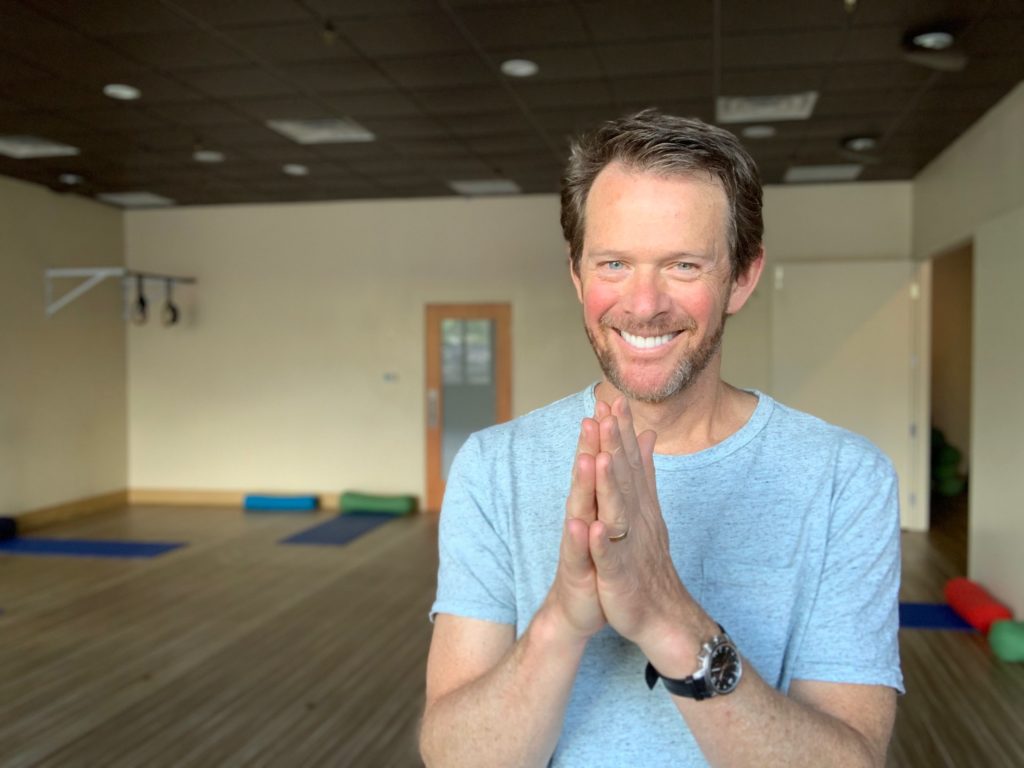
Jeff Bailey, founder of Avita Yoga and author of Mobility for Life: Healthy Joints, Strong Bones, and a Peaceful Mind, has spent decades challenging that assumption. A former rolfing practitioner and movement educator based in Boulder, Colorado, Bailey argues that joint pain is far less about the passage of time and far more about accumulated movement patterns — and unresolved compensations — that the body has quietly built up over years, sometimes decades.
“We tend to blame just about everything on aging,” Bailey says. “The moment we blame, we put the solution outside of ourselves.”
Pain Is a Messenger, Not a Verdict
One of the most disorienting findings in modern pain science is the weak correlation between structural damage and the experience of pain. MRI studies consistently show that people with significant joint degeneration often report no pain, while others with mild structural findings suffer considerably. Pain is communicative — the body flagging an environment that needs attention.
The trouble is that our dominant response — suppressing pain with medication, pushing through it, or avoiding the movements that trigger it — addresses none of the underlying conditions that sent the signal. “It’s like shooting the messenger,” Bailey says. “They’re telling us there’s a problem out here. Let’s do something to address it.”
How Compensation Patterns Create Chronic Pain
The body is extraordinarily good at pushing the pain and problem down and adapting to it. When we develop habitual patterns — a posture held for hours at a desk, a protective limp after an ankle sprain, years of favoring one side — the nervous system and fascial system reorganize around those patterns to make them sustainable. This is compensation, and in the short term, it is the body being efficient.
The problem is that compensations compound. A subtle shift in how you load one foot changes how force travels through the knee, which alters the hip, which influences the lumbar spine. Over time, the fascia — the dense connective tissue wrapping muscles, bones, and joints — begins laying down additional tissue to support the dysfunctional pattern. What began as a smart short-term adaptation becomes a structural source of chronic restriction and pain.
Bailey illustrates this with his own experience: a childhood foot injury from horses on his family’s Colorado ranch showed up decades later as arthritis in his big toe. “There’s an injury that happened many, many years ago that I wouldn’t give a second thought,” he says, “that starts to show up later in life.” The difference is, now there’s a way to decrease pain and arthritis while maintaining important mobility.
What’s Actually Happening Inside Your Joints
Every major joint in the body is enclosed in a synovial membrane filled with fluid that both lubricates joint surfaces and nourishes the cartilage inside. Crucially, cartilage has no direct blood supply — it depends entirely on the mechanical compression and release of the joint to circulate that fluid, flush out metabolic waste, and bring in nutrients.
When joints are chronically under-moved, waste accumulates, the cartilage becomes nutrient-deprived, and degeneration follows. “Without consistent pressure, the waste begins to build up,” Bailey explains. “Now you have a toxic environment. The cartilage can no longer stay healthy. We call that arthritis.”
This reframes the problem entirely: joints don’t primarily degrade from overuse. They degrade from the wrong kind of disuse — the failure to move them in ways that keep their internal environment clean and nourished.
Flexibility Is Not Mobility — and Neither Equals Comfort
Flexibility describes how far a muscle can lengthen under external pressure. Mobility describes how well a joint moves through its full range with active control. You can be highly flexible and have poor joint mobility — and as Bailey has observed across decades of teaching, flexibility does not equal comfort.
“There are plenty of very flexible people who are very uncomfortable in their bodies,” he says. “And I know plenty of stiff, rigid people who are more comfortable than flexible people.”
This distinction drove Bailey to develop Avita Yoga as a departure from conventional yoga’s emphasis on stretching. The practice uses hundreds of shapes — not poses — specifically designed to bring targeted compression and movement to joint capsules and deep fascial structures. The variety serves both the joints, which benefit from novel movement, and the mind, which must stay present when it cannot predict what is coming next. “Where does healing occur?” Bailey asks. “In the present moment.”
The Nervous System’s Role
Chronic pain is not simply a readout of tissue damage. It is the nervous system’s interpretation of a problem and should not be ignored, numbed, killed, eliminated or imagined away. When we react to pain or try to eliminate it, we are in effect “shooting the messenger.” If we succeed, then the problem remains and we have no link back to it, which in the case of joint pain, leads to degeneration and immobility. Yes, we can rely on joint replacement surgery, but why undergo the hassle and risks when there’s a way to improve mobility and remodel joints non-invasively?
Not only is Avita Yoga a revolutionary approach to joint health and mobility, but it is remarkably helpful in resourcing a peaceful state of mind.
Bailey’s approach explicitly targets this important dimension. “When we get close to the bones, we have a natural backdoor into the nervous system,” he says. “You have to bring the nervous system along for the ride for lasting results.” His rolfing background reinforced this understanding — that fascial tissue holds the imprints of physical and emotional history alike, and that genuine release requires both physical input and the kind of slow, attentive presence that signals safety to a guarded nervous system.
He also challenges the conventional equation of muscle mass with strength. With Avita Yoga, long-term practitioners in their sixties routinely hold shapes that defeat athletes decades younger — because real functional strength depends not on muscle bulk but on the absence of the restrictions blocking it. “Find the blockages, the obstacles to the strength,” Bailey says. “And the strength that is already inherent in you starts to come through.”
Five Principles for Lasting Joint Health
Drawing on Bailey’s framework and the broader research on mobility and chronic pain, these principles offer a starting point:
Target joints, not just muscles. Slow, controlled use of joints that thoughtfully approach end-range loading produce physiological effects that stretching and resistance work cannot replicate. Most people get tangible results in a short period of time with this kind of movement.
Slow down to feel more. Fast, flowing movement avoids the problem and will not produce lasting change we desire at the level of the joints and bones. Slow, deliberate movement includes the nervous system giving it time to process change and begin releasing old patterns.
Treat pain as information. Moving kindly toward healing sensation — and reducing intensity when it sharpens — is far more productive than either pushing through pain or avoiding it entirely. There’s no paradigm for this yet and Avita is not a performance or a push. It’s an opportunity to learn a new way of being.
Prioritize consistency over intensity. Thirty minutes of attentive movement will produce more lasting change than occasional intense sessions. The body integrates change through consistent practice, not extremes.
Regulate the nervous system. Chronic stress and unresolved tension will limit the results of any physical practice. Movement that feels genuinely safe and effective — not punishing — is not a luxury. It is a requirement for the nervous system to allow change.
A Final Reflection
Pain, stiffness, and restriction are not signs of a failing body. They are coherent responses to accumulated demands — physical, emotional, and habitual — that have built up over time. With the right approach, it can be unwound in far less time than one might think.
Through Avita Yoga and Mobility for Life, Jeff Bailey offers a practice grounded in how joints, fascia, and the nervous system actually work — and in the conviction that the body, given the right conditions, can and will heal.
“The body wants to be healthy,” he says. “When you get to the source of the problem, it can turn around quite quickly.”
You are not breaking down. You are holding patterns and restrictions that, with a very different approach, can be reversed.
This article is for informational purposes only and does not constitute medical advice. If you are experiencing chronic pain, please consult a qualified healthcare provider before beginning any new movement practice.