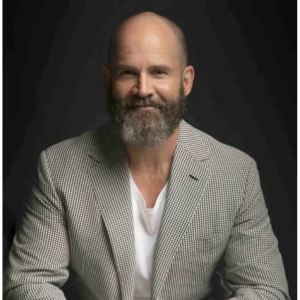

Rich Lyons has a way of making something abstract feel urgently practical. In a recent conversation, he said something that landed hard: “You can build up a reputation over time, and then one seemingly small thing could blow it. And it could take years to rebuild it. Maybe you can’t rebuild it.” That is not pessimism. That is a precise description of how trust actually works, and it changes how you think about every email you send, every commitment you make, and every room you walk into.
Lyons, an entrepreneur, former CEO, leadership coach, and author of Life Is Sales: A Holistic Approach to Sales, Self-Discovery, and Living a Life of Purpose, built Lyons Consulting Group to roughly five hundred employees before selling it in 2017. Today he coaches executives, leads leadership cohorts, and helps professionals build the kind of reputation that opens doors long before they ever knock. His core philosophy, which he calls Life Is Sales, is built on the idea that every single interaction is a sales moment, not in the transactional sense, but in the sense that you are constantly selling trust, integrity, and the belief that you will do what you say you will do.
Why Seamless Matters More Than Perfect
One of the first things Lyons addressed was how trust erodes in the smallest operational moments. He pointed to the experience of calling a company, getting routed through an automated system, being unable to reach a real person, and then having to re-authenticate from the beginning when you finally do. The frustration is immediate and personal, and it transfers directly onto the brand. “You do lose trust,” he said. “And you’re like, I wanna call someone else where I can talk to someone right away.”
His point was not that AI or automation is the problem. He was clear that he is not against technology. The problem is when the system is not seamless. When a customer cannot exit the automated experience and reach a human quickly, the breakdown is not just a service failure. It is a reputation failure. And reputation, Lyons argues, is far harder to rebuild than a broken process.
The takeaway here is structural: however your business or career handles friction points, those moments are actively shaping what people say about you when you are not in the room. Every dropped handoff, every unanswered follow-up, and every moment a customer has to repeat themselves is writing a line in your reputation that you did not intend to write.
What “Your Word” Actually Means in Practice
Lyons defines reputation through a concept he returns to again and again: your word. Not your credentials, not your track record on paper, but the gap between what you say and what you actually do. “You don’t have anything but your word,” he said. “It’s hard to gain trust, but when you lose it, it’s almost impossible to get it back.”
He gave a specific example from his time running Lyons Consulting Group. Rather than budgeting for litigation like some of his larger competitors, he budgeted for accommodations. If a client disputed a charge, even when his engineers were technically right, he would ask: what’s fair to you? He described a scenario where a million-dollar client was disputing ten thousand dollars. His engineers wanted to fight it. Lyons did not. “Should we split it? Do I need to give you the full ten thousand? What’s fair to you?” His reasoning was simple: if that client’s lifetime value is five million dollars, fighting over ten thousand dollars is not a business decision. It is an ego decision.
The concept he built his entire client philosophy around was what he called being 100% referenceable. “Even if we lose a deal, I want that prospect to feel like we treated them well,” he said. That standard, applied consistently, means never burning a bridge. Not because every relationship will continue, but because you cannot always predict which ones will matter later, or who will be in the room the next time your name comes up.
The Skill Nobody Lists on a Resume
Lyons is direct about what he considers the single most important skill in business: social and emotional intelligence. Not charisma. Not technical expertise. The ability to be aware of what you are feeling in real time, regulate what you do with it, and stay focused on what you are actually there to accomplish.
He described what happens when that awareness is absent. “If you’re not aware of it, I can promise you it’s gonna leak out,” he said. The leak looks different in every situation. It might be a sharp comment in a meeting. A snippy reply to an email. A tone of voice that signals something the speaker did not intend to signal. None of these feel significant in isolation. But each one deposits something into the account of how other people experience you, and that account is your reputation.
The practice he teaches starts with a simple question in any charged moment: why am I here and what am I trying to accomplish? He described being in meetings where he was so thrown off by something that happened earlier in the day that he could feel the emotion distorting his presence. His discipline was to track himself back. Not to suppress the feeling, but to notice it and return to purpose. “I’m trying to do this. So I’m going to put that aside. I can take care of it later.” That is what he means by emotional regulation, and he is clear that it is not the same as pretending you are fine.
The Moment He Swore at a Client’s CEO
Lyons shared two specific stories from his time as CEO that illustrate what it actually looks like to protect your reputation under pressure, and the risks that come with choosing integrity over comfort.
The first happened during a routine client visit. He was sitting in a status meeting when the client’s CEO walked in, clearly upset, and began yelling at his own team. Then he started yelling at Lyons’ team, who were on the phone. Lyons decided in real time. He interrupted. “If you want to yell at someone, you can yell at me, but never yell at my people. Ever.” He was direct, intense, and used a word he would not use in most professional settings. The room stopped.
What happened next is the part that surprised him. Afterward, at the airport, the client’s CEO appeared in the same security line. He apologized. He said he felt like he needed to hold people accountable but recognized that it went too far. He offered to buy Lyons a drink. “I gained his respect,” Lyons said. “That’s not what I was expecting to happen.” But more importantly, the story traveled through his own company. People knew their CEO had their back. That was not why he did it. He did it because it was the right thing to do in the moment. The reputation effect was a consequence, not the calculation.
The second story unfolded in a London boardroom with eighteen people present. A project manager at the client company made an untrue claim about Lyons’ team. He said so, calmly and directly. The client’s VP pushed back. “Are you calling my employee a liar?” Lyons held his ground. “I’m not calling her a liar. I’m just telling you what she’s saying is not true. We have the requirements. I can show them to you.” The room was tense. He repaired the relationship with the VP afterward in a separate conversation. The project manager remained cold toward him. And he was at peace with both outcomes because he had stayed integrous, which is the word he uses: integrous. Staying true to what you know to be true, regardless of who is in the room.
“My truth could be a little bit different than your truth. But if I can stay integrous, that’s gonna build trust because you know where I’m at. You know where I’m coming from. I’m not gonna lie to you.”
~ Rich Lyons
When to Pick Your Battle and When to Let It Go
One of the most practical frameworks Lyons offered was about choosing when to speak and when to contain. He described a friend who feels compelled to fight every single disagreement, every slight, every moment where he feels wronged. “You gotta pick your battles,” Lyons said. “And you’re gonna make the situation worse.” The friend is not wrong that some things deserve a response. The problem is the indiscriminate application of that instinct.
The calculation Lyons recommends is whether speaking in this moment will make things better or worse. Some moments require directness, as his CEO stories show. But many moments require the opposite: holding the feeling, staying on purpose, and choosing not to add more heat to an already charged situation. That is not weakness. It is strategic emotional management.
He also addressed what to do when a colleague or business partner is operating outside your values, and you cannot easily exit the relationship. His answer was honest: sometimes you cannot do much. He told a story about a high-performing salesperson at a previous company who went over his head when Lyons tried to hold him accountable. The situation was handled badly by leadership. Years later, when Lyons had his own company, that same salesperson wanted to join. He was the number one salesperson. The financial case was real. Lyons said no. “Our culture was too fragile,” he explained. “We couldn’t bring someone in because they would have impacted us negatively.” He used a memorable image: a big boat leaving a big wake. You might be standing on the dock, but you are going to get wet.
Three Habits That Build a Reputation Over Time
Lyons closed with three concrete practices that anyone can start immediately, regardless of where they are in their career.
The first is underpromising and overdelivering. He called this a foundational trust-builder, and the logic is simple. Most people do the opposite: they say yes quickly and deliver less than they implied. That pattern, repeated over time, trains the people around you not to count on you. “Back to keeping your word and being someone people can trust,” he said. If you set a lower bar and then clear it, people notice. They remember it.
The second is watching your words, particularly when making commitments. Lyons pointed to how easy it is to say yes with no real intention of following through, and how corrosive that habit becomes over time. “You’re better off saying no,” he said. A clean no is more trustworthy than a yes that evaporates. He also flagged a specific language pattern worth paying attention to: when someone says “I can’t,” they are almost always choosing not to. The more honest and more trust-building phrase is “I have another commitment” or “I’m choosing not to.” The difference is small. The cumulative effect on how people perceive your integrity is not.
The third habit is choosing to trust people first, rather than making them earn it. This runs counter to how many professionals operate, especially those who have been burned before. Lyons acknowledged the risk. He has been burned. “But that doesn’t ruin me for everyone else,” he said. He made a deliberate decision at some point in his life to extend trust as a starting position, and to update that position based on evidence rather than withholding it by default.
Every Interaction Is Already Writing Your Resume
The reputation you have right now was not built in a single moment of integrity or a single failure. It was built in thousands of small moments: the email you sent when you were tired and frustrated, the client you chose to accommodate instead of fight, the person you defended when it would have been easier to stay quiet, the commitment you let slip because no one was watching.
Lyons makes the case that the people worth having in your life and your business can feel the difference between someone who is performing trustworthiness and someone who actually lives it. You cannot sustain the performance indefinitely. And you do not need to. What Lyons describes is simpler than a strategy. It is alignment between what you say and what you do, repeated consistently, in the moments when it is inconvenient, uncomfortable, or even costly.
The three habits he offered are not complicated. Underpromise and overdeliver. Say what you mean. Trust people first. Rich Lyons has been practicing and teaching these principles for decades, and his central argument is that no credential, no title, and no polished LinkedIn profile will ever substitute for the reputation you build one interaction at a time.