You just delivered a winning presentation and your first thought was “I got lucky.” You landed the promotion and told yourself “They’ll figure out I’m not ready.” Despite being objectively good at what you do, you can’t shake the feeling that you’re faking it.
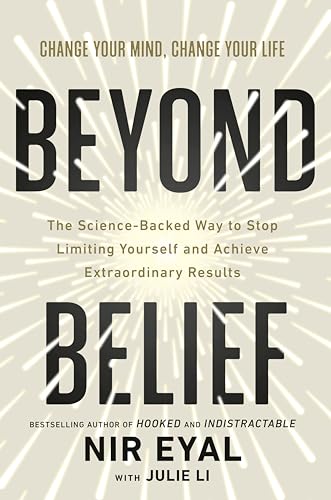
Here’s what you need to know: You don’t have impostor syndrome. You don’t have a condition. What you actually have is a belief, one that’s been reinforced so many times it feels like truth. But, as I argue in my new book Beyond Belief, like all beliefs, it can be examined, questioned, and updated.
It’s Not a Syndrome, It’s a Story You Keep Telling Yourself
Think about the sentences running through your head: “I don’t belong here.” “Someone’s going to find out I’m not that smart.” “I got lucky.” You’ve repeated these sentences so many times—in your internal monologue during meetings, in the moments before you fall asleep—that they’ve stopped feeling like interpretations and started feeling like facts.
But that’s exactly what they are: interpretations. A story you’ve constructed from messages you received growing up or from one particular moment when you felt exposed and your brain decided never to forget it.
The language matters here. When we call it “impostor syndrome,” we’re medicalizing a belief, turning it into a diagnosis. That framing suggests something is wrong with you. But you don’t have a condition that needs treatment. You have a belief that’s been reinforced over time, and beliefs can be examined and updated with new evidence.
The Paradox: Why Success Makes It Worse
The more successful you become, the more intense these impostor feelings often get.
Every time you level up in your career, you enter a “new room.” You’re suddenly surrounded by people who seem more experienced, more polished, more certain. Your brain then makes a critical mistake: it compares your inside with everyone else’s outside.
You have intimate access to your own inner experience: every doubt, every moment of uncertainty, every time you didn’t know the answer. But when you look at others, you only see their carefully curated exterior: the confidence they project, the polish of their presentations, the certainty in their voices.
This creates a fundamental asymmetry. You conclude, “I don’t belong here. Everyone else seems so sure of themselves.” What you’re missing is that they’re making exactly the same flawed comparison. They’re looking at your composed exterior and wondering when someone will realize they’re faking it too.
The discomfort of new rooms isn’t a warning sign that you’re in the wrong place. It’s just what growth feels like from the inside.
What This Belief Is Costing You
This belief fundamentally shapes how you show up professionally, and the costs compound over time.
When you believe you’re faking it, you compensate by overworking. You stay late, double-check everything, volunteer for extra projects. You struggle to delegate because giving others visibility into your work feels dangerous. Perfectionism becomes your defense mechanism, but perfectionism is just fear wearing a productive mask.
Then there are the opportunities you turn down. The promotion you’re qualified for but decline. The meetings where you have the answer but don’t speak up. The projects you avoid because they feel too risky. You play small to stay safe, not realizing that staying small guarantees you’ll continue feeling like an impostor.
Perhaps most insidiously, this belief undermines your ability to rest. Taking time off feels like falling behind. You’re exhausted, but the exhaustion itself becomes part of the story: “See? I’m so stressed. I must not be cut out for this.”
You’ve created a vicious cycle where the belief generates anxiety, and then you interpret the anxiety as proof that the belief is true.
The Two Wrong Solutions (And the Right One)
Most people reach for one of two strategies. Both ultimately fail.
The first is to shrink. Stay small, stay safe. But this keeps you stuck, never accumulating experiences that might change your belief. The second is to fake it. Project confidence you don’t feel. This keeps you in the game but doesn’t change the underlying belief. You still think you’re an impostor, just one who’s getting better at hiding it.
Both strategies accept the premise that you don’t actually belong. Neither questions whether the premise itself might be wrong.
There’s a third approach, one I developed while researching Beyond Belief: At the end of each week, write down three specific things you did well. Not compliments you received, but actions you took: decisions you made, problems you solved, moments when you showed up.
This matters because of how your brain processes information. External validation slides right past your belief system—you can always find a reason not to trust it. But when you document your own actions, something different happens. When you write “I analyzed the customer data and identified the pattern everyone else missed” or “I stayed calm when the project hit a crisis and made the call that kept us on track,” those are facts about your behavior, not judgments about your worth.
This is the specificity principle: impostor feelings survive on vague self-doubt. “I feel like a fraud.” “I’m not qualified.” But they collapse when confronted with concrete specifics. “What did I actually do this week? What skill did I use? What problem did I solve?”
Where to Begin
Start an evidence file. Every Friday afternoon, write down three specific things you did well that week. Be concrete: “I did X which resulted in Y.” Keep this document somewhere you can return to when impostor thoughts hit. Over time, it becomes an archive of capability you can’t easily dismiss.
Reframe “I got lucky.” When you catch yourself attributing success to luck, pause and ask: “What did I actually do here?” Make yourself name the specific skill, decision, or action. Luck might play a role, but it’s rarely the whole story.
Share the moment out loud. The next time you feel like an impostor, try saying it to someone you trust: “I’m having an impostor moment right now.” Speaking it often removes some of its power—and you’ll likely discover they’ve felt the exact same way.
Track your false alarms. For one week, count how many times you think “they’re going to find out I don’t know what I’m doing.” Then count how many times that prediction actually came true. The data will likely surprise you, revealing how unreliable these predictions are.
Ask yourself: “What would I tell a friend?” When an impostor thought hits, imagine a friend or colleague telling you they feel this exact way about themselves. What would you say to them? Now offer yourself that same compassion and perspective.
(Want to work through this process step-by-step? I’ve created a free 5-minute guide that walks you through the exact questions to ask yourself to start updating this belief.)
You’re not an impostor. You’re someone who leveled up and made the human mistake of comparing your messy interior with everyone else’s polished exterior. You are exactly where you need to be. Now you just need to collect enough evidence to believe it.