
Vision boards are often talked about as something creative and inspirational. That can be true, but they can also be a highly practical and motivating tool.
A well designed vision board is not just a collage of nice images. It’s a visual representation of your priorities and direction. Used well, it can help you stay focused on what matters, make better decisions, and keep moving toward the life and career you actually want.
In this article, we will walk through six steps to create a vision board that is grounded, realistic and useful, and we will look briefly at the neuroscience that explains why this simple tool can be so effective.
Step 1: Decide what your vision board is for
Start by being specific about the purpose of your vision board.
Ask yourself:
- Is this vision board for my overall life in 2026
- Is it focused mainly on my career and leadership
- Do I want to include wellbeing, finances or relationships as well
You can create one broad board, or separate boards for different areas, but it’s important to decide up front. If you try to include everything without any structure, it can quickly become cluttered and less effective.
Once you are clear on the purpose, write a short intention statement. For example:
“This vision board represents the life and career I am intentionally building in 2026, with a focus on meaningful work, sustainable energy and financial stability.”
This gives you a clear filter for what does and does not belong.
Step 2: Clarify what you actually want
Before you start collecting images or words, spend time clarifying what you want the year and the next chapter to look like.
Reflect on questions such as:
- What do I want to be different in my work by the end of this year
- How do I want my day to day life to feel
- What kind of leader do I want to be known as
- What specific outcomes would make me feel that this year was well used
Turn your answers into a list of themes or outcomes. For example:
- Step into a more senior or strategic role
- Improve my financial position
- Have more predictable time for family or health
- Reduce constant urgency and create more space to think
These themes will guide the content you choose for your board. The clearer you are here, the more effective the board will be.
Step 3: Collect images and words that are specific and meaningful
Rather than randomly choosing pretty pictures, select images, words and symbols that genuinely reflect your intentions.
You can use:
- Photos that represent the type of work, environment or impact you want
- Keywords or phrases that capture how you want to feel, such as “clarity”, “focus”, “leadership”, “stability”
- Visual representations of goals, such as a speaking stage, a book cover, a savings target or a simplified calendar
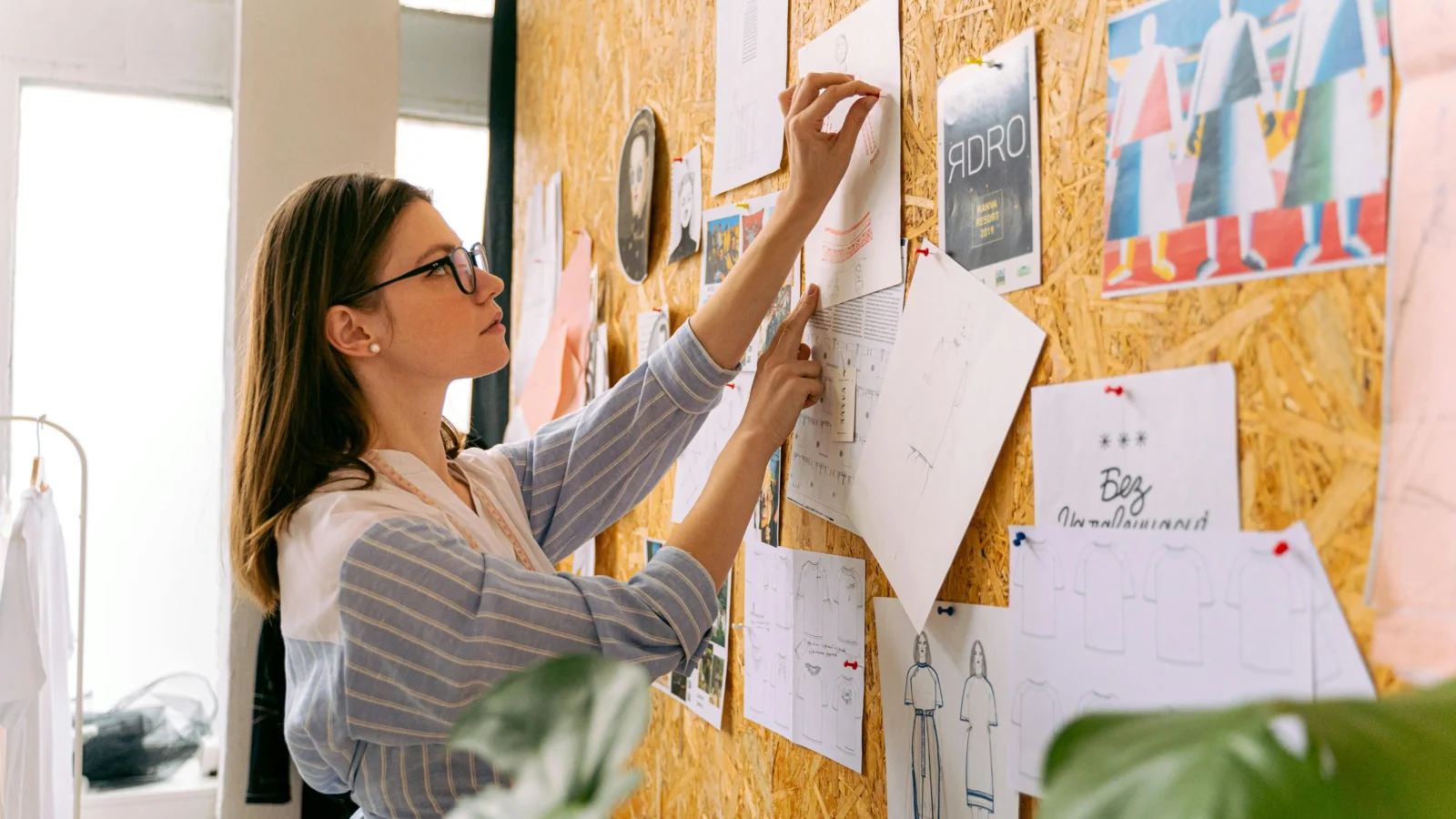
You can create your vision board either physically, with magazines, printouts and a board, or digitally, using tools such as Canva, PowerPoint, in an AI tool, or a simple image editor. A digital version can be useful if you want to use it as a desktop background or phone wallpaper.
The key point is that everything on the board should be there for a reason. It should represent a direction, decision or desired experience, not a vague wish.
Step 4: Organise your board in a way your brain can process
Your brain is more likely to engage with a vision board that feels clear and ordered rather than chaotic.
Consider grouping your board into sections. For example:
- Top left: Career and leadership
- Top right: Finances and work environment
- Bottom left: Health and energy
- Bottom right: Personal life, relationships and interests
You can create headings or keep the structure more visual, but some form of organisation helps your brain quickly interpret what it is seeing.
Aim for enough content to feel rich and motivating, but not so much that it feels busy. White space is useful. It gives your eyes places to rest and makes key elements stand out.
Step 5: Understand the neuroscience behind vision boards
Vision boards are not magic, but they do leverage several principles from neuroscience and psychology.
A few key ideas:
- Mental rehearsal
When you repeatedly visualise a desired future, your brain treats it as a form of practice. This can strengthen the neural pathways associated with that direction and make it feel more familiar and attainable. - Attention and the reticular activating system
Your brain has a network, often referred to as the reticular activating system, that helps filter information. When you repeatedly focus on certain goals or themes, your brain becomes more likely to notice opportunities, information and connections related to those goals. - Emotion and motivation
Images that evoke positive, meaningful emotions create more engagement than a written list. When you feel something in response to what you see, you are more likely to stay motivated and to take action.
In simple terms, a vision board helps your brain pay attention to what you want, reduces the psychological distance between your current reality and your goals, and supports more consistent action over time.
It does not replace planning and work, but it can make that work more focused and aligned.
Step 6: Use your vision board actively, not passively
Creating a vision board is only the first step. The way you use it will determine its impact.
Here are some practical ways to integrate it into your daily and weekly life:
- Place it somewhere you will see it regularly, such as above your desk or on your desktop background
- Spend a few minutes with it at the start of the week, and ask, “Which part of this vision can I move forward in the next five days”
- Use it as a check in when making decisions, and ask, “Does this opportunity or commitment support or distract from this vision”
Review and adjust it each quarter, removing what no longer feels relevant and adding what has become clearer
The aim is not to look at it and hope. The aim is to let it inform your choices, your boundaries and your focus.
In summary
A vision board is most effective when it is:
- Clear in its purpose
- Connected to your real goals and values
- Organised in a way your brain can easily process
- Linked to consistent reflection and action
Used this way, it becomes more than a motivational image. It becomes a practical tool that supports your leadership, your career decisions and your life direction.
If you would like support to turn your vision into confident action for your career, leadership and life, this is the work we do inside Women Rising.