
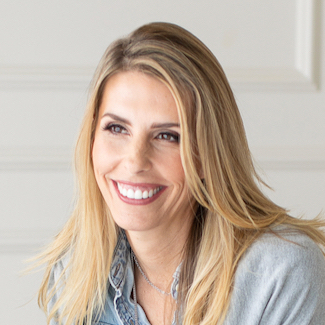

In the “sales pitch for love” we’re often told that relationships inevitably lead to compromise and dimmed authenticity, Case Kenny offers a radically different perspective. The author, podcaster, and social media philosopher behind the red marker wisdom that has captivated millions believes that the right relationship should make you feel like more of yourself, not less.
His latest book, The Opposite of Settling: How to Get Everything You Want Out of Love and Life Without Losing Your Spark, challenges everything we’ve been taught about love, relationships, and the supposed trade-offs between independence and partnership. Through research-backed insights and his signature blend of optimism and practicality, Kenny makes the case for “settling up” rather than settling down.
For the full interview, listen to our Evolving with Gratitude podcast episode. Also available on your favorite podcast platform.
The Power of Being “Cringe”
One of Kenny’s most counterintuitive pieces of advice? Embrace being cringe. “It has been shown time and time again by research and statistically relevant data that your non-conforming traits are the ones that attract people into your life,” Kenny explains. “So non-conforming, basically being the ones that you think make you a little bit weird, where you’re too passionate, too intense, a little bit cringe. That is the thing that attracts the right people into your life.”
Kenny points to research on The Liking Gap, which shows that “you are more likable than you think you are, overwhelmingly so.” When we dim ourselves down out of fear of being too much, we’re actually working against the data.
You were put on earth to be so wildly passionate that people can’t decide if you’re crazy or a genius.
—Case Kenny
The key insight is that authenticity serves as both filter and magnet. “Your passion is a filter for the wrong people and a magnet for the right people,” Kenny notes. By bringing your full, unedited self to relationships from the start, you gather crucial information quickly.
The Dependency Paradox: Independence Through Partnership
Kenny tackles one of the most persistent relationship myths through The Dependency Paradox. Drawing from child development research, he explains how secure attachment actually creates more freedom, not less.
“The closer they are together, the more willing the child is to be independent because the child knows that mom or dad or caregiver has their back,” Kenny observes. “If that’s true in childhood, why isn’t that the same lens at least to look at a relationship in adulthood?”
This reframe pushes back against cultural messaging that suggests wanting independence signals relationship problems. Instead, Kenny argues that the right partnership makes you feel free to pursue your interests precisely because you know someone is genuinely in your corner.
The Michelangelo Effect
Perhaps the most beautiful concept in Kenny’s philosophy is the Michelangelo Phenomenon—the idea that the right partner helps chip away at your rough edges to reveal your ideal self. “Similar to how the artist Michelangelo chipped away at a solid piece of marble to reveal the amazing statue of David. The same is true of a partner.”
Kenny emphasizes this isn’t about needing someone else to complete you. “We are very capable of revealing on our own, independently our ideal self… maybe like 95%.” It’s that final 5%, the gentle encouragement to tell the joke or start the business, that makes partnership so powerful. This creates what Kenny calls “settling up”: relationships that elevate both people.
Trust Made Practical
When it comes to trust, that vulnerable foundation of any meaningful relationship, Kenny offers a refreshingly practical framework. Rather than treating trust as an abstract concept, he breaks it down into four measurable components:
- Credibility: I can trust what you say
- Reliability: I trust that you will show up for me
- Intimacy: I trust that I can be open with you
- Selflessness: I trust that you care about yourself and also care about me
This framework helps us move beyond the ambiguity of “Do I trust them?” to more specific, observable behaviors we can evaluate over time.
Self-Worth as a Personal Decision
Central to Kenny’s philosophy is ownership of self-worth. “The most powerful person is someone who decides their self-worth is not a group decision,” he shares. Rather than seeking external validation, Kenny argues that true worth comes from effort and the goodness we offer others.
“Self-worth comes from effort, and we could all control effort,” Kenny explains. This internal foundation becomes crucial in relationships, helping us distinguish between incompatibility and inadequacy.
The Power of Memory
Kenny’s approach to optimism might surprise you: “The key to being optimistic is having a good memory. Reminding yourself of your ability to survive and evolve and overcome.” Instead of constantly looking forward, he encourages collecting “receipts” of past resilience—all those times you thought something would destroy you, and it didn’t.
Kenny’s message is revolutionary in its simplicity: find someone who makes you feel like more of yourself, not less. Build a life you love, and love will meet you there. In a culture obsessed with perfection, his wisdom offers relief: you don’t need to be perfect to be loveable. You just need to be courageously, authentically yourself.
In Bold Gratitude,
Lainie
Connect with and learn from Case Kenny:
Website: CaseKenny.com
Book:The Opposite of Settling: How to Get Everything You Want Out of Love and Life Without Losing Your Spark
Instagram: Follow @case.kenny
Podcast: New Mindset, Who Dis? (700+ episodes of optimism and practical advice)
Newsletter: Sign up at CaseKenny.com for updates and insights
