

Our capacity for focus, once a cornerstone of human achievement, is disappearing. Buried beneath an avalanche of to-do lists, we flit between tasks like lab rats in a maze of digital distractions, each notification a flickering promise of a reward.
We live in a constant state of flux, citizens of two worlds—the physical one around us and the ever-expanding digital realm. Managing our inboxes, social media feeds, and online identities feels like a second job, calling for our attention even when we’re trying to be present in the real world. This constant state of “betweenness” erodes our focus and leaves us feeling fragmented.
The demands are relentless—an endless cacophony of anxieties that echoes through our lives at a deafening volume. Looming deadlines blare while the hum of other obligations whispers a haunting melody of inadequacy. We’re left mentally exhausted, unable to hear our own internal voices above the din.
Even the solace of sleep feels like a luxury good in this hyperconnected marketplace. News alerts flash like strobe lights, emails ping with the urgency of a fire alarm, and our phones buzz with the incessant rhythm of a demanding taskmaster. This persistent noise of distraction drowns out the quiet yearnings of our souls—the desire for genuine connection, the simple pleasure of uninterrupted thought.
This isn’t a private or individual struggle, a simple case of poor time management or a lack of willpower. It’s a societal epidemic. Our devices, far from being the communication tools they promised to be, have become meticulously crafted attention vacuums. Engineered to exploit our brains’ reward systems, they bombard us with a constant stream of unpredictable notifications and positive reinforcement loops. Every “like,” comment, or follower delivers a tiny dopamine rush, a neurochemical pat on the back that keeps us compulsively checking for more. It’s a vicious cycle, leaving us wired and hooked, but ultimately unfulfilled.
This isn’t a private or individual struggle. It’s a societal epidemic.
We’ve become conditioned for these fleeting dopamine hits, perpetually on edge, searching for the next digital validation. Even the pressure to keep up with the curated social media feeds of our friends and family chips away at our ability to be fully present. We crave the digital reward system, which is as unpredictable and alluring as a slot machine. But at what cost? Have we sacrificed the very foundation of human well-being—meaningful connection—on the altar of busyness?
But it’s not just our devices. The unabated demands of modern life pile on: work deadlines, overflowing laundry baskets, the constant mental loop of errands and appointments. We relentlessly expect more of ourselves. Pursuing greater ambition at work; showing up not as merely “good” parents but as perfect ones; endlessly curating homes and lives and relationships that project an impossible kind of flawlessness. Even self-care becomes yet another thing to optimize.
Everyone, from high-powered executives to busy parents juggling countless demands to students just starting out, feels perpetually behind. Our days are fragmented by distractions, our energy depleted by the incessant demands of our frenzied lifestyles. Even in moments of leisure, the habit of task switching clings to us like a second skin. Folding laundry becomes punctuated by mental to-do lists, a walk in the park interrupted by a nagging thought about an unanswered email. Our brains, conditioned by the endless barrage of stimuli, have become uncomfortable with sustained focus. The very act of experiencing life in real time has become a challenge.
The very act of experiencing life in real time has become a challenge.
My most recent wake-up call came at a traffic light. Waiting in my car at the intersection, I seized the moment of downtime to answer a work email. As I finished up, feeling pleased that I’d completed this task so efficiently, I became aware that my son was loudly pleading from his seat. “Mom, I’m talking to you!” I hadn’t heard a word he’d said. When I turned to him and saw his earnest eyes fixed on me, my heart broke. Not only was I distracted, I was also modeling the very thing I often tell my kids never to do. I was being a hypocrite—and it wrecked me. In that moment, I knew I had to seriously regroup. I needed to be more conscious of where and when to focus my attention, and to be acutely mindful of when distractions were getting in the way of the life I wanted to lead.
[…]
Take a breath and turn the page. Your journey to focus starts now.
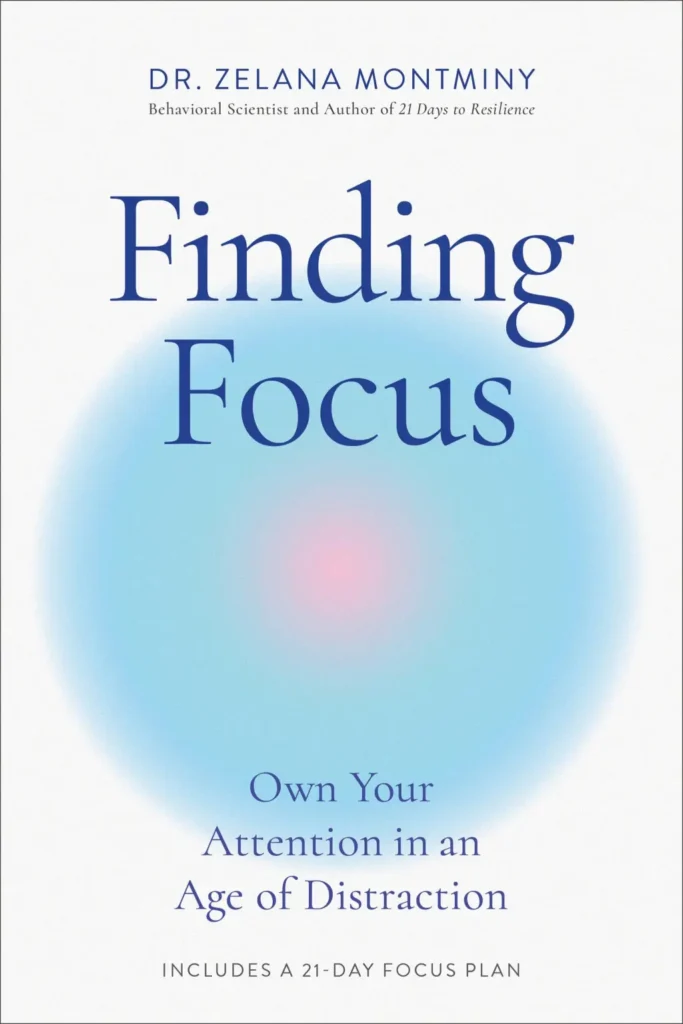
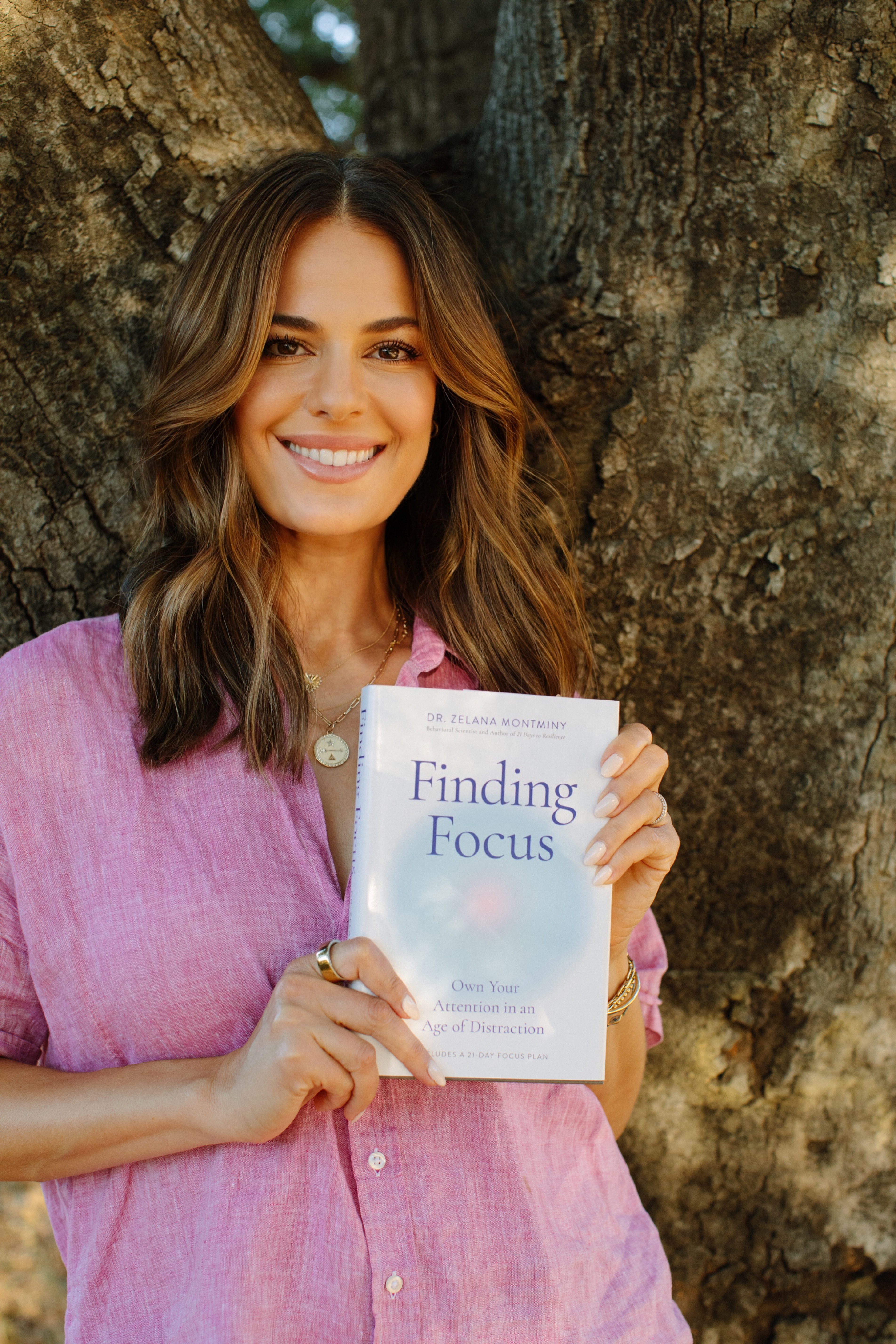
Dr. Zelana Montminy is a behavioral scientist and author of FINDING FOCUS (out now).