

Have you ever noticed that not knowing can feel worse than bad news?
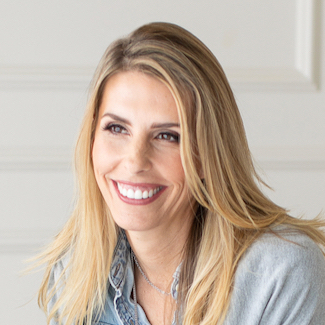
Cognitive scientist, podcast host, and Chris Hemsworth’s brain coach on the National Geographic series Limitless, Dr. Maya Shankar has spent years studying how people navigate change, especially the kind that arrives without warning. In her new book, The Other Side of Change: Who We Become When Life Makes Other Plans, she explores why uncertainty can feel so unbearable and what actually helps us move forward when life veers off course.
“Change is scary for all sorts of reasons,” Maya told me. “But I think one of the biggest reasons is that as humans, we love having a firm grip of the steering wheel.”
She pointed to research showing that people can feel more stressed when they are told they have a 50% chance of receiving an electric shock than when they are told they have a 100% chance.
“We would rather be certain about a negative outcome than to have to grapple with any ambiguity.”
For the full interview, listen to our Evolving with Gratitude podcast episode, embedded in this article (above) and also available on your favorite podcast platform.
Why Uncertainty Hits Us So Hard
According to Maya, our discomfort with uncertainty is not a personal failing. It is human.
“Change is accompanied by so much uncertainty, and our brains are not wired to enjoy uncertainty,” she said. “It’s an uncomfortable, unpleasant feeling on average.”
That discomfort is often compounded by a cultural mantra we hear in moments of hardship: You can’t control what happens to you, but you can control your reaction.
While meant to be empowering, Maya shared that during periods of deep personal pain, that advice rang hollow.
“I was like, okay, it sounds great. Yeah, I would love to change how I feel about this situation. I would love to think differently. How the heck do I even do that?”
That question became the seed for The Other Side of Change. She did not want platitudes. She wanted tools.
The End of History Illusion
One of the most hopeful concepts Maya shared is something psychologists call the End of History Illusion.
“In a nutshell, the end of history illusion says that we wildly underestimate how much we’re going to change in the future, even though we fully agree and admit to the fact that we’ve changed considerably in the past.”
We can look back at earlier versions of ourselves and see growth clearly. Yet when we imagine the future, we tend to believe we are more or less done changing.
“I think we all intuitively feel this way,” she said. “That we are the finished product.”
This matters because at the beginning of a difficult change, we assume we will face the entire journey as the person we are right now.
“We forget that we won’t be the same person on the other side of change,” Maya explained. “We will actually be a different person, one with new abilities and perspectives and values.”
We forget that we won’t be the same person on the other side of change.
—Maya Shankar
When Change Threatens Identity
As Maya continued interviewing people for her book, another pattern emerged.
“One reason why change is so destabilizing is that it can threaten our fundamental sense of self.”
She knows this personally. As a teenager, she was a serious violinist studying at Juilliard under Itzhak Perlman, with dreams of becoming a professional musician. A hand injury ended those plans almost overnight.
“I wasn’t just grieving the loss of the instrument,” she said. “I was also grieving the loss of myself.”
Over time, she learned a lesson that now informs her work.
“It can be more sustainable to define ourselves, not simply by what we do, but by why we do those things.”
When identity is rooted in deeper values, the loss of a role or path does not erase the essence of who we are.
Possible Selves and Reopening Imagination
Maya also introduced the idea of “possible selves,” which she described as a mental album of different futures we can imagine for ourselves.
“When change strikes, it can really change the landscape of possible selves because we now have to generate a vision of who we can become that is rooted in our new reality.”
The challenge, she said, is that we often narrow our imagination too quickly.
“We often restrict our imagination more than is necessary in the face of change.”
One question can help reopen that space.
“Who else can this person be?”
A Surprising Permission Slip
When I asked Maya what she wished more people understood about change, her answer was unexpected.
“Distraction is actually a healthy, productive tool and coping mechanism in the face of change.”
She emphasized that stepping away does not necessarily mean avoidance.
“Giving yourself mental breaks away from the challenging or traumatic experience you’re going through can long term be fantastic.”
When Change Won’t Leave Your Mind Alone
If you are in the middle of change right now, especially the kind you did not choose, here are a few questions and tools drawn directly from Maya’s work:
- Name the uncertainty.
Distinguish between what is truly unknown and what is simply uncomfortable. - Look for identity beyond roles.
What is the “why” underneath what you do? When we root our sense of self in deeper values rather than specific roles, we give ourselves a softer landing. - Ask the possible-selves question.
Who else can this person be? We often restrict our imagination more than necessary when change arrives. - Give yourself permission for healthy distraction.
If something helps you breathe and resets your mind, it can be part of coping, not a failure to cope.
Change can be harrowing. Maya was careful to say that not all of it is positive. And still, she has lived and witnessed again and again that unexpected opportunities can exist on the other side. Not because pain is a gift, but because we are still becoming who we are when life makes other plans.
In Bold Gratitude,
Lainie
Photo Credit: Kirsten Lara Getchell
Connect with and learn from Maya Shankar
- Book: The Other Side of Change: Who We Become When Life Makes Other Plans
- Podcast: A Slight Change of Plans
- Instagram: @DrMayaShankar
- Website: MayaShankar.com
