
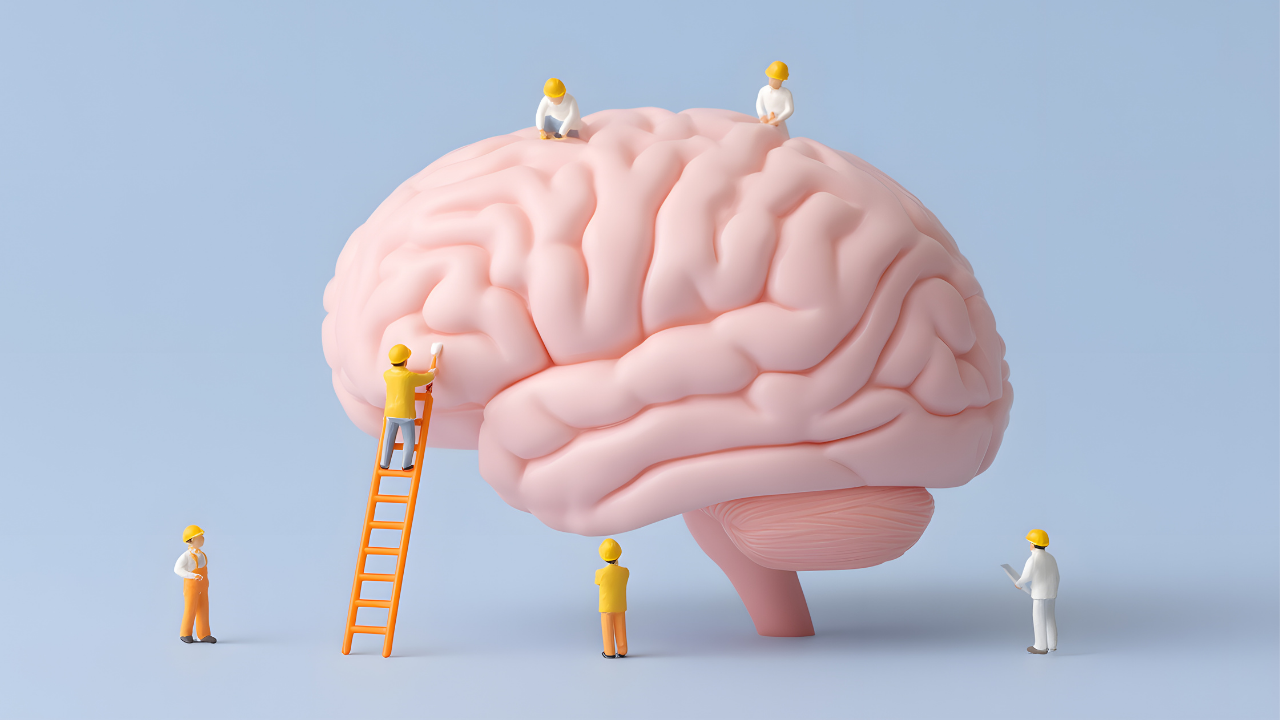
The subconscious mind isn’t trying to hurt us. It’s trying to protect us, often from things we no longer need protection from.
Mike Wood describes the subconscious mind with unusual precision—not as something mystical or abstract, but as a protective system running old code. Much of that code, he explains, was written during moments of heightened emotion, often by a younger version of ourselves navigating stress, fear, or uncertainty.
In a recent conversation, Wood introduced what he calls the “Basement Lab,” a metaphor for the internal space where deeper change occurs. It’s the place where core beliefs are identified, examined, and—when they no longer serve—reconsidered with compassion rather than force.
His central observation is straightforward and rooted in lived experience: many people spend years trying to manage anxiety or depression by addressing symptoms alone, while the beliefs driving those reactions remain unchanged. When those beliefs stay intact, the nervous system continues to respond as if the past is still unfolding.
What follows is a science-forward, human-centered look at how the subconscious operates, why time functions differently at that level, and how reframing and forgiveness can soften the grip of outdated internal narratives.
The “Basement Lab” and the Limits of Symptom Relief
Wood uses the “Basement Lab” to describe where transformation becomes practical rather than aspirational. For him, this isn’t about willpower or layering positivity on top of distress. It’s about locating the beliefs that formed beneath conscious awareness and recognizing how they continue to shape emotional responses, behavior, and self-concept.
He draws a clear distinction between symptom management and deeper resolution. Many coping strategies, he notes, can provide temporary relief without altering the internal patterns that generate distress in the first place.
Wood speaks openly about his own detours. In his twenties, he describes attempting to “outrun” anxiety through substances that offered short-term relief but left the underlying system unchanged. Over time, it became clear that while the tools had shifted, the internal script had not.
A Protective System That Can Become Restrictive
One of Wood’s consistent themes is that the subconscious is not an adversary. It is protective—sometimes excessively so. He likens it to a guard dog that barks at every unfamiliar sound: loyal, vigilant, and easily triggered.
In this framing, anxiety and intrusive thoughts are not signs of weakness but signals from a system attempting to prevent past pain from repeating. The difficulty arises when the system reacts to present-day situations using outdated criteria.
This creates a paradox many people recognize. Efforts toward growth—starting something new, taking a creative risk, becoming more visible—can provoke fear not because the action is dangerous, but because it resembles conditions that once felt unsafe. The protection remains active, even when the threat has passed.
Early Imprints and the Weight of “Day One” Beliefs
One of the most striking moments in the discussion comes when Wood traces a core belief back to his earliest days of life. Through revisiting early felt experience, he describes recognizing emotional imprints tied to a lack of physical soothing and safety at birth—imprints that later surfaced as anxiety and a sense of unworthiness.
What surprised him was not that early experiences mattered, but how persistently they shaped adult emotional responses, even when the conscious mind dismissed infancy as irrelevant.
For Wood, this illustrates a broader point: many foundational beliefs form before the conscious mind can contextualize events. Once established, they operate quietly in the background, influencing perception and reaction for years.
Why the Subconscious Doesn’t Track Time
Wood frequently returns to a concept that helps explain why past experiences can feel so immediate: the subconscious does not register time in the same way the conscious mind does. Emotional memories are often stored as if they are still happening.
This helps explain why certain triggers can evoke reactions that feel disproportionate to the present situation. From the nervous system’s perspective, the original context has not fully resolved.
In this framework, revisiting a memory with new understanding can alter the meaning the system assigns to it. When meaning changes, the emotional response can change as well.
How Beliefs Take Hold
Wood explains belief formation through a simple equation: elevated emotion plus meaning. When emotion intensifies—whether through fear, shame, excitement, or joy—the subconscious becomes more receptive. Add an interpretation (“This means I’m not smart,” “This proves I’m unsafe,” “This person is my future”), and a belief can solidify.
He illustrates this through personal examples, including a childhood experience with learning difficulties that became linked to a belief about intelligence, and adult relationships where early emotional highs created expectations that persisted even after circumstances changed.
In both cases, the belief endured because it was formed during moments of heightened emotional significance.
When Old Material Resurfaces
Wood notes that when people begin examining core beliefs, early stages can feel destabilizing. Memories may surface with unexpected intensity. From his perspective, this isn’t a breakdown—it’s a system responding to perceived change.
Over time, he observes, many people report a reduction in internal noise and a growing ability to notice emotional responses without being overwhelmed by them. Triggers become information rather than threats.
Reconsidering Beliefs, Not Erasing the Past
Rather than framing this process as erasing or fixing, Wood describes it as reconsideration. Identifying when a belief formed, acknowledging what was felt, and allowing an adult perspective to reinterpret the experience.
Forgiveness plays a central role in this reframing—not as approval of what happened, but as a way to release the nervous system from holding the past as present reality.
When meaning shifts, the emotional charge often softens. Wood likens the result to a system update: a period of calm followed by a new baseline marked by reduced reactivity and greater internal steadiness.
Power as Internal Agency
Wood’s definition of power is not control over circumstances or others. It is agency within one’s inner world—the capacity to recognize outdated programming and respond from the present rather than the past.
As the conversation turns toward authenticity, his point is measured but clear: sustained healing requires honesty. Not self-criticism, but clarity about what is real.
In that sense, the work is less about fixing oneself and more about understanding how protective systems developed, updating what no longer fits, and learning to meet the present moment with greater steadiness.
And for many, that shift—quiet, internal, and deeply human—may be the most meaningful change of all.