

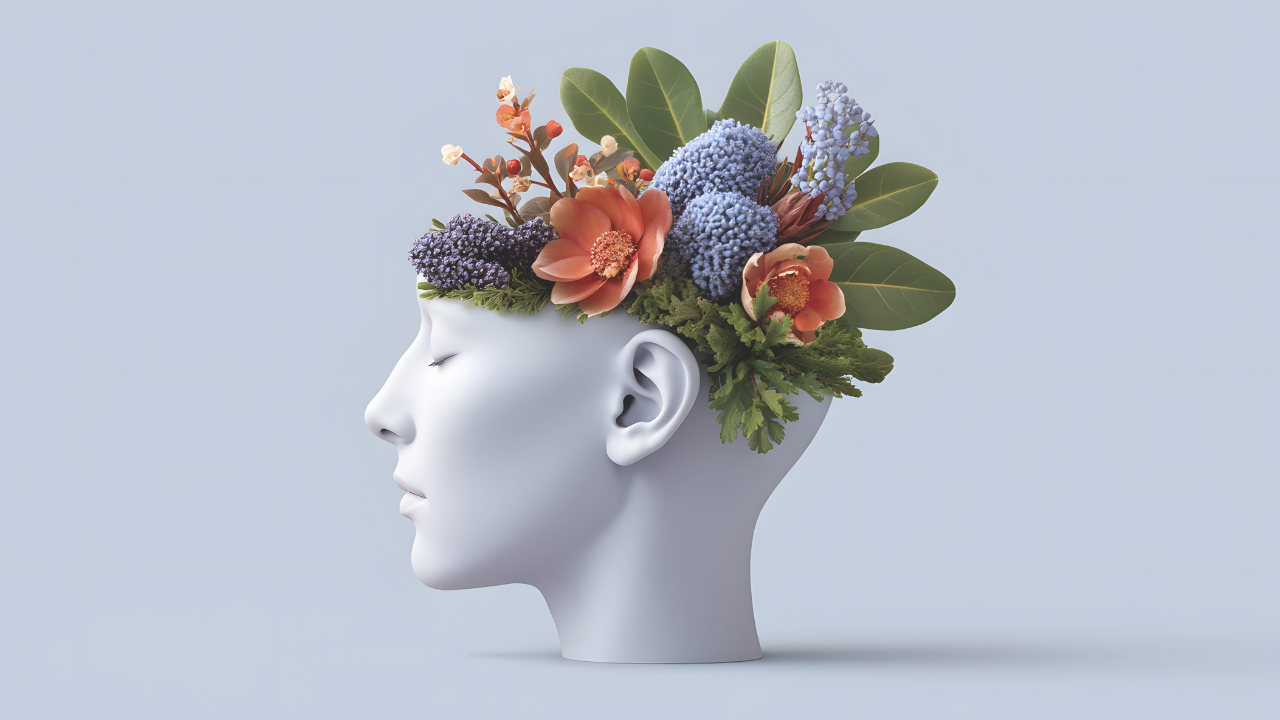
“The natural state of the mind is calm, peaceful, and alert—and when we learn how to return there, mental wellness becomes a skill we can practice, not a struggle we have to endure.”
Mental wellness is often framed around what’s going wrong: stress, anxiety, burnout, emotional overload. What’s talked about far less is what mental wellness actually is. In a world shaped by constant stimulation, packed schedules, and an always-on attention economy, many people feel reactive, depleted, and unsure how to reset—especially those who are capable, motivated, and outwardly successful.
For many, the problem isn’t a lack of effort. It’s a lack of clarity. Without a practical definition of mental wellness, self-care becomes vague or overwhelming. People try to subtract discomfort without knowing what they’re trying to build. The result is a familiar cycle: push hard, crash, recover just enough, then repeat.
According to licensed clinical social worker and educator MJ Murray Vachon, LCSW, mental wellness isn’t a personality trait or a permanent state—it’s a trainable skill. One that can be practiced, strengthened, and sustained over time.
Why Mental Wellness Feels So Hard to Reach
One of the most common misconceptions about mental wellness is that it’s defined by the absence of stress. While understandable, this approach creates a problem: it gives the mind no destination.
When people focus only on reducing anxiety or eliminating symptoms, they end up chasing relief instead of building stability. Even within mental health fields, many professionals struggle to clearly define what “well” actually looks like. Without that definition, it’s difficult to know what to practice, how to measure progress, or how to recover when overwhelmed.
A more useful starting point is this:
Mental wellness includes calm, clarity, and alertness—the ability to respond to life rather than constantly react to it.
The Mind’s Natural State—and What Disrupts It
In everyday terms, mental wellness can be understood as a calm, peaceful, and alert state of mind. When people are in this state, they can focus, connect, problem-solve, and cope with normal stressors.
When stress overwhelms the system, most people move toward one of two extremes:
- Rigidity, where control tightens, flexibility disappears, and tension builds
- Chaos, where emotions feel scattered, intense, or unmanageable
These are not character flaws. They are stress responses.
The goal of mental wellness is not to eliminate stress, but to learn how to return to calm more quickly and more often.
Awareness is the first step. Most people don’t notice what’s happening internally until they’re already overwhelmed. Learning to recognize earlier signals—racing thoughts, physical tension, emotional reactivity—creates space for choice. And choice is where regulation begins.
Sleep, Phones, and the Burnout Loop
One of the most underestimated foundations of mental wellness is sleep. When sleep is compromised, everything becomes harder: emotional regulation, focus, patience, and resilience.
Late-night phone use plays a significant role here. Scrolling often becomes a way to avoid uncomfortable emotions at the end of the day—worry, loneliness, sadness. Over time, this keeps the nervous system activated when it should be winding down, feeding anxiety and exhaustion.
Improving this doesn’t require perfection. Even small changes—creating distance between phones and bedtime—can significantly improve mental clarity and emotional stability.
A Practical Framework for Mental Wellness
To make mental wellness actionable, MJ teaches a simple framework that describes what a regulated mind looks like. A mentally well system tends to be:
- Flexible – able to adapt rather than rigidly control
- Adaptive – capable of adjusting to change
- Coherent – making sense of internal experience
- Energized – supported by stable energy, not adrenaline
- Stable – grounded and less easily thrown off balance
When stress hits, this framework offers direction instead of judgment. The question becomes:
What would help me move back toward calm right now?
Why Self-Judgment Keeps People Stuck
Many people interpret emotional struggle as personal failure. But behaviors like avoidance, overworking, or emotional numbing often make sense once the deeper context is understood.
Shifting from “What’s wrong with me?” to “What’s happening inside me?” changes everything.
This shift replaces shame with understanding. When experiences make sense, people stop fighting themselves—and that alone restores energy and stability.
Mental Wellness in Real Life
Mental wellness is rarely tested during calm moments. It’s tested during conflict, boundary-setting, and emotionally charged situations.
One of the most effective skills is learning to regulate before responding. Grounding the body, slowing the breath, and pausing—even briefly—can prevent escalation and protect relationships.
A simple reset might include stepping away for a moment, grounding the feet, or taking 30–60 seconds to breathe. These small interventions interrupt stress cycles and allow people to return with clarity rather than reactivity.
Five Small Practices That Build Mental Wellness
Mental wellness doesn’t require a full life overhaul. Small, consistent practices build capacity over time:
- Practice calm in micro-moments—at stoplights, before meetings, between tasks
- Keep a short “glimmer list” of things that reliably ground or uplift you
- Choose one supportive habit—walking, music, connection—and repeat it
- Protect sleep gently by moving phones out of reach at night
- Treat wellness as a process, not a finish line
These practices don’t add pressure. They build resilience.
Mental Wellness Is Teachable—and Sustainable
Mental wellness isn’t about eliminating stress or achieving constant calm. It’s about learning how to return to yourself more quickly when life pulls you away.
With a clear framework and consistent practice, regulation becomes a skill—not a struggle. When people stop chasing relief and start building capacity, burnout begins to loosen its grip.
Calm isn’t something you wait for.
It’s something you learn.
