


She was at a potluck. Friends were bringing food over, everyone was ready to hang out, and she sat down on the couch and fell asleep. Not because the company was dull, but because she was tired all the time and had been for years. Dr. Alicia Newsome tells this story about herself, back when her children were small, and she was seeing patients all day, rushing to daycare pickup, feeding her kids and hurrying them into bed because, as she puts it, mama needed to go to bed. She calls those the early signs. Most women do not recognize them as anything at all.
Dr. Alicia Newsome is a functional medicine and lifestyle physician, a bestselling author, keynote speaker, executive health coach, and the founder and CEO of Body Wellness Institute, where she helps high-achieving women understand what is actually happening inside their bodies. She joined Dr. Susan Landers, a neonatologist and the author of Good Enough is Your Superpower, for a conversation about why accomplished women burn out and what to do about it. Dr. Landers spent decades running between a neonatal intensive care unit and three children at home, and she is direct about what that cost her. Between the two of them, one bringing the physiology and one bringing thirty years of lived experience in a demanding medical career, they mapped out something more useful than encouragement. They explained the mechanism.
The Early Warning Signs Look Nothing Like Collapse
Burnout does not usually announce itself. According to Dr. Newsome, the later signs are the ones people picture, but the earlier ones are quieter and easier to explain away. You sleep a full night and wake up exhausted anyway. You need coffee to get through the day. You struggle with brain fog or trouble focusing.
Then there is the one Dr. Newsome calls a big one, and it is the sign most women dismiss entirely: decision fatigue. It is the point where you no longer want to decide what is for dinner or what the family is doing this weekend, where small choices become genuinely hard. That is not indifference, and it is not a personality flaw. It is a system running past its capacity.
Dr. Landers describes her own version of the same thing, which showed up as a feeling rather than a symptom. She felt she was not doing anything well enough, that she was leaving her children in the lurch because she worked so much, and that she might not be doing a perfect job for the babies and parents in her care. So she stayed extra hours. She did not shut down at five or six in the evening. She carried her stress from work home with her every night, and she names that as her own biggest red flag. If you recognize yourself in either description, the useful first step is simply to call it what it is rather than pushing through it.
Your Body Is Running From a Bear That Is Not There
The reason exhaustion persists through a full night of sleep has a physiological explanation, and Dr. Landers lays it out plainly. Excessive stress revs up the sympathetic nervous system, the fight-or-flight part of us. Once it is keyed up, it tends to stay keyed up unless you teach it to settle down. That is the part most people never learn.
Dr. Newsome uses an image that makes it concrete. If a bear were running after you, your body would move into fight or flight, and you would either fight or run to safety. Once the danger passed, your body should return to the parasympathetic state, what she calls rest and digest. Our bodies, she explains, were built for short-term stress. Handle the threat, then come back down. Instead, many women live in what she describes as sympathetic dominance, always somewhat on edge. And there is no bear.
The consequences are not abstract. Dr. Newsome points out that the parasympathetic state is where rest happens, where digestion happens, and where the sex hormones that matter for far more than making babies are supported. Her line about it is the clearest summary of the problem: if a bear were chasing you, the last thing your body would decide is that now is a great time to make a baby. When survival is the priority, everything else gets deprioritized, including getting nutrients from your food. The practical takeaway is that constant low-grade stress is not just a mood. It is a physiological state with physiological costs, and the fix is to deliberately signal safety to your body rather than waiting for a calm week to arrive.
Three Breathing Techniques, and Why They Actually Work
Dr. Landers admits she used to think breathing was automatic and no big deal. Then she learned what it could do, and it changed her working life. Breathing exercises stimulate the parasympathetic nervous system, which is why they work quickly when you have lost your patience and need to take the edge off before you speak to a child who has driven you up the wall.
The first technique she describes is the physiologic sigh: a big deep breath, then a small top-off breath, then a long exhalation sigh. She used it constantly at work. The second is four seven eight breathing, which she turned to at night when she was lying in bed running through whether the permission slip was signed, whether the pediatrician appointment had been made, and whether her husband was pulling his weight. You inhale for four seconds, hold for seven, and exhale for eight, repeated three or four times. Part of why it works, as she explains it, is that counting pulls your attention off the rumination and onto the breath.
Dr. Newsome favors box breathing: four counts in, hold for four, release for four, hold for four after the exhale, repeated four times. She adds an observation that reframes the whole practice. Mothers, she says, are often doing shallow breathing without realizing it, all up in the chest with everything tight. Breathing techniques give the body permission to release. She specifically praises the long exhale in Dr. Landers’ method, because that extended breath out is exactly what most people never do. Pick one and use it tonight. It costs nothing and works anywhere.
The Threshold Nobody Teaches You to Cross
One of the most practical ideas in the conversation is what Dr. Newsome calls transition routines, a deliberate ritual between activities that tells your nervous system one part of the day is over. She compares it to what we already do for our children. Her son knows that a bath, lotion, pajamas, and a book mean bedtime is coming. Adults need the same kind of signal and almost never build one.
Dr. Landers found hers by accident and only after a failed attempt. In her forties, she would come through the door, ask her children for five minutes, and go to her bedroom to meditate, which never worked because of the noise and the soft knocking at the door. Then she discovered that if she pulled into the garage and sat in her car for five minutes listening to Enya, she could breathe and let go of the day. Those five minutes, she says, were golden. It was how she learned to enter her own home. Afterward she could give her children real attention and ask her husband about his day instead of unloading her own.
Dr. Newsome’s point about timing is the part to remember. Do it before you get inside, because once you cross the threshold, your mind is already on what everyone else needs. She works from home, so she built her routine in her office before crossing into the rest of the house. It can be as small as a song you love, a few minutes with a coloring book, or essential oils. The requirement is not the activity. It is the boundary.
Where the Story That You Are Not Enough Begins
The harder question is why accomplished women keep raising the bar on themselves. Dr. Newsome traces it to childhood and to what she calls little t traumas, the small things that happened to us and left behind stories we believe about ourselves even when they are not true. When something triggers us, she says, we default into a younger version of ourselves, an eight-year-old who was told she was not good enough or who was the one who never got picked. From there we conclude things like nobody ever helps me, or I have to do everything myself.
Her process for handling it is specific and repeatable. First, acknowledge the emotion, and she notes that a feeling is usually one word: sad, angry, frustrated. Not the pile of thoughts you have about it, just the one word. Second, ask yourself what you are making it mean. Third, and this is the step she calls resourcing yourself, tell yourself the truth the way you would tell it to someone you love. Dr. Newsome describes what she would do if her fourteen-year-old daughter came to her saying these things. She would mother her. She would tell her she is more than enough. The work is doing that for yourself before you make any decisions, so that the choice to chase another degree or another promotion comes from the resourced adult and not from the child.
“I don’t want the eight year old driving the car of my life.”
Dr. Alicia Newsome, functional medicine physician and founder of Body Wellness Institute
Dr. Landers adds a line she got from a psychiatrist that pairs perfectly with this: feelings are not facts, they are just feelings. Both women land in the same place. Acknowledge the eight-year-old, put her in the back seat with some crayons, and then decide.
Connection Is Not a Luxury, It Is Chemistry
When Dr. Landers describes having lunch with another physician and a nurse practitioner and feeling lighter afterward, or going to a colleague after something went badly in the NICU so they could commiserate, she is describing something with a measurable biological basis. Dr. Newsome explains that human connection produces oxytocin, the same hormone released during breastfeeding, and that oxytocin works against cortisol, the stress hormone. Deep connection changes how you feel because it changes what is circulating in your body.
This is also why both women push back on the idea that connection and movement are indulgences. Dr. Landers knows working mothers roll their eyes at exercise advice, so she talks about what worked rather than what is ideal. She took a friend to Saturday yoga so they could hold each other accountable. Now, in retirement, she does resistance training with a group of older women, a former editor, a nurse, and a businesswoman, and gets more out of the company than the weights. She also spent about six months running with her twelve-year-old son when he joined a track team, and she found that children talk once they loosen up and it is only the two of you.
Dr. Newsome walks with girlfriends she rotates through the week, and once looked up to realize they had covered seven miles without noticing. She points to the Blue Zones, the places in the world where people live past a hundred, where community and deep connection are one of the pillars alongside movement, the way they eat, and a sense of purpose. If you can attach the social connection to the movement, you get both at once, which is the most efficient thing any exhausted woman can do with an hour.
Rest Is Not the Prize for Finishing
The most useful reframe in the whole conversation comes from Dr. Newsome, and it arrives as a comparison. Think about professional athletes at the highest level. They rest, and they recover. You would never see an elite athlete practice every single day without recovery built into the schedule, because performance depends on it. Rest is not what they get after the work is done. It is part of the work.
Dr. Landers takes that further into everyday terms. When you are lying on the couch doing nothing, no cleaning, no sorting, no fixing, no buying, she wants you to think one specific thought: this is good for me. Not neutral, not wasted, but good. Rest and recovery, she says, are crucial for our modern lives, and that includes the ones lived by women who have been taught to earn every quiet moment in advance.
Both of them are clear about the voice that will argue with this. Accomplished women, as Dr. Landers describes it, have critical negative inner voices that harp constantly, saying you did not do that well enough or you were not prepared. Her husband used to answer that voice for her by telling her she was a good enough mother and listing the reasons why, and she says she cannot overstate how much that mattered. So if there is one thing to carry into today, let it be Dr. Newsome’s warning about what happens when we ignore all of this: if we run our bodies into the ground, we have nothing left to fulfill our purpose. Dr. Alicia Newsome has spent her career showing women what is actually happening inside their bodies, and this is the finding that matters most.

Dr. Alicia Newsome is a functional medicine and lifestyle physician, executive health coach, corporate trainer, bestselling author, and the founder and CEO of Body Wellness Institute. She holds a Bachelor of Science in Psychology and a Doctorate of Chiropractic, along with advanced study in sports health science and nutrition and certifications in functional medicine and cellular detoxification. She specializes in women’s health, hormones, digestion, and burnout, and she is known for helping women understand exactly what is happening inside their bodies and resolve it without drugs or surgery. She is the author of Worthy of Rest.
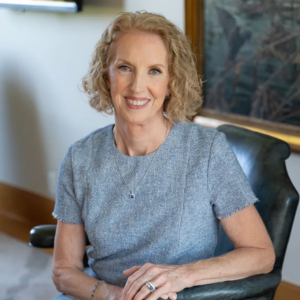
Dr. Susan Landers is a neonatologist and the author of Good Enough is Your Superpower: Overcoming Perfectionism for Women by Silencing Your Inner Critic and Setting Boundaries. She practiced newborn medicine for decades while raising three children, and she writes and speaks about perfectionism, parental burnout, and the realities of a demanding career alongside motherhood. Her work helps women recognize the invisible emotional labor they carry and quiet the inner critic that tells them it is never enough.