
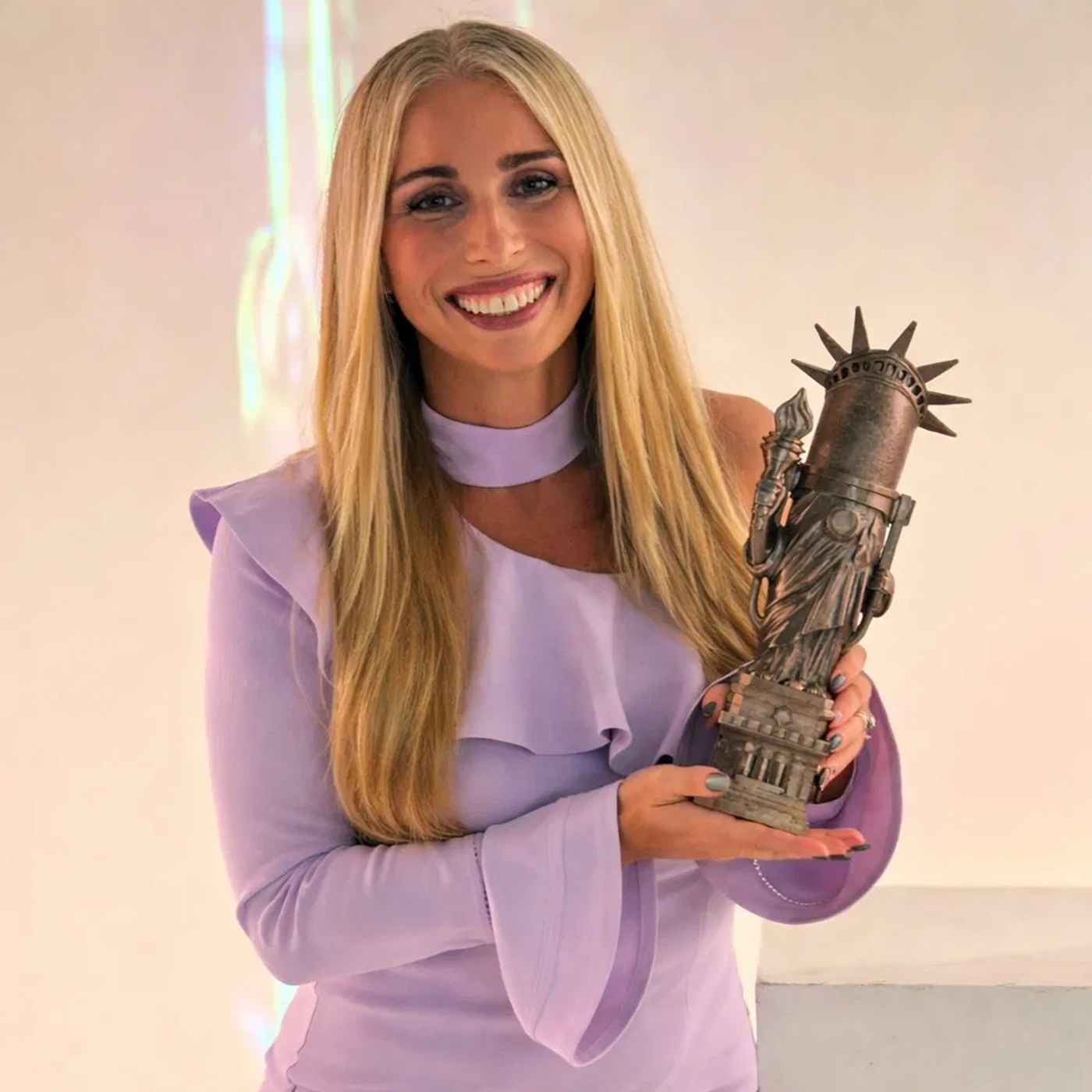

For more than a decade, she did everything right. She ate clean, shopping for what she calls “the perimeter of the market.” She exercised, drank good water, and paid attention to the air she breathed. She tried Ayurveda, went vegan, did cleanses, and kept a cabinet full of digestive enzymes. Her blood work kept coming back normal. Still, she was chronically fatigued, slept poorly, and watched new symptoms arrive almost every year. At one point, she was told she had postpartum depression. “I’m not depressed,” she remembers answering. “I just don’t feel well.”
That woman is Kim Ressler, Founder and CEO of SNiP Nutrigenomics, a wellness company focused on precision nutrition. Her search ended when she discovered nutrigenomics, the study of how our genes influence the nutrients our bodies need. Since then, Ressler has personally conducted between 8,000 and 9,000 DNA report reviews. She has made it her mission to explain a question that frustrates millions of people: why can you do everything right and still feel wrong? In a conversation on The Advisor with Stacey Chillemi, she explained what genetics can reveal, how it changes the way we think about nutrition, and why a strong foundation matters during major transitions like menopause.
When Normal Blood Work Doesn’t Match How You Feel
Ressler’s symptoms began after the birth of her youngest child in 2007. Her blood work returned to normal, but her body did not. Her energy, sleep, and digestion declined. Later came chronic constipation, a drop in libido, and hot flashes and night sweats in her early forties. “I look good on the outside,” she said. “My blood work says I’m fine. It doesn’t match up.”
Ressler explained that blood work and genetics answer two different questions. She describes blood work as a snapshot in time. “Blood work tells you where you are,” she said. “Genetics don’t change. The expression of them can, but genetics don’t.” A blood panel shows what is happening today. Genetics show the inherited tendencies that shape how your body handles nutrients over a lifetime.
This is why Ressler likes to look at family history, blood work, and genetics together and track them over time. When she turned 50, she asked her primary care doctor for specific panels to establish baselines. Her genetics showed markers related to heart health, a pattern that matched her family history. “I would rather be ahead of it,” she said. If your lab results and your daily experience don’t line up, treat that gap as information rather than imagination. Write down your symptoms consistently and bring them to every appointment so they can be considered alongside your numbers.
Nutrigenomics Focuses on the Genes You Can Act On
“Nutrigenomics is the study of nutrition based on your genetics,” Ressler said. She stressed that the field is not new, but it continues to evolve. Its key concept is what she calls actionable genes.
Many genetic traits cannot be changed. Ressler pointed to height and a tendency toward a unibrow as examples. “Those things aren’t actionable,” she said. Nutrigenomics instead focuses on genes where research has shown that specific nutrients can help. That means vitamins, minerals, and micronutrients in the right format, at the right dose, and with the right cofactors.
Her clearest example is the vitamin D receptor. Vitamin D influences immune health, mood, and bone health. A variant on that receptor can make it harder for a person to absorb vitamin D from sunlight, use it, and distribute it through the body. Ressler has this variant herself, so she cannot rely on sunlight alone and takes vitamin D every day.
She also explained why food alone may not close the gap for some people. Based on her own genetics, Ressler said she would need 16 servings of salmon a day to meet her vitamin D needs. She would need 13 cups of spinach for folate and 39 servings of beef liver for vitamin B12. “That is why people supplement,” she said. The practical lesson is that “eat a balanced diet” is sound advice, but it does not account for the person who absorbs or converts a particular nutrient poorly.
The Folic Acid Question Most People Have Never Considered
To show how much the form of a nutrient matters, Ressler turned to methylation and a gene many people have heard of: MTHFR. Store-bought breads and breakfast cereals are often fortified with folic acid, which is an inexpensive way to add the vitamin to the food supply. Ressler explained that people with certain MTHFR variants have less capacity to convert folic acid into folate, its bioactive form.
She used an analogy to explain the stakes. Imagine a million-dollar Ferrari that needs premium unleaded gasoline. Would you fill it with diesel? Of course not, because it would damage the engine over time. “When we can’t take and convert in our bodies, we are doing it every day,” Ressler said. In her view, a nutrient your body cannot convert well can slowly affect your detox pathways, your energy, and your sleep. “One person can take folic acid and be totally fine,” she said, “but the next person cannot take and convert that.”
Ressler noted that the NIH has estimated about 45 percent of the population carries markers on one of the MTHFR genes. Based on her own thousands of report reviews, she believes the real number is closer to 80 percent. She also cautioned against focusing on a single gene. “Our genes work in a symphony,” she said. They operate as systems, so related genes involved in B12 absorption and homocysteine can matter just as much.
The same principle applies to CoQ10, a nutrient many people take for energy. Ressler explained that a gene can show whether someone can use the less expensive form, ubiquinone, or needs the more expensive form, ubiquinol, or a combination of both. The takeaway for readers is simple: the label on a supplement tells you what is in the bottle, but not whether your body can use that form.
“We truly aren’t what we eat. We are what we absorb and utilize.”
Kim Ressler, Founder and CEO of SNiP Nutrigenomics
Why the Same Healthy Diet Can Produce Opposite Results
Humans are about 99 percent genetically alike. That small difference, which Ressler describes as “that one little 1 percent or less than 1 percent,” helps explain why we absorb and use nutrients differently. She sees this in her own household. When she compares the nutrient profiles for herself, her husband, and their four children, each one is distinct.
This is also why Ressler doesn’t believe in a single perfect diet. A keto plan might help one person thrive and leave another feeling cranky. One of her daughters carries a variant Ressler describes as the “warrior worrier” gene, and that daughter tends to be a perfectionist who stews on things. Knowing this changed how Ressler supports her. Instead of asking “Why are you this way?”, she can see the pattern and respond to it with understanding.
Ressler is also candid about the confusion surrounding supplements. She estimates that more than 80 percent of the population takes supplements, yet many people don’t know why they take what they take. She once knew a woman who took 70 supplements a day, timed before, with, and after meals, which Ressler calls “pill fatigue.” Her alternative is to ground health in what she calls the pillars: eating well, breathing clean air, drinking good water, taking proper supplementation, moving your body, and building community and connection. “There’s not a magic pill,” she said. Before adding another product, ask what each item you already take is meant to support and whether you know it suits your body.
A Stronger Foundation for Menopause and Beyond
“You would not build a house without a foundation,” Ressler said. Her central idea is that when the body’s nutritional foundation is strong, everything works better, including the transition through menopause.
She explained that the body works in systems, and life steadily adds stress to them. Teenage stress, college pressure, and environmental exposures all add up. Ressler gave the example of breathing in smoke from wildfires, which creates compounds the body must convert into a water-soluble form to clear. When one system falls behind, others feel the strain.
Ressler experienced this personally. When hot flashes and night sweats arrived in her early forties, she was advised to start hormone replacement therapy. She tried it for a week and felt it wasn’t right for her at that stage. She was clear that this was her own experience and not a rejection of HRT. “I’m not opposed to HRT at all,” she said. She later focused on supporting her foundation through nutrition guided by her genetics. Now in her mid-fifties and through menopause, she says she “breezed through with pretty much no symptoms.” She also described a man who approached her at an event to share that his wife, who uses HRT, felt dramatically better once her foundation was supported as well.
Ressler emphasized that every woman’s experience is unique. Her advice for women who are struggling begins with finding the right care. “Get with a provider that wants to listen to you and wants to look deeper,” she said. She also believes patients should be active partners in their health. “You hire your doctor,” she said. If a provider won’t take your concerns seriously, it is reasonable to seek one who will.
Using Your Genetics to Ask Better Questions
Ressler sees genetics as a roadmap that makes the search for answers more targeted and less expensive. She shared the story of a woman who still felt unwell after adjusting her nutrition. Her genetics showed markers across many detox pathways, and her report suggested specific labs to request from a provider, including testing for heavy metals and mold. She had already been tested for heavy metals, but no one had ever tested her for mold. Then she remembered that her home had mold several years earlier. Testing followed. “We got her to the root cause of what was going on,” Ressler said.
Her own story carries the same lesson. Ressler said she went undiagnosed and misdiagnosed for 11 years before learning she has Hashimoto’s. “I think that we have to learn to be our own advocates more,” she said. She believes in combining how you feel with what your labs show. “Some sides only do symptoms. Some sides only do blood work. We’ve got to marry the two.”
For a practical starting point, Ressler suggests three tools: a genetic test for your inherited tendencies, blood work for your current snapshot, and your own symptom tracking for the day-to-day picture. Together, they give you and your provider far more to work with than any one of them alone.
Small Shifts, Real Results
Ressler is firm that lasting health isn’t built through dramatic resolutions. “Health and wellness is a marathon. It’s not a sprint,” she said. After menopause, she noticed a few things shifting. She responded with small edits, introducing one change at a time until it became a habit. Foods she loved but suspected were causing inflammation came out of her daily routine without disappearing entirely. She isn’t a gym person, so she started with a 10-minute walk away from her computer, then built it to 15 minutes and later to 30. “We do not get sick overnight, and we don’t heal overnight,” she said.
Her deeper message is that your genetics are information, not a verdict. “Genetics aren’t a death sentence,” Ressler said. They describe how your body works, and that knowledge puts you in a better position to make choices that fit you. “There is only one you,” she said.
If you have been doing everything right and still feel wrong, consider that nothing may be wrong with your effort. The advice you were given may simply not have been written for your body. Choose one small, specific change this week, and bring your questions to a provider who will look deeper with you. As Kim Ressler has seen across thousands of DNA reviews and in her own life, understanding your biology is often the missing piece.

Kim Ressler is the Founder and CEO of SNiP Nutrigenomics, a wellness company focused on precision nutrition guided by genetic insight. After more than a decade of unresolved health struggles, she discovered nutrigenomics and made it her mission to make DNA-informed nutrition simple and accessible to everyone. She has personally conducted thousands of DNA report reviews and is known for translating complex genetic science into clear, practical language. Ressler helps individuals and wellness practitioners understand how genetics shape nutrient needs, energy, and long-term health.