It’s invisible only if you’re using the wrong scanner — trauma leaves measurable changes in the brain and nervous system.
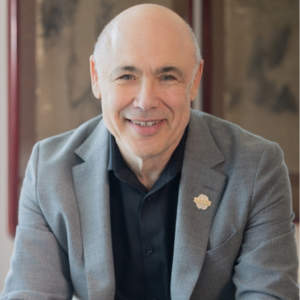
– Dr. Eugene Lipov
Most of us think of trauma as something emotional — a painful story we carry, a memory we revisit, a narrative we’re meant to “process” until it softens. But what if the anxiety, hypervigilance, and chronic stress that follow trauma aren’t just psychological at all? What if they are biological?
That is the question at the center of a growing conversation about post-traumatic stress — and one that anesthesiologist and pain specialist Dr. Eugene Lipov has spent nearly two decades exploring.
Lipov’s work focuses on the nervous system’s role in trauma, and on a proposed shift in language: from post-traumatic stress disorder (PTSD) to post-traumatic stress injury (PTSI) — a change he believes more accurately reflects what happens in the brain and body after trauma.
His argument is simple but provocative: trauma leaves measurable biological changes in the brain. And when we frame it as an injury rather than a disorder, it may change both how we treat it — and how people seek help.
Trauma Is Visible — If You Know Where to Look
For decades, PTSD has often been described as an “invisible wound.” Lipov challenges that phrase.
“It’s invisible if you have the wrong scanner,” he says.
Functional MRI and PET imaging studies have consistently shown that individuals with PTSD display increased activity in the amygdala — the brain’s fear-processing center — and altered regulation from the prefrontal cortex. These are not metaphors. They are measurable patterns of neural activity. When treatment is effective, Lipov notes, those patterns can change.
From his perspective, trauma is not a weakness of character or resilience. It is a physiological state in which the nervous system remains stuck in fight-or-flight mode long after the danger has passed.And that reframing matters.
Why Language Shapes Recovery
The proposal to shift from “disorder” to “injury” is more than semantics.
Lipov points to research and surveys suggesting that people respond differently to the two terms. “Disorder” implies something fundamentally wrong with the person. “Injury” implies something happened to them, and that it may heal.
Historically, trauma has been renamed repeatedly: “soldier’s heart,” “shell shock,” “battle fatigue,” “Vietnam syndrome.” The symptoms have remained remarkably consistent across centuries — insomnia, hypervigilance, irritability, depression, emotional numbing — but the terminology has evolved with cultural understanding.
Reframing trauma as an injury, Lipov argues, may reduce stigma and encourage people to seek care sooner. And stigma, particularly in military and first responder communities, has long been associated with delayed treatment and higher suicide risk.
Language doesn’t change biology. But it may change whether someone feels safe enough to address it.
Why Some People Develop PTSD, and Others Don’t
Not everyone exposed to trauma develops persistent symptoms. Research suggests that vulnerability is shaped by genetics, prior stress exposure, and neurobiological factors.
Lipov highlights the role of the sympathetic nervous system — the body’s fight-or-flight circuitry. During trauma, stress hormones like norepinephrine surge. In severe or repeated trauma, the brain may undergo structural adaptations, including increased sympathetic signaling.
In practical terms, this can feel like:
- Being easily startled
- Chronic tension or irritability
- Persistent insomnia
- A sense of looming danger
- Emotional numbing
The amygdala remains overactive, signaling threat even in safe environments. Meanwhile, the prefrontal cortex works overtime to calm it down — often unsuccessfully.
This imbalance, Lipov suggests, is why some people feel “stuck” even when life appears stable on the surface.
A Biological Intervention: The Stellate Ganglion Block
One of the treatments Lipov has studied extensively is the stellate ganglion block (SGB) — an injection of local anesthetic administered to a bundle of sympathetic nerves in the neck.
The stellate ganglion acts as a relay station in the fight-or-flight pathway between the body and brain. By temporarily numbing this nerve cluster, clinicians aim to interrupt excessive sympathetic signaling. Lipov describes this as a “reset” of the nervous system.
Some studies and clinical reports suggest that certain patients experience rapid reductions in hyperarousal symptoms following the procedure. However, the broader psychiatric community continues to evaluate the evidence base, and long-term outcomes are still under investigation.
What is clear is that the approach differs from traditional talk therapy: it targets physiology directly.
Lipov emphasizes that biological interventions do not replace psychotherapy. Instead, he sees them as complementary. When the nervous system is calmer, he says, trauma-focused therapy may become more tolerable and effective.
Why Therapy Sometimes Feels Incomplete
Psychotherapy often works by strengthening the prefrontal cortex’s ability to regulate the amygdala — essentially helping the rational brain reassure the fear center that it is safe.
But if the amygdala remains highly reactive, this can feel like a constant internal tug-of-war.
“You’re telling yourself you’re safe,” Lipov explains. “But your body doesn’t believe you.”
This may be why some individuals report partial relief but persistent physiological symptoms. It’s not necessarily a failure of effort or insight — it may reflect the depth of nervous system activation.
That said, trauma recovery is rarely one-dimensional. Evidence-based therapies such as EMDR, cognitive processing therapy, and somatic approaches remain foundational in treatment. Increasingly, clinicians are exploring integrated models that combine psychological and biological strategies.
The Overlooked Body
Beyond medical interventions, Lipov emphasizes the fundamentals:
- Consistent sleep routines
- Meditation or mindfulness practices
- Gentle yoga or breathwork to stimulate the vagus nerve
- Limiting stimulants like excessive caffeine
- Addressing underlying medical conditions such as anemia or thyroid dysfunction
These may sound basic. But trauma recovery is not separate from physical health.
Chronic stress is associated with increased cardiovascular risk, immune changes, and sexual dysfunction. In some cases, untreated trauma may affect family systems across generations — both behaviorally and, potentially, epigenetically.
The body keeps the score, as psychiatrist Bessel van der Kolk famously wrote. Lipov’s contribution to the conversation is a focus on where — neurologically — that score may be kept.
Signs It May Be Time to Seek Help
Trauma symptoms are not limited to combat veterans or survivors of catastrophic events. Childhood adversity, bullying, medical trauma, domestic violence, and chronic stress can all leave lasting imprints.
Red flags may include:
- Persistent sleep disruption
- Hypervigilance or exaggerated startle response
- Irritability or emotional numbness
- Intrusive memories
- A constant sense that something bad is about to happen
If these symptoms interfere with daily life, consultation with a licensed mental health professional or physician is warranted. Treatment is highly individualized — and increasingly multidisciplinary.
Reclaiming Hope
Lipov’s interest in trauma medicine is personal as well as clinical. He has spoken publicly about growing up in a household affected by untreated wartime trauma. That experience informs his focus on breaking cycles rather than simply managing symptoms.
No single intervention works for everyone. And no biological model fully captures the complexity of human suffering.
But shifting the lens from “What’s wrong with me?” to “What happened to my nervous system?” may offer a different starting point — one rooted in compassion and science rather than shame.
Trauma is not a personal flaw or a failure of willpower. It is, increasingly, understood as a whole-body experience — one that science is still learning how to measure, and how to heal.