
A piece of toast burns. Nothing else has gone wrong, nothing is on fire, no one is hurt. And yet the tears come, fast and disproportionate, and afterward comes the more confusing part: the quiet question of why something that small landed that hard. Most people have a version of this story. A tone of voice, a missed text, a small correction at work, and suddenly the response arriving in the body is far larger than the event that caused it.
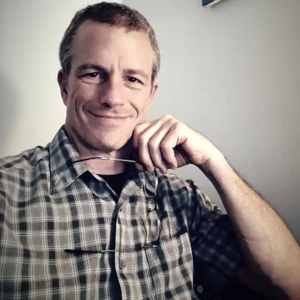
Ernest Ellender, PhD, a trauma-informed mentor coach and the author of “This Is How We Heal from Painful Childhoods,” has spent his career studying exactly that gap. Trained to the doctoral level in clinical psychology and later drawn toward complex PTSD and childhood family dysfunction, Ellender now works with adults who want to understand why old survival patterns keep steering their confidence, their decisions, and their relationships decades after the original stress has passed. His answer is neither mystical nor vague. It is anatomical, behavioral, and it comes with a formula simple enough to remember in the middle of an argument: breathe, plan, do.
Your Brain Has a Bodyguard, and It Does Not Ask Permission
Ellender breaks the brain into two working parts. There is the primal brain, which he describes as a motor core and fear sensor, and there is the prefrontal cortex, the later developed, highly intelligent part of us that reasons and plans. The primal brain, he says, functions like a friendly bodyguard whose entire job is survival. And a bodyguard that failed to remember past threats would be doing a terrible job.
The part most people miss is what happens physically when that bodyguard steps in. According to Ellender, the body reroutes blood flow more heavily toward the primal brain and effectively quiets the thinking brain. In that window, we are not reasoning. We are acting. The body drops into fight, flight, freeze, or fawn before the conscious mind has caught up.
That same shift explains why the memory is often unreliable. Ellender notes that people who have lived through distinctly traumatic experiences sometimes hold a hyper-specific memory of the event and sometimes almost no memory at all. But the primal brain retains it. Occasionally what it holds is not a narrative at all. It is an olfactory memory, a particular smell, or a band of muscular tension in one spot. The record exists. It is simply stored somewhere the thinking mind cannot easily read.
So the burnt toast may be an accumulation of stress across a long day. Or, as Ellender puts it, it may be far more specific: a parent who was harsh about messes in the kitchen, a perfectionistic environment intense enough that a child became hypersensitive to it. The survival brain took over then, and it is doing what it was trained to do now. Do not make mistakes. That is when bad things happen.
How to Tell a Present Problem From an Old Wound
Ellender is direct about the fact that this skill can be developed, and equally direct that it rarely arrives quickly. Most people, he says, come in unsure why a reaction happened at all. What changes that is deliberate attention to pattern. Is it always mistakes? Is it always cooking? Is it something narrower and stranger than either?
He describes two workable approaches. Sometimes the origin never becomes clear, and the work becomes practicing how to handle the reaction anyway. More often, with observation over time, a person can narrow in on the instigating circumstance, which makes everything downstream more precise.
What makes that observation possible is a state, not an insight. Ellender points out that people have to practice staying calm enough to tolerate the reaction while it is happening, because that tolerance is what creates the room to look back and see the shape of it. He also names, without hedging, that most people do this better alongside someone else, whether a therapist or a coach who can help build the cognitive skill of recognizing a pattern and then moving into action.
The Three Part Loop That Keeps Old Patterns Alive
Ellender uses the cognitive behavioral model to explain why these patterns hold on so tightly. Human functioning, in that framework, breaks into three components: cognitive, meaning our thinking; behavioral, meaning what we do in the physical world; and emotional, meaning what we feel. His central observation is that those three, taken together, are remarkably stable.
The reason is fear of the unknown. Whatever is known, Ellender says, even when it is not enjoyable, is known, and the body does not want to change it. The primal brain resists the swap. That is how a family habit of working enormous hours passes intact from one generation to the next, unless something provokes a tremendous rejection of it.
Look at how the three parts reinforce each other in that example. Behaviorally, there is the habit of long hours. Cognitively, there is an inherited image in which success equals long hours and hard work to the point of exhaustion, which is also what work ethic means. Emotionally, there is a state of adrenaline-based intensity that runs until it collapses. Each part props up the other two.
This is why Ellender treats perfectionism, overworking, and people pleasing as learned architecture rather than personality. He compares part of the cognitive layer to a kind of brainwashing in childhood, much of which is good, some of which is less helpful or actively damaging. He listens for the tell in how people speak. A should statement gives it away. You should be working. If you are not working, you are lazy. He calls the deeper versions of these beliefs trauma lies, running quietly in the background of the subconscious. If I am not working hard enough, then I am a failure. If I am not producing, then I am lazy. Once those surface, they can finally be worked with.
Breathe, Plan, Do, and Why the First Step Is the Hardest
The formula looks almost too simple on first read, and Ellender knows it. People see the word breathe and assume they have already covered it, since they are alive and therefore breathing. He counters with a martial arts comparison drawn from his own training. On day one of jujitsu, he understood the concept by the end of the class and could run the technique. The moment someone resisted, he was completely incompetent. Understanding a move and being able to do a move under pressure are separated by years of practice.
The breathe phase is not a pause. It is a target. Ellender frames it in terms of percentages to make it concrete. Someone driving home still amped from work might be sitting at forty percent survival mode, which leaves sixty percent of good blood flow to the thinking brain. Someone with a significant trauma history might be at seventy or eighty percent. Ten rounds of box breathing, four counts in and four counts out, might bring that seventy percent down toward twenty, which flips the ratio and hands the smart part of the brain most of the resource. Everything that follows depends on that.
He pairs the physical work with a cognitive component, because breathing alone will not persuade a nervous system that is convinced it is in danger. You can breathe deeply while watching a pit bull run at you and still be certain you are about to die. So Ellender teaches people to add a sentence. This is not a life-threatening situation. Inhale deep into the diaphragm, one, two, three, four, exhale, and repeat it. I cannot die from this conversation. It teaches the primal brain that it is not needed right now.
For people carrying more history, he adds a second layer of acknowledgment: it is extra difficult for my primal brain to calm down because of my childhood, and I know it is perceiving danger that is not actually there.
Only then does the plan phase begin, and Ellender considers it the hardest of the three. The shift he is after is from survivalistic, reactive thinking toward goal-oriented, values-driven thinking. In practice, he asks a person to lay out the reactive option, which is easy to picture because the body is already trying to run it, alongside one or two new options built from a clear image of what thriving actually looks like. He is specific that the image changes over time, often annually, and that its clarity determines the precision of everything else.
The do phase is the easiest, and Ellender says so plainly. The only requirement is one action in the direction of the goal. Ten more minutes and then stop. Or stop now, because the thriving version of today is already complete. Small as it sounds, it matters, because without doing something, a person never experiences progress and never builds the confidence that comes with it.
Insight Is Not the Same Thing as Skill
This may be Ellender’s most useful correction, and it runs against how healing is usually portrayed. In the movies, he notes, there is a single session in which everything is suddenly understood, and the person walks out healed. My parents were perfectionists; nothing was ever good enough, and now I can love myself regardless. He would love for that to be sufficient. It is not.
The insight really can be instant. I was raised in an unhealthy environment. I can forgive my parents. I can let go of the anger. But Ellender points out what remains standing after the insight arrives: the skill deficits. He compares a healthy family to a healthy business, where different people contribute different competencies, from being on time to resolving conflict to planning. Grow up in a dysfunctional environment, and you arrive in adulthood short a number of those skills, with no awareness that they were ever supposed to be taught.
His example is conflict resolution. If the model you absorbed was people yelling, then refusing to speak for a few days, then never addressing it again, the insight about your childhood does not hand you a replacement process. There is an actual process, and it has to be learned.
“Skills just take time to develop. They take focused practice over time.”
~ Ernest Ellender, PhD
He is candid that this is why the work has to be tolerable. He learned controlled breathing and muscle relaxation in school and found it boring enough to resist. It was only after practicing it session after session with his own clients that he noticed how much calmer he felt afterward, and recognized an anxiety in himself he had not been aware of. He later found the same subject reached into free diving and breath holds of seven and eight minutes, a rabbit hole deep enough to become genuinely interesting. His point is practical. If every session is a brutal descent into trauma material, the burnout is too great, and no one comes back. Something in the practice has to be worth returning to.
The Slow Version Is the One That Works
Ellender rejects the quick fix without rejecting hope, and the distinction matters. He values the flash of understanding. He simply refuses to confuse it with the outcome. Between knowing why you overwork and being able to sit still on a couch without guilt sits a stretch of skill building that he measures in months and sometimes in a year or two, not in sessions.
There is relief buried in that. If the pattern is a set of skills rather than a character flaw, then failing to shed it in one afternoon is not evidence of anything being wrong with you. It is evidence that you are attempting something that was always going to take practice. And skills, unlike identity, respond to practice. They start hard, they stay challenging, and eventually they get easier because the skill is finally there.
The one thing worth carrying into today is the smallest piece of the formula. Before the next decision that feels charged, breathe first, long enough to actually change your state, with the reminder attached: this is not a life-threatening situation. That is the moment when the thinking brain comes back online, and, as Ellender describes it, that is the only moment in which a genuine choice is available to you.