
Imagine being told, after years of trying and multiple failed cycles, that your chances of having a child are effectively zero. For millions of people around the world, that conversation isn’t hypothetical. It’s the moment that divides their life into before and after. A moment defined by grief, confusion, and a question that cuts to the core of human identity: What do I do when the path forward disappears?
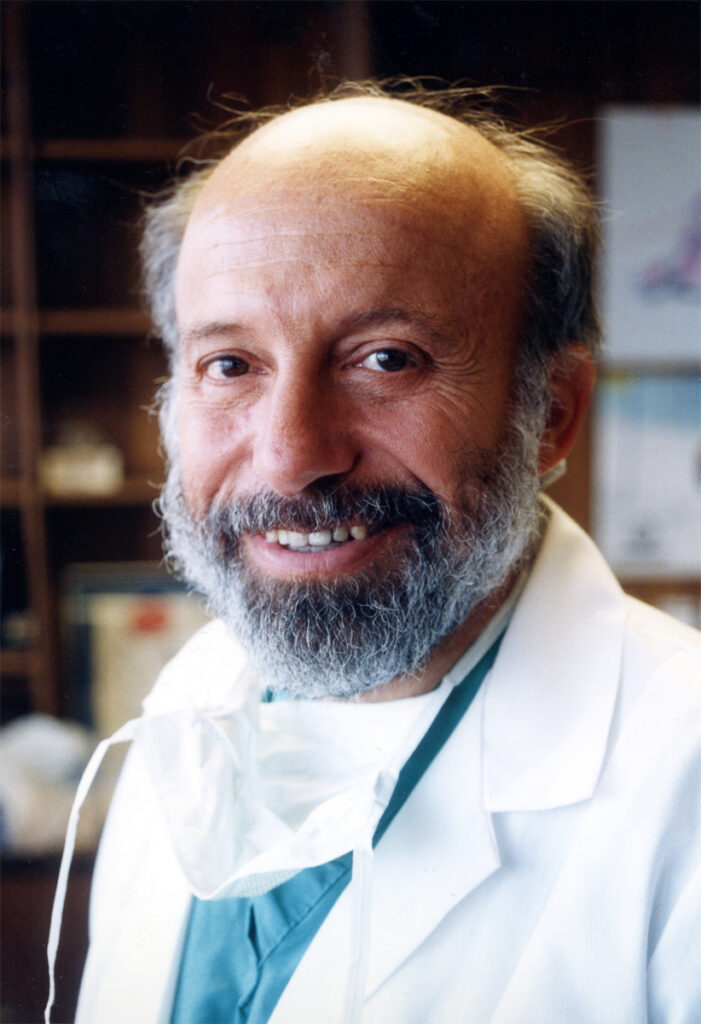
Dr. Sherman Silber, one of the world’s most recognized reproductive microsurgeons and a pioneer in ovarian tissue transplantation, ICSI (intracytoplasmic sperm injection), and IVF advancement, has spent more than four decades sitting across from people in that very moment. His message, sharpened through tens of thousands of patient encounters, is both clinically precise and profoundly human: there is almost never a logical reason to give up.
But what makes his perspective so useful, not just for people navigating infertility but for anyone confronting what feels like an insurmountable obstacle, is how he frames hope. Not as a feeling. Not as wishful thinking. As a plan.
Hope Is Not a Strategy. It’s an Architecture.
Early in a recent conversation, Dr. Silber drew a line that is worth pausing on: “Hope to me is not a strategy. It’s not really a plan. I will give them a plan, and we can call it hope, but it’s not just blind hope. I can tell them exactly what we can do.”
This distinction matters far beyond the fertility clinic.
Psychological research consistently shows that what separates people who recover from adversity from those who don’t is not the presence of optimism, but the presence of what psychologist Charles Snyder called agency thinking: the belief that there are workable pathways forward, combined with the motivation to pursue them. In other words, hope that is grounded in a concrete understanding of available options is psychologically protective in a way that abstract reassurance simply isn’t.
When Dr. Silber tells a patient “here are the five things we can try, in this order, for these reasons,” he isn’t just offering medical guidance. He’s rebuilding what trauma often destroys: the sense that the future is navigable.
Takeaway: When you’re facing a difficult situation, resist the comfort of vague reassurance, in yourself and from others. Instead, ask: What do I actually know about my options? What is the next concrete step? A plan, even an imperfect one, reduces psychological helplessness more effectively than hope untethered from action.
Don’t Let a Bad Statistic Write Your Story
Dr. Silber describes a patient, a young woman with unexplained infertility, who underwent three embryo transfers without success. At that point, the statistical likelihood that at least one of those transfers would have worked was roughly 95%. She was in the unlucky 5%.
Feeling that her case was hopeless, she moved to gestational surrogacy. It worked immediately. Later, with one remaining frozen embryo transferred back to her own uterus, she conceived naturally.
His point is not that statistics are meaningless. It’s that statistics describe populations, not individuals. “Every time it would be 60% chance,” he explains. “Don’t be fooled by statistics.”
“There is no logical reason to give up. I will give them a plan. We can call it hope, but it’s not just blind hope. I can tell them exactly what we can do.” — Dr. Sherman Silber
This is a lesson that behavioral psychologists and cognitive therapists have long emphasized: we are prone to narrative foreclosure, the tendency to treat a past outcome as a permanent verdict on future possibility. When something doesn’t work, the mind races to construct a story of permanent failure. That story feels true. It is rarely accurate.
Research on what psychologist Carol Dweck calls growth mindset underlines the same principle: believing that outcomes can change with different approaches, circumstances, or information is not naïve. It’s a more accurate model of reality than fixed-outcome thinking.
Takeaway: Distinguish between a setback and a ceiling. Ask yourself: Is this outcome telling me something is impossible, or is it telling me something about this particular approach, at this particular time? Those are very different questions.
Reframe What “Yours” Really Means
One of the most emotionally charged aspects of Dr. Silber’s work involves donor eggs, a path that many patients resist because it feels like a surrender of biological identity. His response to this resistance is one of the most instructive things he shares.
“Since 1986, we’ve never had an unhappy case with donor eggs,” he says. “And I challenge them sometimes. Twenty years later when their kid is graduating college and they send me a card and they’re very proud. And I say, ‘Well, you know, that really isn’t your DNA.’ And they say, ‘You think I’m stupid? I know it’s not my DNA. But it is my baby.'”
He grounds this in Nobel Prize-winning research by ethologist Konrad Lorenz on imprinting, and in developmental psychologist Burton White’s foundational work on the first three years of life. The qualities we most want to pass on to our children, character, emotional stability, curiosity, and resilience, are not encoded in DNA. They are shaped through thousands of small interactions in those early years: how securely a child is held, how their curiosity is met, whether they feel safe enough to explore the world.
“Those five features,” Dr. Silber says of personality, character, intelligence, emotional stability, and bonding, “are not in the DNA. They arise from how you interact with the baby in the first two or three years of life. So it is their baby.”
This insight extends well beyond reproductive medicine. It is a reminder that identity and belonging are constructed through relationships, not just biology. The things we imagine are fixed and essential are often far more porous and more within our power than we think.
Takeaway: When facing a decision that requires letting go of an “ideal” version of something you want, ask: What is the actual core of what I value here? Often, what we need most is available to us through a different path than we’d imagined, if we’re willing to look.
Progress Often Comes From Unexpected Places
Dr. Silber describes a breakthrough in egg maturation that came not from a major research center but from physicians in Vietnam who developed a way to aspirate unstimulated eggs from small follicles, eliminating the need for hormonal stimulation drugs entirely. A pain management protocol that has transformed outpatient surgery came from the University of Cork in Ireland. ICSI, the technique that essentially eliminated most categories of male infertility, emerged from micromanipulation work done incrementally over the years.
“You never know where the next fantastic advance is going to come,” he says.
This is not merely an observation about science. It’s a principle about problem-solving under uncertainty: breakthroughs rarely arrive from the direction we’re watching. Decades of research on innovation confirm that solutions to hard problems often emerge laterally, from adjacent fields, from unexpected geographies, from people operating outside the established consensus.
For anyone navigating a long, difficult challenge, this is practically useful: the answer may not come from the most obvious source. Staying curious and open, especially when conventional paths haven’t worked, is not a luxury. It’s a strategy.
Takeaway: When you’ve exhausted the obvious approaches, deliberately look sideways. Who is solving a version of this problem in a different field, context, or culture? What would it look like to approach this from an entirely different angle?
The Biology of Thriving: Lessons from Menopause and Hormonal Health
Dr. Silber speaks with equal conviction about a subject that affects half the population and receives a fraction of the attention it deserves: menopause and the long-term consequences of estrogen loss.
His framing is stark: “Menopause really is a disease.” Bone loss, increased fracture risk, cognitive vulnerability, cardiovascular risk, painful intercourse, recurrent urinary infections. The downstream effects of estrogen depletion are serious and well-documented. Yet a deeply flawed 2002 study caused a collapse in hormone replacement therapy use, from roughly 60% of eligible women to around 2%, with what Dr. Silber calls a “gigantic negative impact on women’s health” that took years to begin correcting.
The broader lesson here connects to an important principle in personal well-being: fear of intervention is not the same as safety. In medicine, in relationships, in professional life, choosing not to act is itself a choice, with consequences. Avoiding a risk you can see doesn’t eliminate risk; it may simply shift it to a risk you can’t see.
Dr. Silber, who at 84 swims a mile every other night, plays chess at a master level, and continues to practice medicine, is himself a kind of walking argument for this philosophy. Biology is not destiny. Attention, intention, and informed action shape the arc of health more than most people realize.
Takeaway: Seek accurate information before letting fear make your decisions. Ask your doctor not just “what are the risks of doing this?” but “what are the risks of not doing this?” Both sides of the ledger deserve weight.
Ask for the Second Opinion You Think You Don’t Deserve
When asked what patients should ask their doctors that they usually don’t, Dr. Silber’s answer is both practical and psychologically insightful.
“Doctors can become egotistical, not that they want to be, but it can happen.” The advice: approach the conversation with care for the relationship, but don’t let that care silence you. A gentle, respectful inquiry, “I don’t want to give up. Do you think there are other options you don’t provide that might be helpful?” can open doors that patients assume are permanently closed.
This reflects something important about self-advocacy under stress. Research on patient outcomes consistently shows that people who ask more questions, seek second opinions, and actively participate in their own care tend to achieve better results, not because they’re luckier, but because they surface more information and options. Yet the vulnerability of illness, combined with the authority gradient between patient and provider, often suppresses exactly that behavior.
The same dynamic plays out beyond medicine. In professional life, in personal relationships, in any situation with a power differential, asking the question you’re afraid to ask is almost always worth it.
Takeaway: Before accepting a final verdict, ask one more question. Is there someone else I should speak with? Is there something you don’t offer that might help? You are not obligated to accept the ceiling someone else drew for you.
The Bigger Lesson: What Facing the Impossible Teaches About Resilience
Across everything Dr. Silber shared, a coherent framework for facing what feels impossible begins to take shape. It has several elements:
1. Replace blind hope with structured hope. Know your options. Build a plan. Uncertainty becomes more bearable when you have a clear next step, even if the destination remains unclear.
2. Distinguish a setback from a permanent verdict. Statistics describe populations. They do not determine individual outcomes. Failed attempts carry information; they do not carry finality.
3. Revisit your assumptions about what you actually need. Often, what we want most is available through a path we initially resist. Flexibility about means, while staying anchored to core values, is a mark of resilience.
4. Stay open to solutions from unexpected directions. The answer may not come from the expected source. Curiosity is protective.
5. Act on accurate information, not fear. Choosing not to act is a choice. Make it deliberately.
6. Ask the question you’re afraid to ask. Self-advocacy is a skill, and it can be practiced with grace.
A Final Reflection
Near the end of his conversation, Dr. Silber is asked what he wishes every patient understood before giving up. His answer: “There is no logical reason to give up.”
That statement is, on its surface, about fertility. But it points to something deeper about the human capacity to persist and how often we underestimate what is still possible simply because we’ve exhausted the approaches we know.
Whatever your version of the impossible looks like today, the door that keeps closing, the verdict you keep receiving, it may be worth asking one more time: Is this actually the end? Or is it the edge of what I know so far?
A diagnosis is not always a destiny. And sometimes the story you think is over is actually just waiting for the right person, the right approach, or the right moment to shift.