


We live in a culture that loves the phrase just let it go. Move on. Get over it. Put it in the past. But what if your body never received that message?
What if the grief, the fear, the anger — the experiences you thought you had moved past — are still quietly living inside you, shaping how you feel, how you connect, and how you show up every single day?
This is not a philosophical question. It is a physiological and psychological reality that researchers, practitioners, and healers across disciplines are increasingly pointing to: unresolved emotional experiences do not simply disappear when we stop thinking about them. They settle into the body, the nervous system, and what some practitioners describe as the energy field — and they stay there until something finally helps them move.
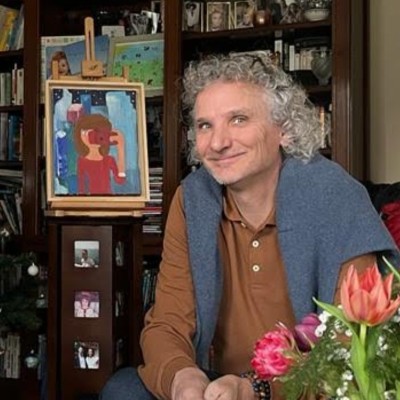
Nicolas Mérand, a French psychoanalytic practitioner and energy healing expert with over three decades of experience, has dedicated his career to helping people understand exactly this — and more importantly, what to do about it.
Trauma Is Not What Most of Us Think It Is
When most people hear the word trauma, they picture a dramatic, singular event — a car accident, abuse, a devastating loss. But trauma, as it is increasingly understood in psychology and somatic research, is far broader than that.
According to Nicolas Mérand, trauma is anything that impacts us so profoundly that we carry it forward — often without knowing we are doing so. It does not require a catastrophic event. It can come from a series of small moments: a dismissive parent, a school environment that made us feel inadequate, a relationship that taught us we were too much or not enough. It can even come from experiences we do not consciously remember.
The critical insight here is this: the body does not need the conscious mind’s permission to hold onto something. It stores experiences in sensation, in posture, in the way we tighten when someone raises their voice, in the exhaustion we feel for no apparent reason.
This is consistent with decades of research in somatic psychology and trauma-informed care, including the foundational work of Dr. Bessel van der Kolk, whose research showed that traumatic memory is encoded differently in the brain than ordinary memory — often bypassing language entirely and living instead in the body’s sensory experience.
The Signs That Something Is Still Stored — That Most People Miss
One of the most important things to understand about stored trauma is that it rarely announces itself clearly. It does not show up wearing a name tag. Instead, it shows up as:
Burnout. Mérand identifies this as the most common hidden sign. A persistent, low-grade exhaustion that does not improve with rest. You are not tired because you worked too hard last week. You are tired because you have been carrying something for a long time.
Emotional flatness. The sense that life has lost its color. Boredom that feels deeper than just needing something new to do. A quiet but persistent feeling of I’m not happy without being able to explain why.
The feeling of living in a smaller life than you should. Mérand describes it this way: imagine you were born into a vast castle, full of rooms, possibilities, and energy. But over time, as painful or overwhelming experiences occurred, you quietly closed the doors to certain rooms — to protect yourself. And at some point, you may have found yourself living only in the smallest corner of what was once your full self.
Tolerating things you should not tolerate. Staying in situations, relationships, or roles that do not fit — not because you lack options, but because a part of you learned, somewhere along the way, to accept less.
Anger, fear, or anxiety that seems disproportionate to the moment. These are not character flaws. They are often signals from the body that something unresolved is still running in the background.
“It’s everything that keeps us from being ourselves. Trauma makes us carry a fake self — and put up with things we should never have to put up with.” — Nicolas Mérand
Why Talking About It Is Not Always Enough
Psychotherapy — and particularly psychoanalysis — is a genuinely valuable tool. For many people, it is transformative. Nicolas Mérand is clear that he is not dismissing it; in fact, he is completing his psychoanalytic training himself. But for others, years of talking about an experience does not fully release it. Why?
Because verbal processing engages primarily the prefrontal cortex — the thinking, reasoning part of the brain. But trauma, particularly early or pre-verbal trauma, is stored in the limbic system and the body. It lives below the level of language.
This is why you can understand, intellectually, that what happened to you was not your fault — and still feel, in your body, as though it was. The insight does not always travel downward into the nervous system on its own.
This is also why approaches that work directly with the body — somatic therapy, EMDR, breathwork, energy-based practices — have gained significant attention in clinical and wellness communities in recent years. They operate at a level that talk therapy alone may not reach.
Mérand sees all of these approaches not as competitors but as complements. The goal, regardless of the method, is the same: to help the nervous system complete what it could not complete at the time of the original experience, and to release what has been held in suspension ever since.
Reconnecting to Your Intuition: The Real Measure of Healing
Here is something worth sitting with: the events of life do not change. The car will still break down. A difficult relationship will still require navigation. Unexpected losses will still arrive. What changes, when genuine healing happens, is not the circumstances — it is your relationship to them.
When stored emotional patterns begin to release, Mérand says people reconnect with something specific: their intuition. Not intuition in a mystical sense, but in a deeply practical one — the internal clarity to know what the right response is, to feel which direction to move in, to trust themselves again.
This makes sense neurologically. Chronic stress and unresolved emotional activation keep the nervous system in a state of low-grade alert. When that activation decreases, the quieter signals — the gut feelings, the clear knowing, the creative impulses — have room to be heard again.
Four Practical Starting Points — Right Now
You do not need to overhaul your entire life to begin. Here are four places to start, grounded in both Nicolas Mérand’s approach and established research:
1. Address one unresolved relationship. If there is someone in your life — a parent, a sibling, a former friend — toward whom you carry unresolved anger, grief, or resentment, take one small step. It does not have to be a direct conversation. Mérand suggests doing it symbolically if a direct conversation feels too large: write a letter you do not send. Speak your truth out loud, alone. The unconscious responds to symbolic action just as powerfully as literal action.
2. Pay attention to what your body does — not just what your mind thinks. For one week, notice where you feel tension, tightening, or heaviness in your body. Do not try to fix it. Just notice it. This simple act of attention begins to shift the relationship between the conscious mind and the stored experience.
3. Explore what blocks your presence. Research in positive psychology and mindfulness consistently shows that the ability to be fully present is one of the strongest predictors of well-being. Mérand puts it simply: in order to be here now, we have to be at peace with our past. Ask yourself honestly — what is keeping me from being fully here?
4. Stay curious about what else exists. If you have been in therapy for a long time and still feel something unresolved, that is not a failure. It is information. Somatic approaches, energy-based practices, EMDR, parts-based work — these are not alternatives to therapy. They are often complements to it.
Healing Is Not About the Past. It Is About Becoming Present.
Nicolas Mérand distills his entire life’s work into one sentence — and it is worth writing down:
“Clean your past to recover your intuition.”
Not to erase what happened. Not to pretend it did not matter. But to stop carrying it at full weight, every single day, into the present moment — where it was never supposed to live.
Your body has been keeping score. It has been trying to tell you something. And the first step — perhaps the most important step — is simply to start listening.
This article is intended for educational and informational purposes only and does not constitute medical or psychological advice. If you are experiencing significant emotional distress, please reach out to a qualified mental health professional.