

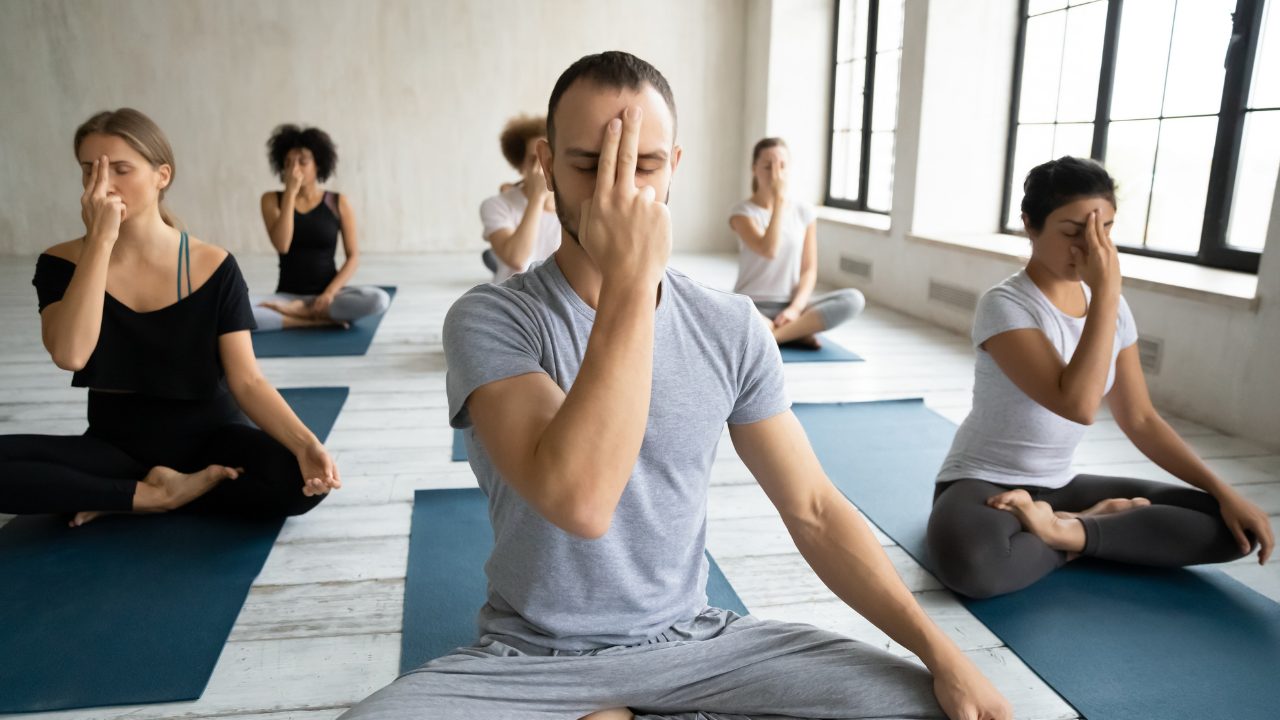
The science of nasal breathing, the “less is more” principle, and why slowing down could be the most powerful thing you do for your body and mind
We live in a culture that worships intensity. More reps, more miles, more hustle. Even the language of wellness has been colonized by the ethos of effort: push through, feel the burn, go harder. And nowhere is this more pervasive, or according to emerging research, more counterproductive, than the way we’ve been taught to breathe during exercise and movement.
What if the deep, forceful exhales your fitness instructor tells you to take are actually working against your body? What if the key to better health, lower stress, and lasting mobility isn’t found in doing more, but in doing less?
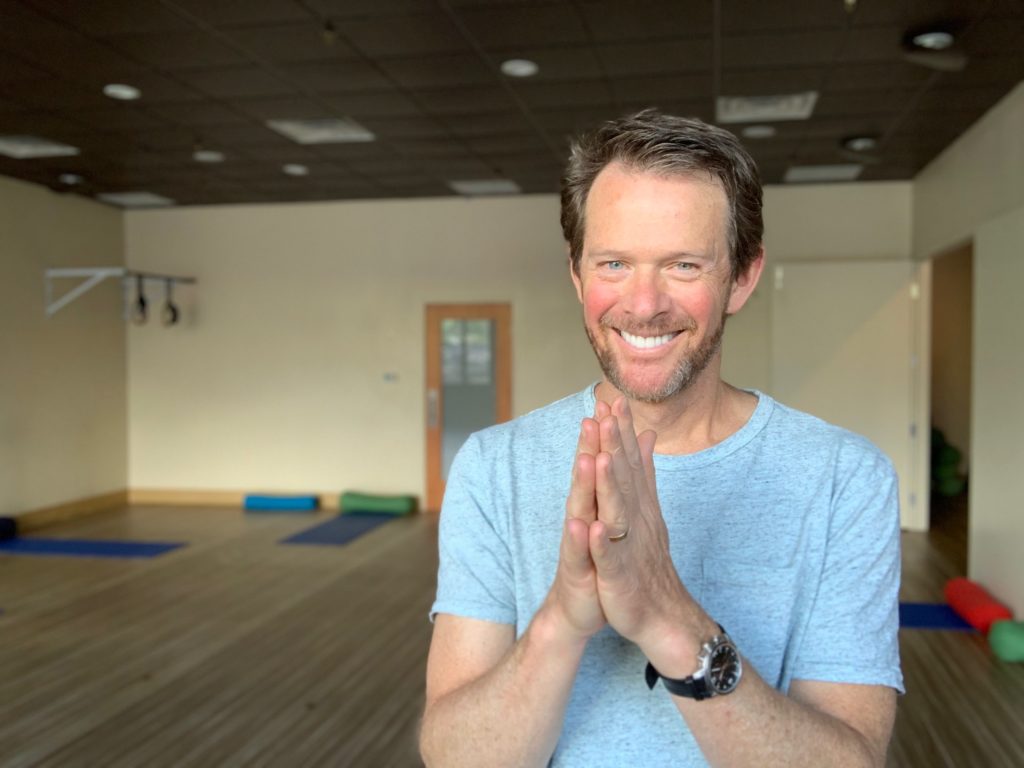
These are the questions at the heart of a growing conversation among movement therapists, physiologists, and mindfulness practitioners. Yoga teacher and movement specialist Jeff Bailey, who has spent over 45 years studying how breath intersects with joint health and well-being, has arrived at a deceptively simple conclusion: less breath, taken more slowly through the nose, is almost always better than more breath taken through the mouth.
The “More Is Better” Myth and Where It Breaks Down
The fitness world has a bias toward intensity. Big exhales feel cathartic. Heavy breathing feels productive. A raised heart rate signals that something “important” is happening. Psychologically, we’ve come to equate effort with progress.
But this equation, Bailey argues, breaks down at the physiological level.
“The moment the idea of ‘more is better’ comes into your mind is the exact moment we were taught wrong, especially when it comes to breath.”
The science he points to is rooted in the Bohr Effect, a well-established principle in respiratory physiology: the release of oxygen from hemoglobin to the body’s cells depends on the presence of carbon dioxide. Counterintuitively, CO2 isn’t just a waste gas to be expelled as fast as possible. It is a critical regulator of how efficiently your body actually uses the oxygen it takes in.
Here’s the mechanism: the trigger that prompts your next inhale isn’t low oxygen. It’s a buildup of carbon dioxide. When we habitually breathe fast and hard through the mouth, we blow off CO2 rapidly. This lowers our CO2 levels, which in turn t triggers an ever-greater hunger for air. Over time, the entire respiratory system recalibrates around this dysfunction as CO2 thresholds drop. Cellular gas exchange becomes less efficient, lactic acid builds up in the muscles, and the nervous system is kept in a state of low-level activation.
The result? Muscles that feel perpetually tight. A stress response that’s always lurking just below the surface. A constant craving for the next big exhale, or the next intense workout, just to feel okay.
Why Nose Breathing Is a Game-Changer
Bailey’s primary instruction to students is almost embarrassingly simple: relax your jaw, lips together, and breathe softly in and out of your nose.
But the physiology behind that instruction is anything but simple.
1. Nitric oxide production. Cells in the back of the nasal pharynx produce nitric oxide, a gas that facilitates the exchange of gases in the lungs and at the cellular level. This gas is only activated through nasal breathing. It is essentially bypassed entirely when we breathe through the mouth.
2. Slower airflow, better efficiency. The nose is a smaller opening than the mouth, which naturally slows both the inhale and the exhale. This keeps more CO2 in the system, which, per the Bohr Effect, actually improves the delivery of oxygen to tissues, even though the total volume of air inhaled is lower.
3. Nervous system regulation. Slow, nasal breathing is deeply connected to parasympathetic activation, the “rest and recover” state. Rapid mouth breathing, by contrast, keeps the sympathetic nervous system primed. The implications extend well beyond exercise: chronic mouth breathing is associated with elevated stress markers, poor sleep, problems with occlusion, and postural problems in the neck and upper back.
Research backs this up. Nasal breathing has been identified as one of the two leading predictors of longevity, the other being grip strength. Studies on breathing retraining, including work inspired by the Buteyko method developed by Ukrainian scientist Dr. Konstantin Buteyko, show measurable improvements in asthma symptoms, cardiovascular efficiency, and stress resilience when people consistently switch to nasal-only breathing.
Practical starting point: Commit to nasal-only breathing during your next walk. If you find you need to open your mouth, slow down until you don’t. This single habit, practiced consistently, begins to rebuild your CO2 tolerance and reset your respiratory baseline over time.
“If you ever need to breathe out of your mouth, you are working too hard. Peace is the goal. And with peace as the goal, real health is made possible.”
— Jeff Bailey, founder of Avita Yoga
Exercise as a Cue for Self-Awareness, Not Just Physical Output
One of the most provocative ideas Bailey raises is that many people use intense exercise as a coping mechanism, a sophisticated form of avoidance.
“Going for a run and going to the gym is one of the better substitutes for anxiety,” he acknowledges. “But let’s let that be a springboard for slowing down.”
This is a meaningful distinction. Exercise done to escape an uncomfortable internal state, whether anxiety, restlessness, or grief, is fundamentally different from movement done with full attention to that internal state. The former may feel like relief, but it operates like a pressure valve: it temporarily releases tension without resolving the problem at its source.
Research on the physiology of anxiety supports this framing. The amygdala, the brain’s threat-detection center, doesn’t distinguish between emotional threats and physical ones. Running from anxiety activates the same stress hormones as the anxiety itself. And because the relief is temporary, the cycle tends to repeat and often intensify over time.
The alternative Bailey proposes is to use movement as a vehicle to identify the inner problem, to slow down enough to let the obstacle to peace actually surface. For some, this can be more challenging than pushing through strenuous exercise. Sitting with discomfort, without immediately exhaling it away or sprinting past it, requires a willingness to look within that most of us have spent years training ourselves out of.
But the payoff is qualitatively different. Rather than managing symptoms, you’re addressing their sources.
Reflection question: What was your goal in your last workout? Were you sourcing something within to unwind it? Or were you pushing toward or away from something?
The Body as a Vehicle, Not an Oracle
Bailey offers a counterintuitive reframe on the popular wellness idea that “the body has the answers.” In his view, the body isn’t a source of wisdom so much as a repository of memory, specifically the stored residue of unresolved experiences, tensions, and traumas.
“The body is a vehicle,” he says. “It remembers everything…every trauma, every bit of our entire history. Conscious of it or not, these memories keep pulling us out of our peaceful Self.”
This reframe is actually quite liberating. When the body presents restriction, tightness, or pain, these aren’t signs of personal failure or irreversible damage. They’re invitations to pay attention. And the appropriate response isn’t to fight them, override them, or ignore them. It’s to resonate with them.
“We come into a shape (not poses, which imply performance),” Bailey explains. “Do a little movement, resonate with the restriction instead of trying to move around it or get upset at it, and let it speak to us. We give it time to resolve.”
This aligns closely with what somatic therapists and trauma researchers describe as titration, approaching difficult material in small, manageable doses with a foundation of physical safety and calm. Research by Dr. Peter Levine and others in the field of somatic experience suggests that the body stores traumatic stress in a physiological form, and that slow, attentive movement can facilitate its release, but only when the nervous system feels safe enough to allow it.
Forcing your way through restriction, by contrast, tends to reinforce it.
Actionable takeaway: The next time you encounter a physical restriction during movement, whether tightness in your hips or a stiff shoulder, try staying with it for 60 to 90 seconds without trying to fix it. Breathe slowly through the nose, maintain awareness of the sensation, and notice what shifts on its own.
“Let a Little Be a Lot”: The Philosophy Behind Sustainable Practice
Perhaps the most quietly radical idea in Bailey’s work is a reorientation of what success in a wellness practice actually looks like.
In a culture obsessed with optimization and measurable outcomes, the suggestion that doing less might yield more runs against nearly every prevailing message about health. And yet the evidence, physiological, psychological, and empirical, points consistently in this direction for sustainable, long-term well-being.
Aerobic metabolism, which the body relies on for sustained energy and cellular repair, operates most efficiently at lower intensities, with adequate oxygen delivery and without the acidic byproduct buildup that comes from sustained anaerobic effort. The nervous system heals most effectively in states of regulated calm. And the mind, according to contemplative traditions dating back millennia and now increasingly supported by neuroscience, finds its greatest clarity not in stimulation but in stillness.
This principle has a direct application for anyone building or sustaining a wellness routine: consistency at a sustainable intensity almost always outperforms heroic effort followed by burnout. A 20-minute daily practice done calmly, with full attention and nasal breathing, will create more lasting physiological change than a 90-minute workout done in a state of driven urgency, particularly as we age.
When You’re Ready to Change: The Role of a Turning Point
Real change, Bailey observes, rarely arrives when things are going well. It arrives when something stops working entirely. When the pain, the exhaustion, or the dissatisfaction finally breaks through every strategy we’ve built to avoid it.
“We get tired enough where we say there must be a better way. And that is actually a prayer. That’s a deep prayer that will get answered.”
This is not merely poetic language. Psychological research on behavior change consistently shows that intrinsic motivation, change that comes from within and is prompted by genuine readiness rather than external pressure, is far more durable than change imposed by will or fear. The moments of exhaustion and crisis that feel like failure are often, in retrospect, the precise conditions under which transformation becomes possible.
The turning point, Bailey argues, is always a decision: an uncompromising, internal refusal to go back to the old way, even when the new way is uncertain, uncomfortable, or asks more of us than we expected.
What follows from that decision, if it’s met with consistency and patience, is a kind of compounding. Small, daily adjustments in how we breathe, move, and meet ourselves accumulate over months and years into a fundamentally different relationship with our bodies and our minds.
Five Takeaways to Start Today
- Switch to nasal-only breathing during exercise. If you need to open your mouth, you’re working too hard. Slow down until you can maintain calm nasal breathing throughout.
- Reframe “no progress” as “sustainable practice.” If your workout doesn’t leave you breathless, you haven’t failed. You may have found your sustainable baseline.
- Use movement to go inward, not to escape. Let physical discomfort during exercise be an invitation to stay present, rather than a cue to push harder.
- Sit with restriction rather than fighting it. Whether it’s physical tightness or emotional discomfort, try staying with it for 90 seconds of calm attention before reacting.
- Start with less than you think you need. Lie down. Put your legs up a wall. Breathe through your nose. Let a little be a lot.
A Final Reflection
The great paradox at the center of Bailey’s work, and of much of what science and contemplative tradition have converged on, is this: we spend enormous energy trying to become better, stronger, and more capable, when what most of us actually need is to become more still.
Not passive. Not disengaged. But present, to the breath, to the body, to the moment, in a way that makes real healing possible.
“Yoga at its very best is an undoing,” Bailey says. “Not something that we do or try to get better at.”
In a world that profits from your restlessness, choosing stillness is a quiet inner decision. And it starts, as most revelations do, with a single breath taken slowly through the nose.
.